10 Rustic Kitchen Materials That Add Instant Farmhouse Character You’ll Love
Let’s be real: the second you add the right materials, your kitchen goes from “nice” to “did Joanna Gaines live here?” Farmhouse style isn’t about perfection—it’s about warmth, patina, and pieces that look like they’ve lived a life. If you’re craving that cozy, collected vibe, these materials are your shortcut.
We’re talking textures you can feel, finishes that don’t take themselves too seriously, and details that make your kitchen smell like fresh bread even when it’s just… Tuesday. Ready to dial up the charm?
Tired of snacking when you’re not even hungry? This reset helps you stop the loop and feel back in control.
A simple reset for moments when cravings take over. Easy to use, easy to repeat, and designed to help you feel satisfied instead of stuck.
1. Reclaimed Wood That Tells a Story

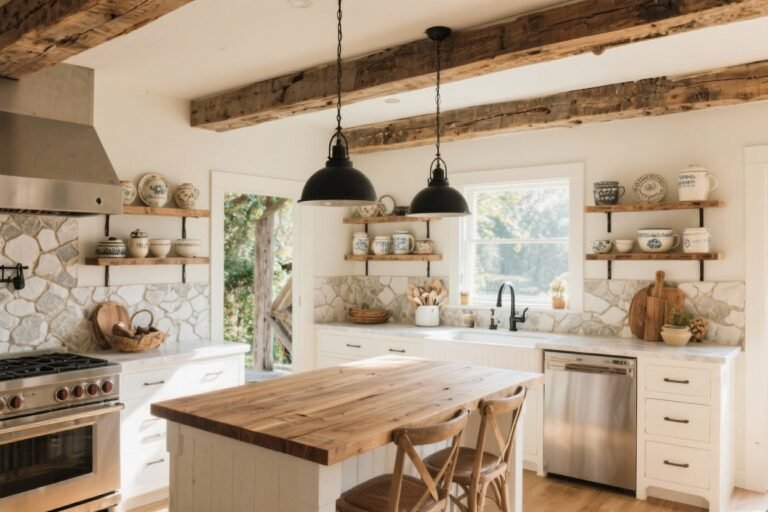
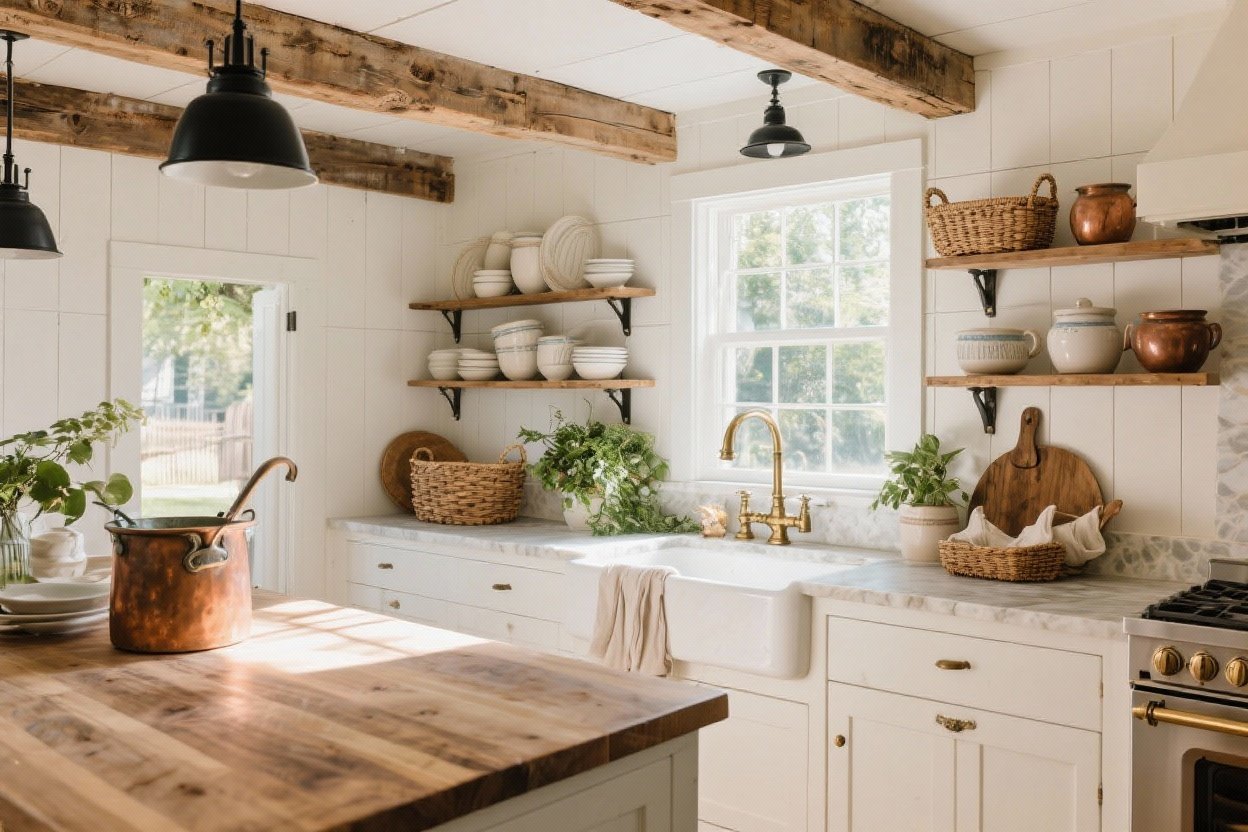
Reclaimed wood is the farmhouse MVP. It brings instant soul—knots, nicks, and all. Use it for shelving, a range hood wrap, or even an island top if you’re okay with a little wear and tear (which, honestly, is the point).
Why It Works
- Built-in patina: The grain, the dings, the color variations—chef’s kiss.
- Warmth: It balances cool stone, stainless steel, and crisp paint colors.
- Eco-friendly: FYI, reusing old boards = guilt-free style.
Pro Tips
- Use matte finishes or oil to keep texture visible.
- Mix tones—don’t match woods too perfectly or it looks staged.
- Seal shelves lightly if they’ll hold oils or spices to avoid stains.
2. Butcher Block That Begs to Be Used

Butcher block is hardworking, forgiving, and super cozy. Whether you go end-grain or edge-grain, it screams farmhouse. It’s also a beautiful contrast to white cabinets or stone counters.
What to Know
- Maintenance: Oil monthly for the first year, then quarterly. Easy.
- Placement: Use on an island or one “prep zone” if you’re not ready for full commitment.
- Species: Maple is classic; walnut is moodier; oak adds visible grain.
Style hack: Pair butcher block with aged brass hardware for warmth on warmth. It’s a vibe.
3. Shiplap and V-Groove Panels for Quiet Texture

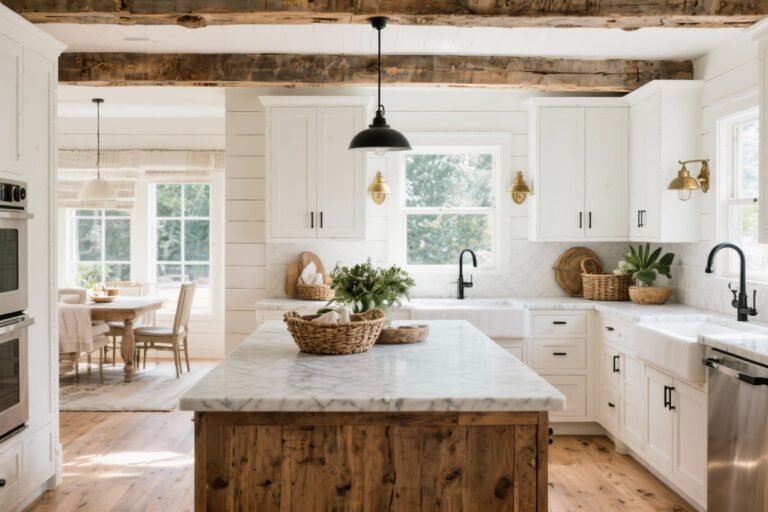
Shiplap isn’t just a trend; it’s a soft, forgiving backdrop that feels farmhouse without trying too hard. Use it on walls, your island back, or even on the ceiling for an unexpected lift.
Transform Your Home With 7,250+ Stunning Landscaping Designs—No Expensive Designers Needed!
- 🌿 Access 7,250+ stunning landscaping designs.
- 💰 Save thousands—no pro designer needed.
- 🏡 Plans for gardens, patios, walkways, and more.
- ✨ Simple, beginner-friendly DIY layouts.
- 🛠️ Customize any design to fit your yard.
How to Use It
- Color: Paint it white, creamy beige, or greige for a timeless look.
- Proportions: Wider boards feel more rustic; narrow reads cottage-y.
- Mix with tile: Do shiplap on most walls, and a tile backsplash only where needed.
IMO: V-groove paneling is a great alternative if you want less “Fixer Upper,” more classic farmhouse.
4. Aged Brass and Antique Bronze Hardware

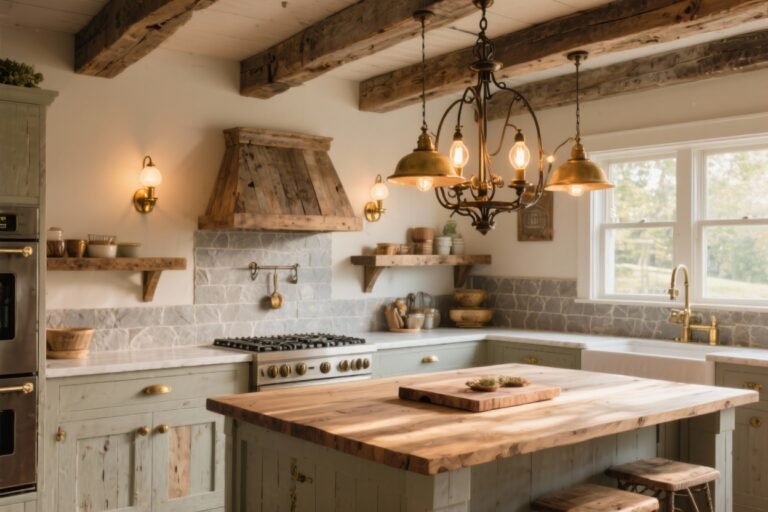
Hardware is tiny but mighty. Swap in unlacquered brass, oil-rubbed bronze, or antique brass knobs and pulls, and suddenly your kitchen feels collected and warm instead of builder-grade.
Best Pairings
- Brass + white or sage cabinets: Clean and elevated.
- Bronze + natural wood: Deep, earthy, and grounded.
- Mixed metals: Keep it to two finishes max so it doesn’t go chaotic.
Pro move: Add matching aged brass switch plates and a vintage-style pot filler to complete the story.
5. Natural Stone That Ages Gracefully

Farmhouse kitchens are lived in, which is why natural stone like soapstone, honed marble, or tumbled limestone works beautifully. They age like leather—better with time.
Top Picks
- Soapstone: Soft, matte, and velvety. Darkens with oiling. Minimal drama.
- Honed marble: Yes, it etches. But also yes, it’s stunning. Embrace the patina.
- Limestone: Great for floors—warm, natural, and forgiving underfoot.
Care Tips
- Choose honed over polished for a more rustic, low-gloss look.
- Seal regularly, but don’t obsess. The lived-in look is part of the charm.
- Balance stone with warm wood or textured tile so it doesn’t feel cold.

6. Handmade Tile With Wabi-Sabi Vibes

If you want a backsplash that whispers “artisan,” go for zellige or other handcrafted ceramic tiles. Slightly uneven edges and glaze variations give major character without screaming for attention.
Design Moves
- Choose soft neutrals—ivory, mushroom, sage—for that gentle farmhouse palette.
- Use a stacked or running bond layout; let the texture do the talking.
- Keep grout tone-on-tone so the tile itself shines.
Budget tip: Use handmade tile behind the range only, then do standard subway elsewhere.
7. Exposed Beams and Boxed Ceilings

Exposed beams instantly cozy up a kitchen. Don’t have them? Fake it. Box beams or faux wood beams add depth and architectural heft without a renovation saga.
Styling Ideas
- Stain: Match to your floor or go darker for contrast.
- Spacing: Keep beams proportional—too many looks busy, too few looks random.
- Lighting: Hang iron pendants or brass lanterns from beams for serious farmhouse drama.
Bonus: Beams visually lower tall ceilings, making big kitchens feel more intimate. Cozy is the goal.
8. Cast Iron and Enamel Sink Moments
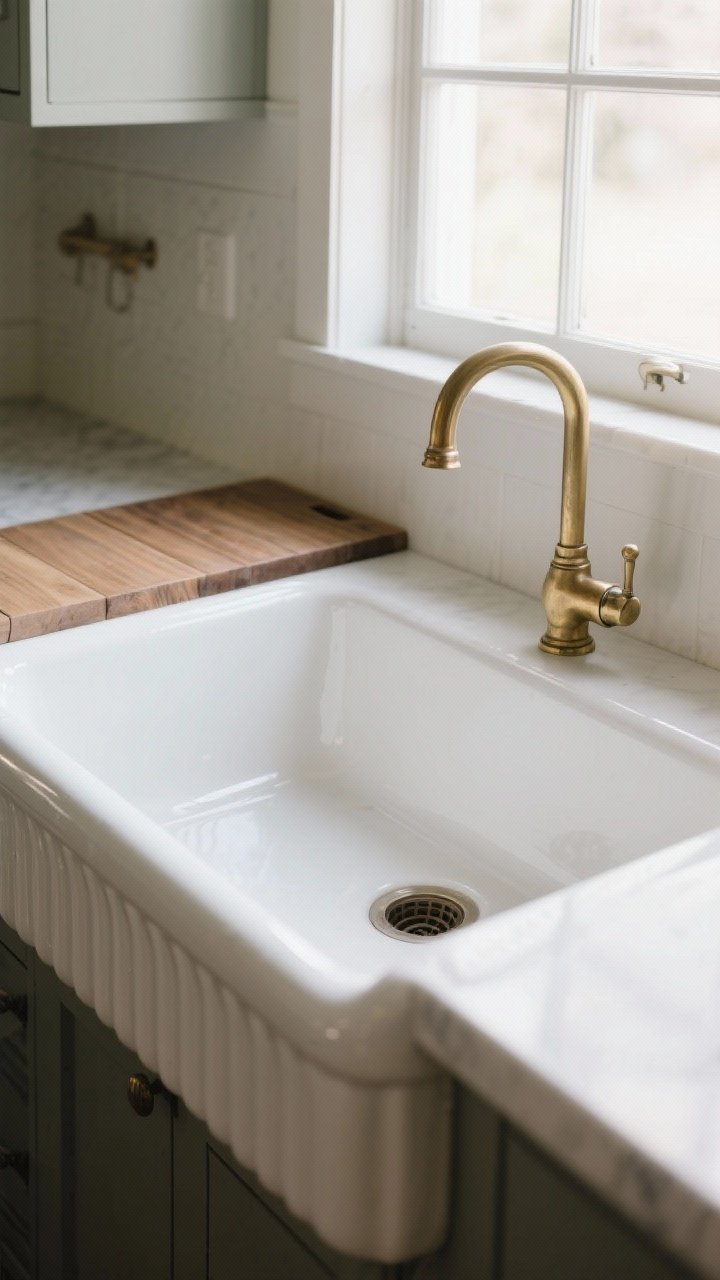
Nothing says farmhouse like a deep apron-front sink. Cast iron or fireclay options feel solid and old-school in the best way. They’re also practical for big pots, baking trays, and “I cooked too much” nights.
What to Look For
- Material: Fireclay resists stains; cast iron is ultra durable and shiny.
- Front profile: Plain for minimalists; fluted or ribbed for extra detail.
- Faucet finishes: Pair with bridge faucets in brass or bronze for a vintage nod.
Practical tip: Add a wood or stone drainboard next to the sink for a custom, collected look.
9. Wrought Iron, Wire, and Basket Weave Accents
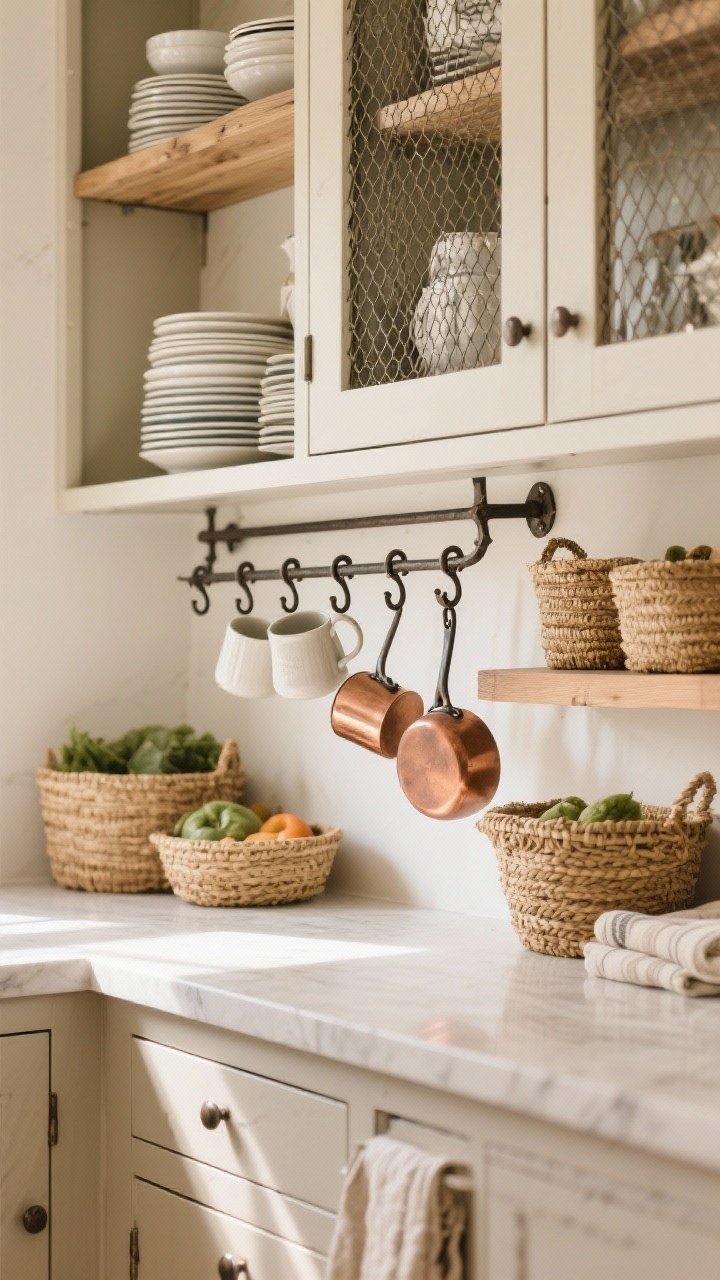
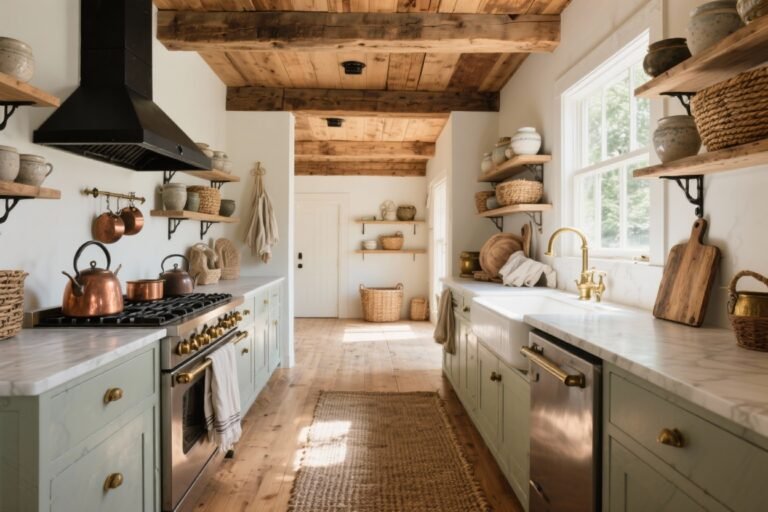
Farmhouse kitchens always mix in a little metal and woven texture. Think wrought iron pot racks, wire-front cabinet doors, and woven baskets that make everyday storage look intentional.
Easy Ways to Layer
- Swap a couple of door fronts for wire mesh to showcase dishes or glassware.
- Use seagrass or wicker baskets in open shelves for produce and linens.
- Install an iron or brass rail system with S-hooks for mugs, towels, and tiny copper pans.
Keep it balanced: one or two metal moments, then soften with wood and textiles. You’re not opening a blacksmith shop.
10. Brick, Terracotta, and Clay For Earthy Warmth

Want instant character underfoot or on a feature wall? Brick, terracotta, and clay bring earthy texture and warmth that feels classic and lived-in.
Where They Shine
- Brick floors: Herringbone or basketweave patterns look timeless, especially with light grout.
- Terracotta tile: Adds Mediterranean heat—seal it with matte finish to keep it rustic.
- Thin brick veneer: Use as a backsplash or on an accent wall for that “converted farmhouse” feel.
FYI: These surfaces are tough. Add a cushy runner by the sink for comfort and layered texture.
Quick Mix-and-Match Guide
- Choose one hero material (stone or brick), then support with wood and metal.
- Keep finishes matte or honed; high-gloss reads modern, not farmhouse.
- Layer natural textiles—linen runners, cotton curtains, jute rugs—to soften all that texture.
Conclusion: Build Your Farmhouse Story, One Material at a Time
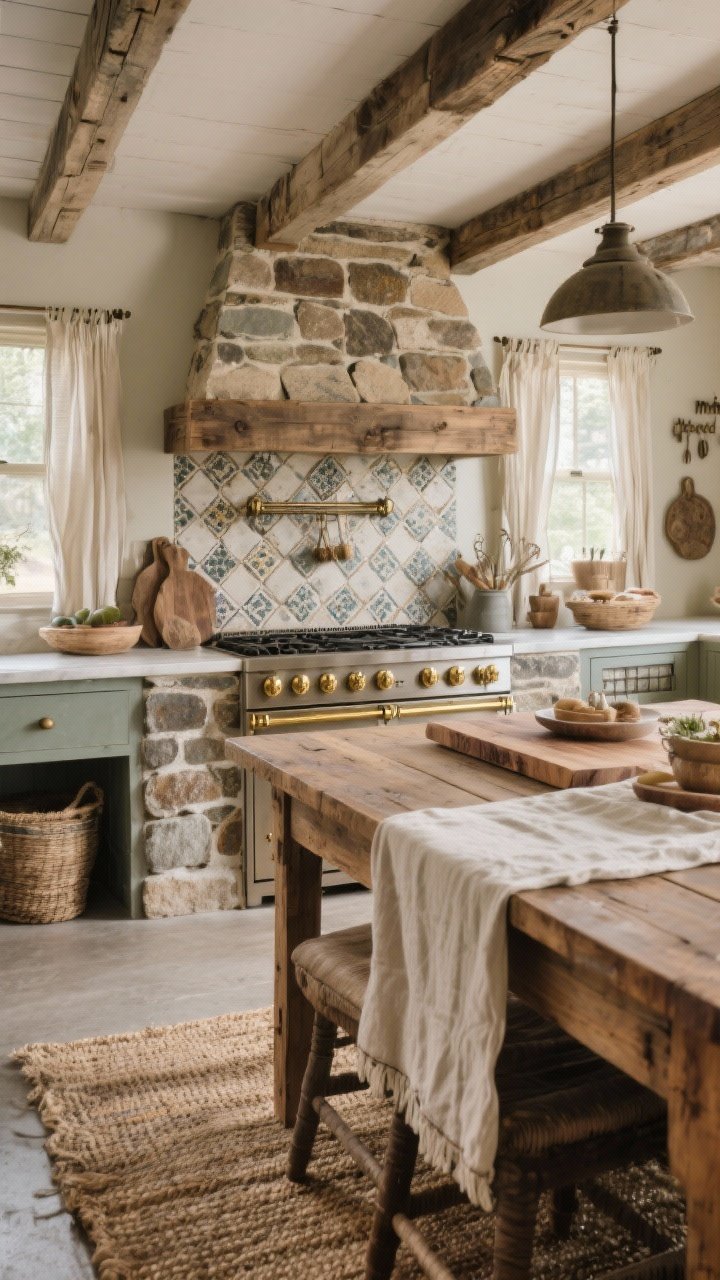
Here’s the secret: farmhouse character comes from mixing textures that feel collected, not coordinated. Start with one or two swaps—maybe butcher block on the island and brass hardware—then layer in handcrafted tile or a vintage-style sink.
Don’t chase perfection. Embrace the patina, let the wood show its age, and choose materials you actually want to touch. Your kitchen will feel warm, honest, and insanely inviting—aka the farmhouse dream.