10 Simple Kitchen Organization Ideas for Busy Households You’ll Actually Use
Let’s be real: when you’re juggling work, meals, and mystery sports practice schedules, your kitchen can go from “cute” to “chaos” in five seconds. But with a few smart tweaks, you can get that calm, everything-has-a-spot vibe—without turning into a full-time organizer. These ideas are designed for busy households that need fast wins, not fussy systems you’ll abandon in a week.
1. Create a “Drop Zone” That Stops the Counter Clutter
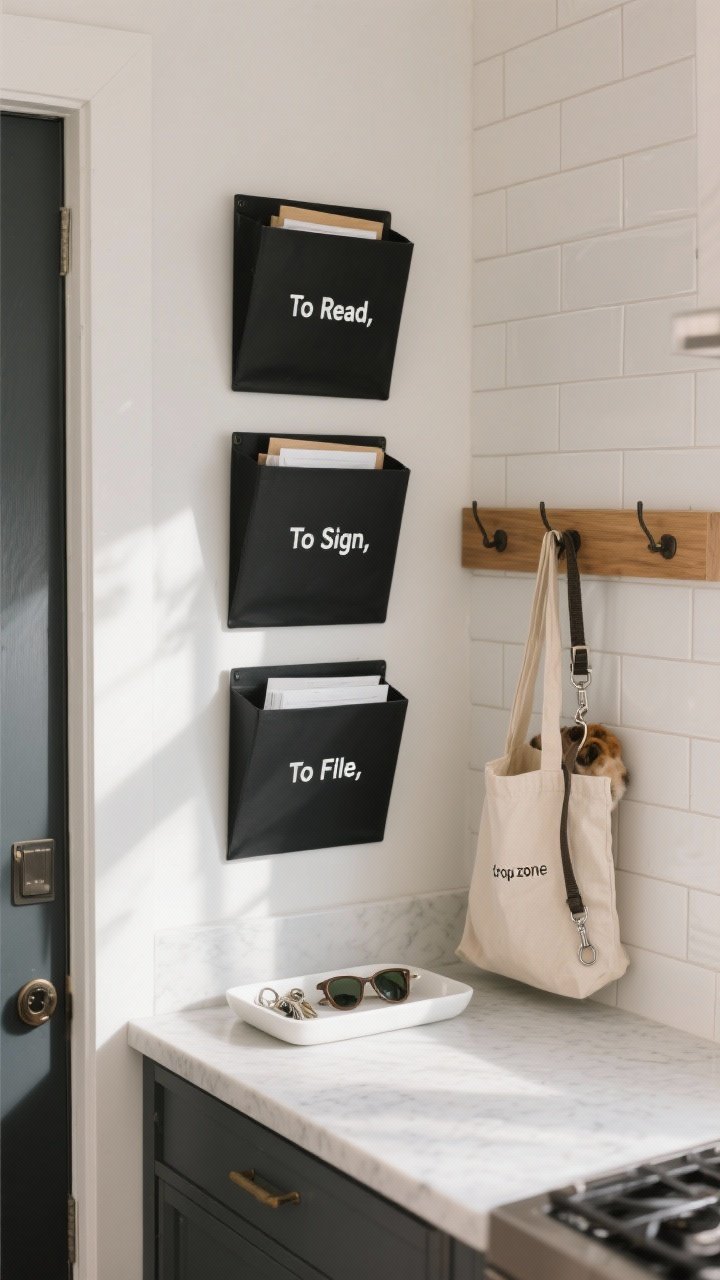
If your counters are a magnet for mail, keys, sunglasses, and school forms, it’s not your fault—it’s just gravity plus life. Give that daily chaos a home with a dedicated drop zone right where everyone walks in.
Tired of snacking when you’re not even hungry? This reset helps you stop the loop and feel back in control.
A simple reset for moments when cravings take over. Easy to use, easy to repeat, and designed to help you feel satisfied instead of stuck.
How to Set It Up
- Wall-mounted file pockets for mail, coupons, and school papers. Label them: “To Read,” “To Sign,” “To File.”
- Tray or shallow basket on the counter for keys and sunglasses. No digging required.
- Hook strip for bags, dog leashes, or aprons—bonus if it’s near the door.
Keep it compact and attractive so you’ll actually use it. A pretty tray can be oddly life-changing, FYI.
2. Zone Your Kitchen Like a Grocery Store
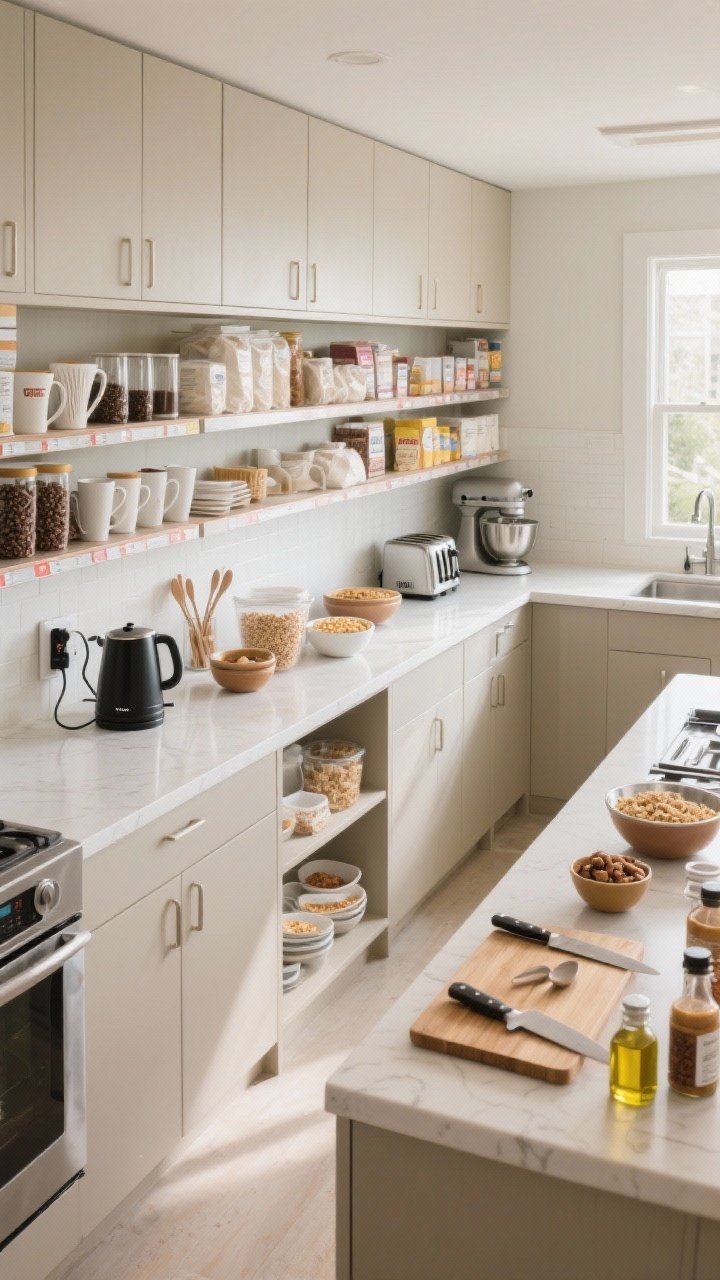
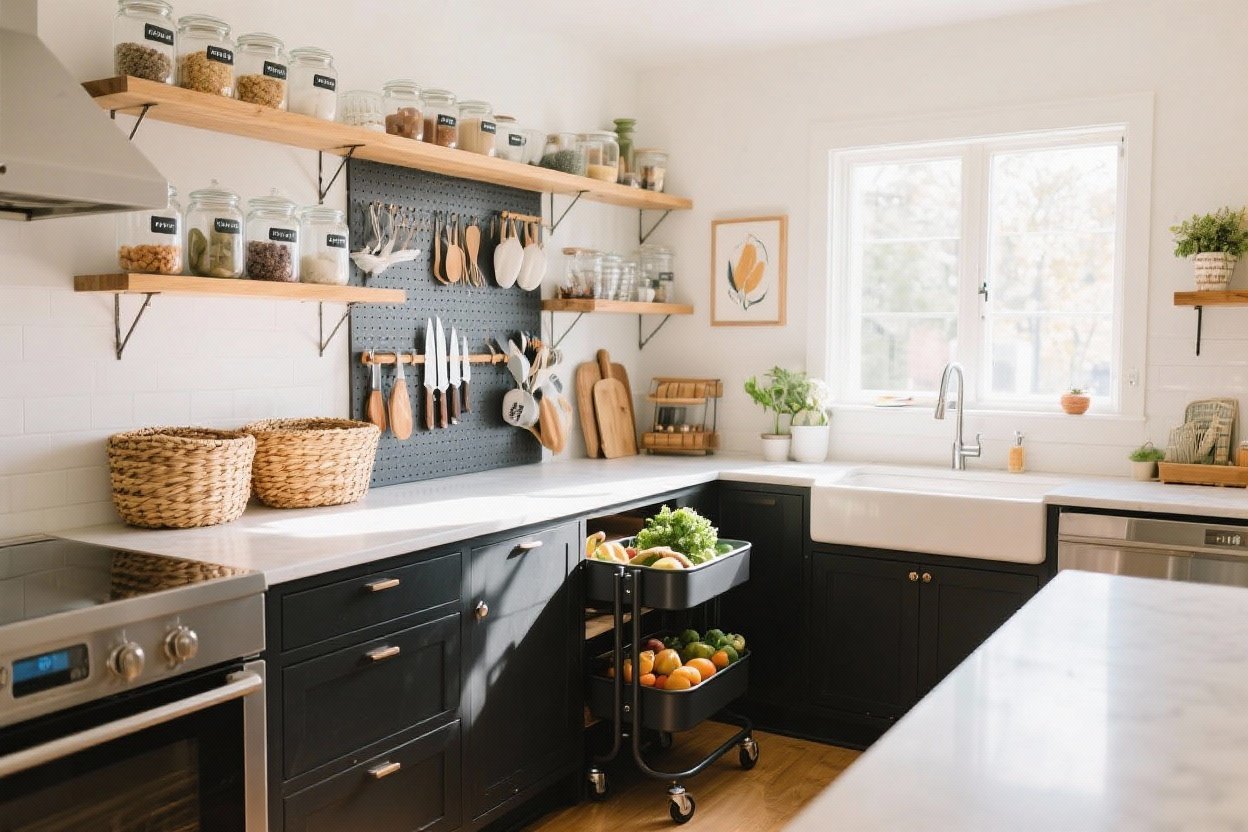
When everything lives in a random drawer, cooking takes forever. Instead, create zones so you can grab-and-go without thinking.
Smart Zones to Try
- Coffee/Tea Zone: mugs, filters, beans, sweeteners, electric kettle or machine. One shelf, one outlet, zero chaos.
- Breakfast Zone: cereals, bowls, spoons, toaster, nut butter. Morning autopilot achieved.
- Prep Zone: cutting boards, knives, mixing bowls, oils, and frequently used spices near your main counter.
- Baking Zone: flour, sugars, baking powder, measuring cups—ideally near the stand mixer.
Group by task, not by aesthetics. It’ll still look good—and you’ll actually save time.
3. Decant the Essentials (But Only the Essentials)
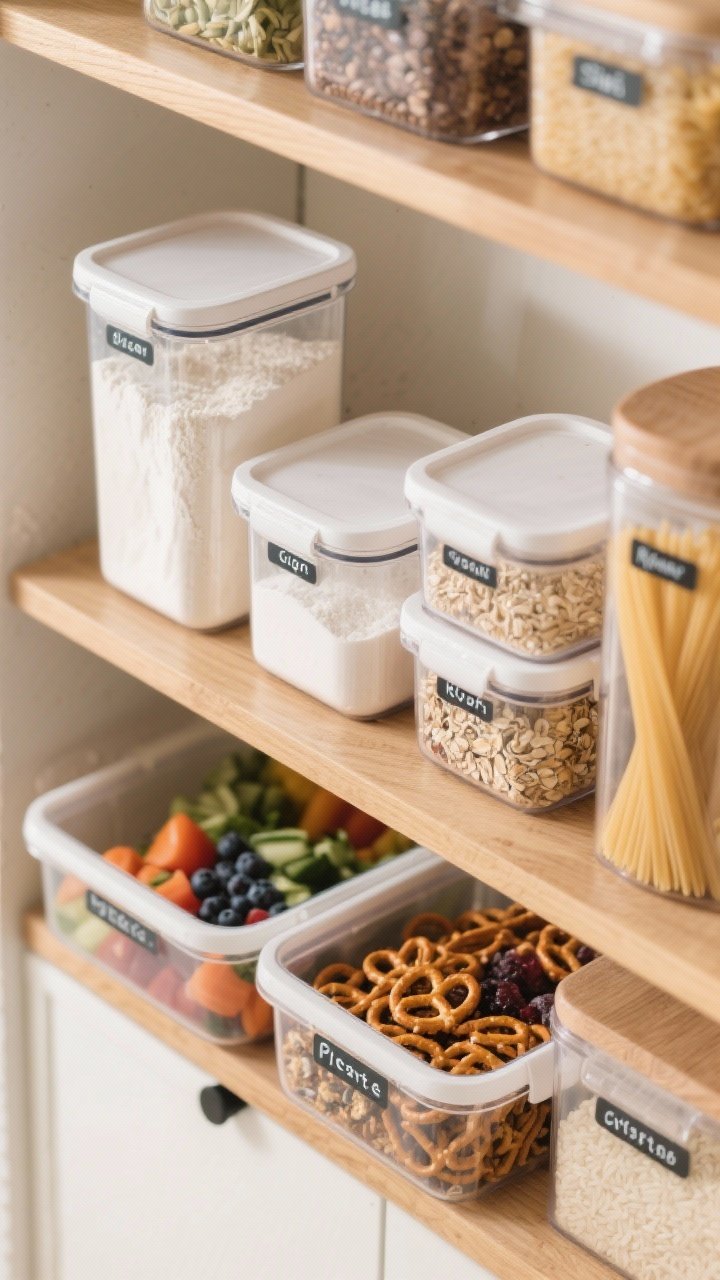
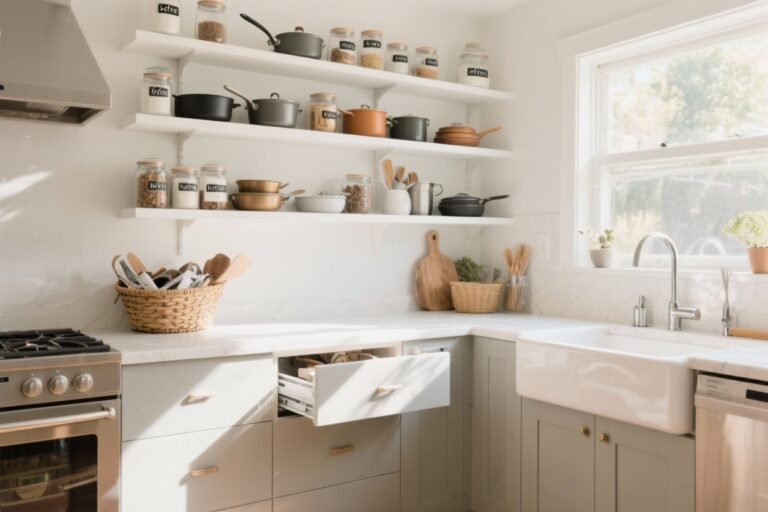
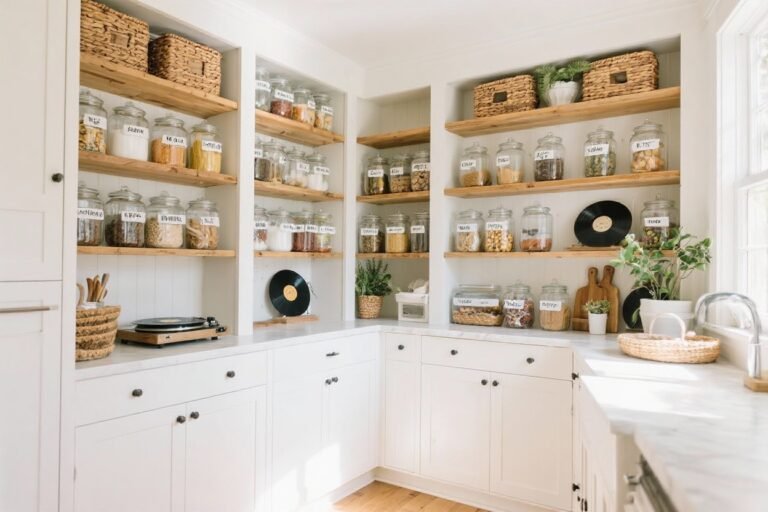
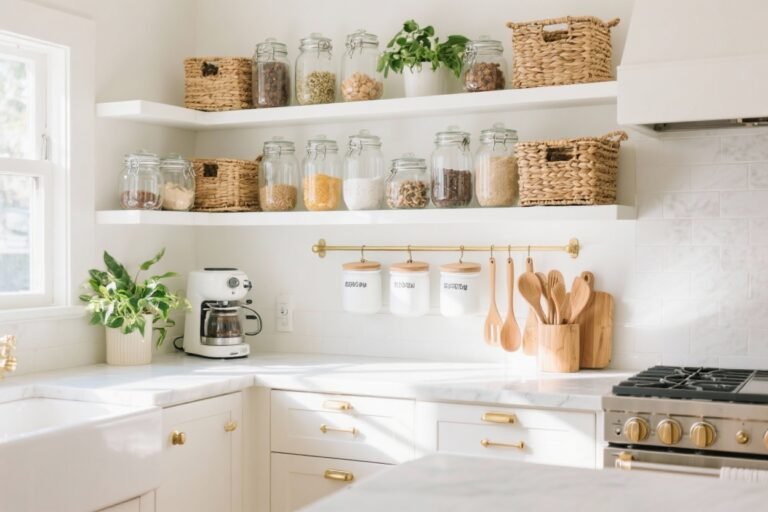
Yes, decanting looks gorgeous on Instagram. But you don’t need to pour every cracker and noodle into a container. Pick your most-used staples and decant just those.
Transform Your Home With 7,250+ Stunning Landscaping Designs—No Expensive Designers Needed!
- 🌿 Access 7,250+ stunning landscaping designs.
- 💰 Save thousands—no pro designer needed.
- 🏡 Plans for gardens, patios, walkways, and more.
- ✨ Simple, beginner-friendly DIY layouts.
- 🛠️ Customize any design to fit your yard.
What to Decant
- Cooking basics: flour, sugar, rice, oats, pasta.
- Snacks for kids: pretzels, granola, dried fruit—labeled and at kid level.
- Fridge MVPs: chopped veggies, berries, leftover rice in clear containers so you actually see them.
Choose clear, stackable containers with tight lids. Label everything with big, readable tags. No mystery jars, no food waste.
4. Upgrade Drawers With Inserts That Fit Your Life
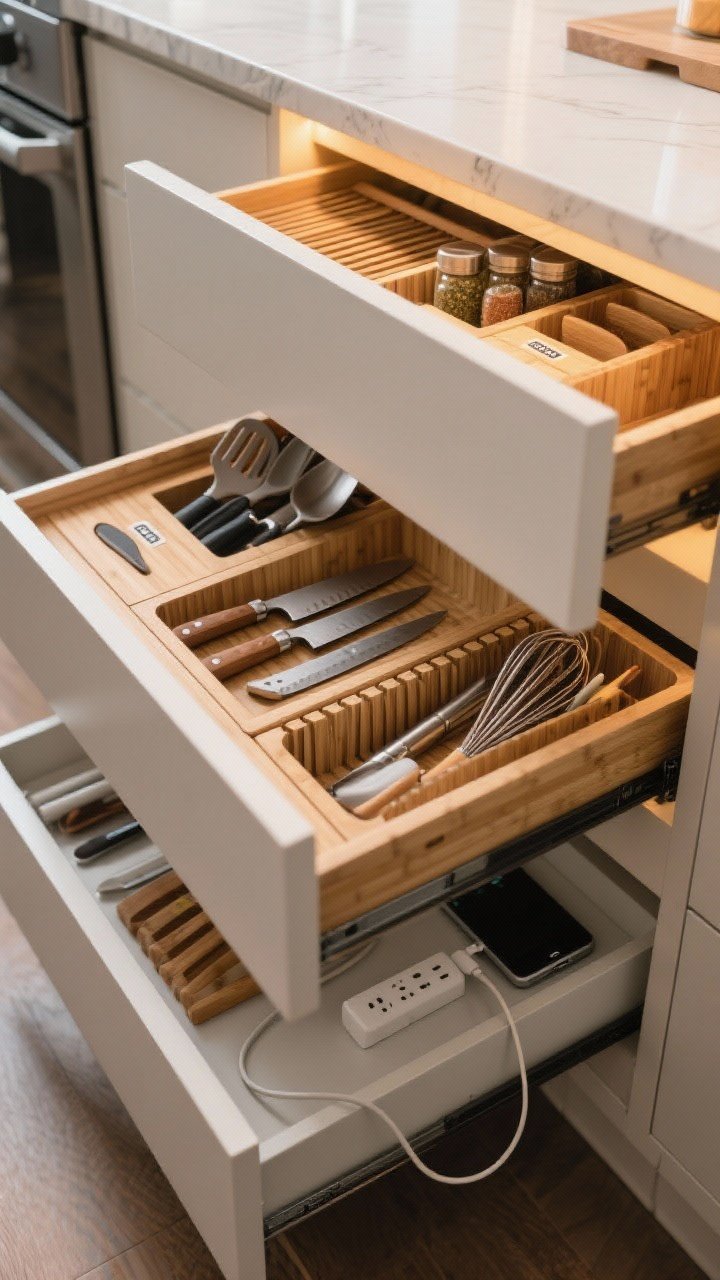
Messy drawers are like black holes for measuring spoons. Fix that with a few well-placed drawer dividers and inserts.
High-Impact Drawer Ideas
- Knife drawer insert: safer than a counter block and saves space.
- Expandable utensil trays: customize sections for spatulas, whisks, and tongs.
- Spice drawer organizers: angled trays make labels readable at a glance.
- Charging drawer: add a power strip for phones and tablets to keep cords off counters.
Measure before you buy (learned that the hard way), and choose inserts that match how you cook, not just how you want your kitchen to look.
5. Use Vertical Space Like a Storage Ninja
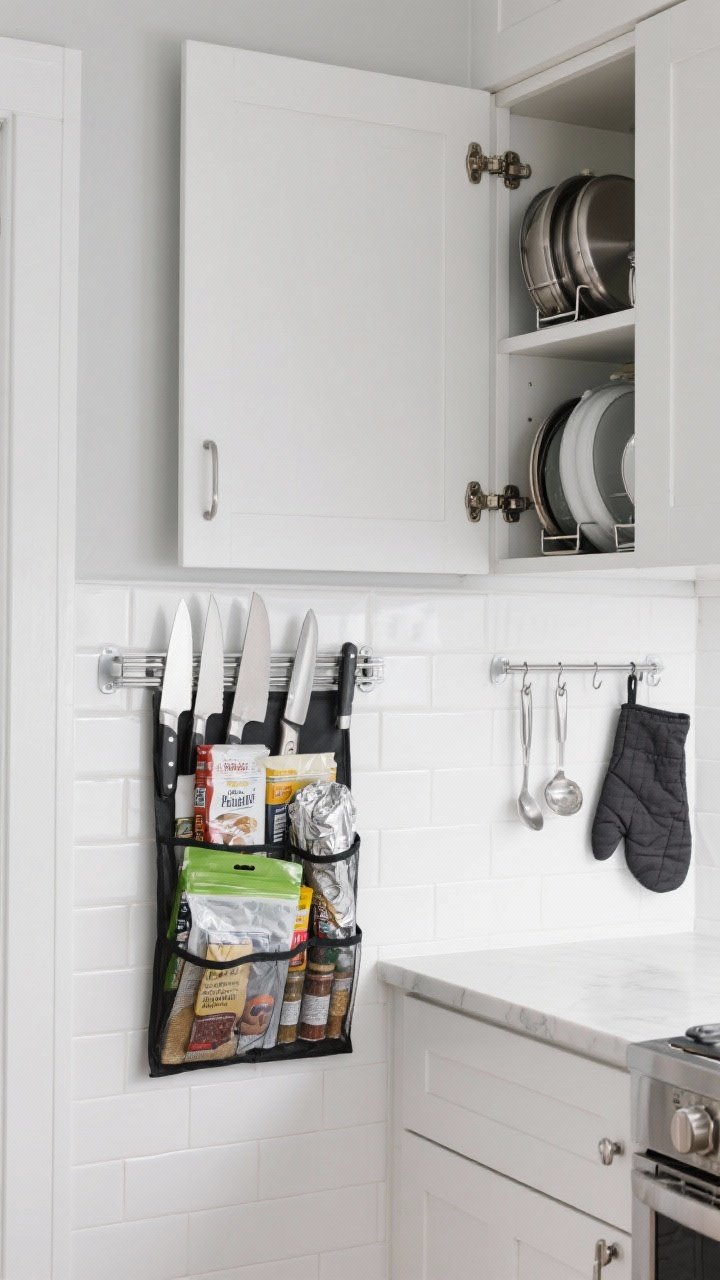
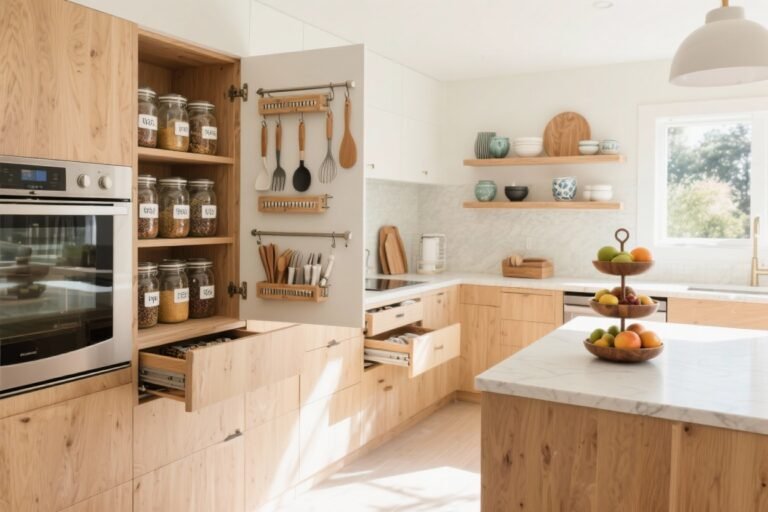
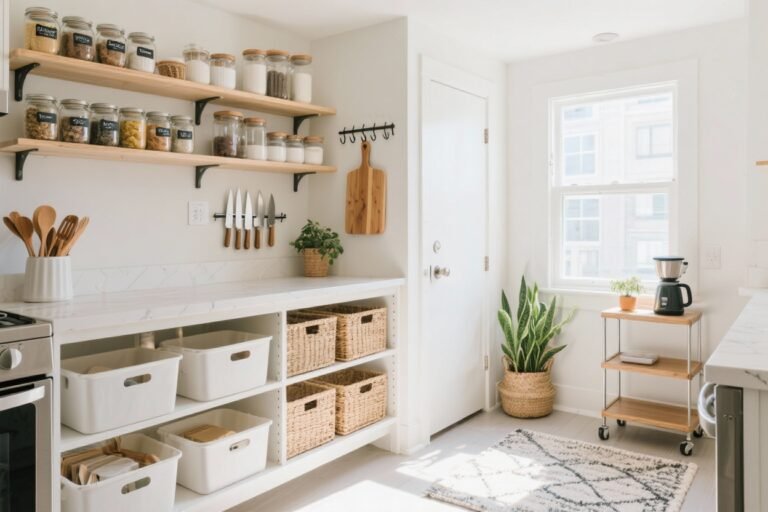
Walls, the sides of cabinets, and the inside of doors are prime real estate. Use them to get bulky items off counters and out of cabinets.
Vertical Wins
- Magnetic knife strip: frees counter space and is oddly satisfying.
- Pan lid racks mounted on cabinet doors—no more clattering lid avalanche.
- Over-the-door organizers for wraps, foils, zip bags, or spices in the pantry.
- Command hooks inside doors for measuring spoons, oven mitts, or small strainers.
Keep heavy stuff at shoulder height and lightweight items higher. Your back will thank you.
6. Build a Snack Station That Practically Runs Itself
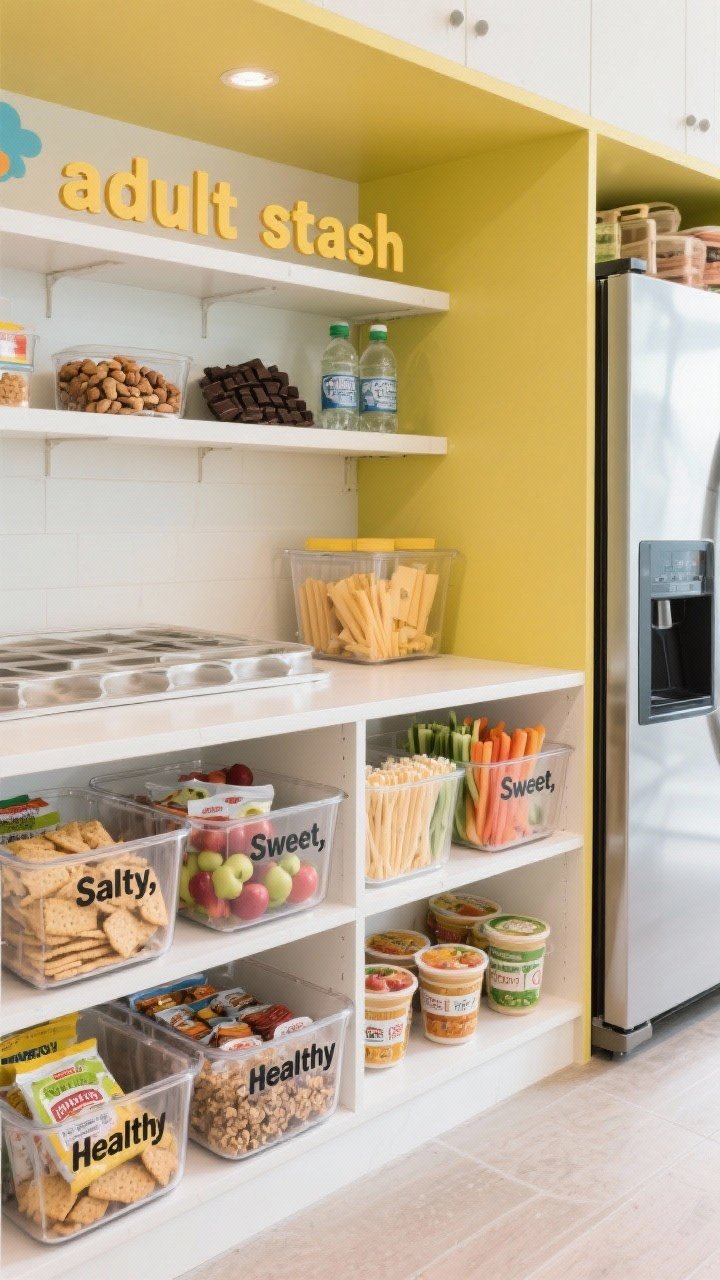
If your household is constantly “What’s for snack?”, it’s time for a self-serve snack station. Seriously, it’s a peace-keeping move.
Set It Up by Age
- Lower shelves for kids: crackers, fruit cups, applesauce pouches, granola bars.
- Fridge bins for grab-and-go: cheese sticks, cut veggies, hummus cups.
- Adult stash up high (IMO essential): nuts, dark chocolate, sparkling water.
Use clear bins labeled “Salty,” “Sweet,” and “Healthy” to keep things balanced. Bonus: kids learn to pack their own school snacks.
7. Tame the Tupperware (Without Losing Your Mind)
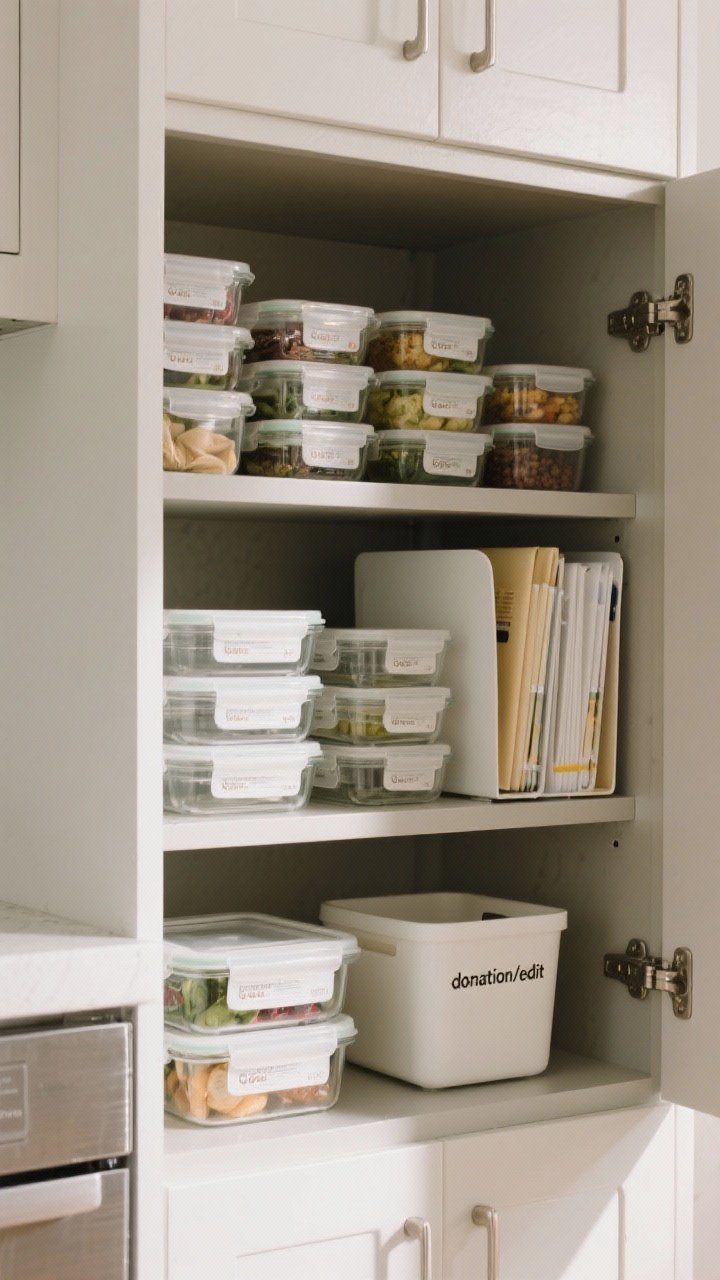
Food containers multiply when you’re not looking. The trick is to store them so matches are easy—and to ditch the weird lids from 2009.
Container Control
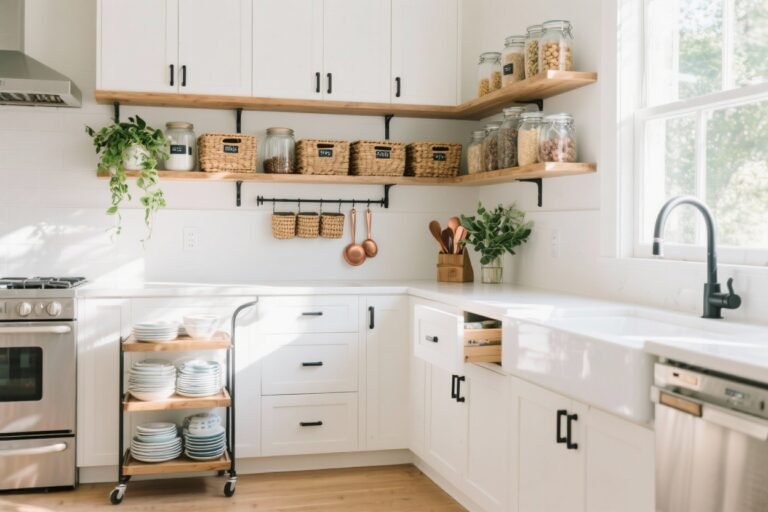
- Nest bottoms by size and store lids vertically in a file organizer or narrow bin.
- Commit to one or two uniform brands so sizes stack and lids interchange.
- Keep a donation/edit bin in the cabinet. If a container cracks or loses a lid, it goes straight in.
For glass containers, store the most-used sizes front and center. If you meal prep, label with days so you don’t open a science experiment on Friday.
8. Corral Cleaning Supplies the Smart Way

Under-sink chaos is universal. Turn it into a tidy little command center so messes are easier to handle—and you’re not buying your third bottle of glass cleaner.
Under-Sink Systems That Work
- Pull-out caddy for daily cleaners—if you can grab it with one hand, you’ll use it more.
- Tension rod to hang spray bottles and free up space below.
- Bins by task: “Dishes,” “Surfaces,” “Floors,” “Trash Bags.”
- Back-of-door pocket organizer for sponges, brushes, and gloves.
Keep only what you actually use in the kitchen here; move extras to a laundry room or utility closet. Safety note: if you have kids or pets, add a child lock.
9. Rotate Pantry Stock With Grocery-Store Logic

If canned beans are hiding in the back corner, you’ll keep buying more. Use FIFO (first in, first out) like a grocery store and stop the duplicates.
Easy Pantry Tweaks
- Risers for cans so you can see the back row.
- Turntables for oils, vinegars, and sauces—spin to win.
- Bins by category: “Pasta + Sauce,” “Quick Meals,” “Baking,” “International,” “Snacks.”
- Date check habit: when you unload groceries, slide older items to the front.
Label shelves with categories so anyone can put things away correctly. Yes, even that person who never knows where the soy sauce goes.
10. Make The Fridge Work Like a Hotel Mini-Bar (But Healthier)

Your fridge should feel like a curated, easy-to-grab display, not a cold junk drawer. A few tweaks can keep food visible and fresh longer.
Fridge Flow That Sticks
- Clear bins for categories: “Breakfast,” “Leftovers,” “Veg Prep,” “Kids’ Drinks.”
- Front-and-center zone for food that needs to be eaten soon—use a bin labeled “Eat First.”
- Mason jars or deli containers for prepped produce; line with paper towel to reduce sogginess.
- Lazy Susan for condiments so you stop collecting five mustards.
Do a five-minute Friday reset: toss expired stuff, move older items forward, and jot a quick grocery list. It’s the tiniest ritual with the biggest payoff, FYI.
Bonus Pro Tips To Keep Your System Going
- One in, one out: when a new gadget or container comes in, something old goes.
- Micro resets: 10 minutes after dinner to put the kitchen back to “ready.”
- Family labels: label shelves and bins so anyone can help. Because they live here too.
Here’s the secret: organization isn’t about being perfect—it’s about making your kitchen do the heavy lifting for you. Start with one idea, test it for a week, and tweak as you go. Before you know it, you’ll open a cabinet and feel that tiny, glorious hit of calm. And yes, that counts as self-care.