5 Small Living Room Decor Ideas That Make a Big Impact (no Reno Required)

Small living room? Same. But guess what—tiny spaces can still deliver big style. You don’t need a sledgehammer or a designer budget. You just need a smart plan, a few high-impact swaps, and an attitude that says, “Watch me make 200 square feet look like a magazine.” Let’s do this.
1. Float Your Furniture For Breathing Room
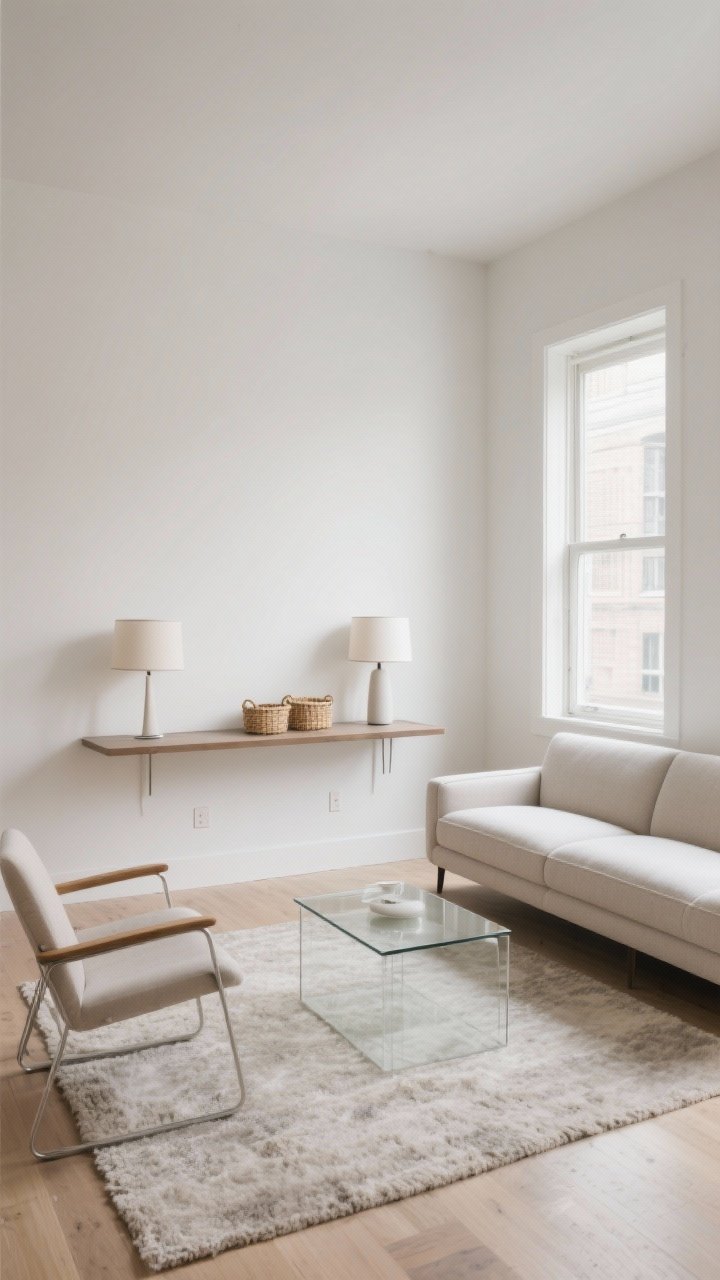
Pushing everything against the walls looks logical, but it actually makes a small living room feel flat. Floating a sofa or a pair of chairs—even just a few inches—creates zones and gives your layout some personality.
Tired of snacking when you’re not even hungry? This reset helps you stop the loop and feel back in control.
A simple reset for moments when cravings take over. Easy to use, easy to repeat, and designed to help you feel satisfied instead of stuck.
Try This
- Anchor with a rug: Choose a rug that fits under the front legs of your seating. A “too small” rug shrinks the room visually.
- Use slender pieces: Slim-arm sofas, open-base chairs, and a glass or acrylic coffee table keep sight lines open.
- Mind the flow: Leave 30–36 inches of walk space where possible. FYI, even 24 inches can work in tighter spots.
Bonus: A petite console or narrow bench behind a floating sofa adds function without bulk—hello, extra storage and a spot for lamps.
2. Go Vertical With Bold Lighting And Tall Moments
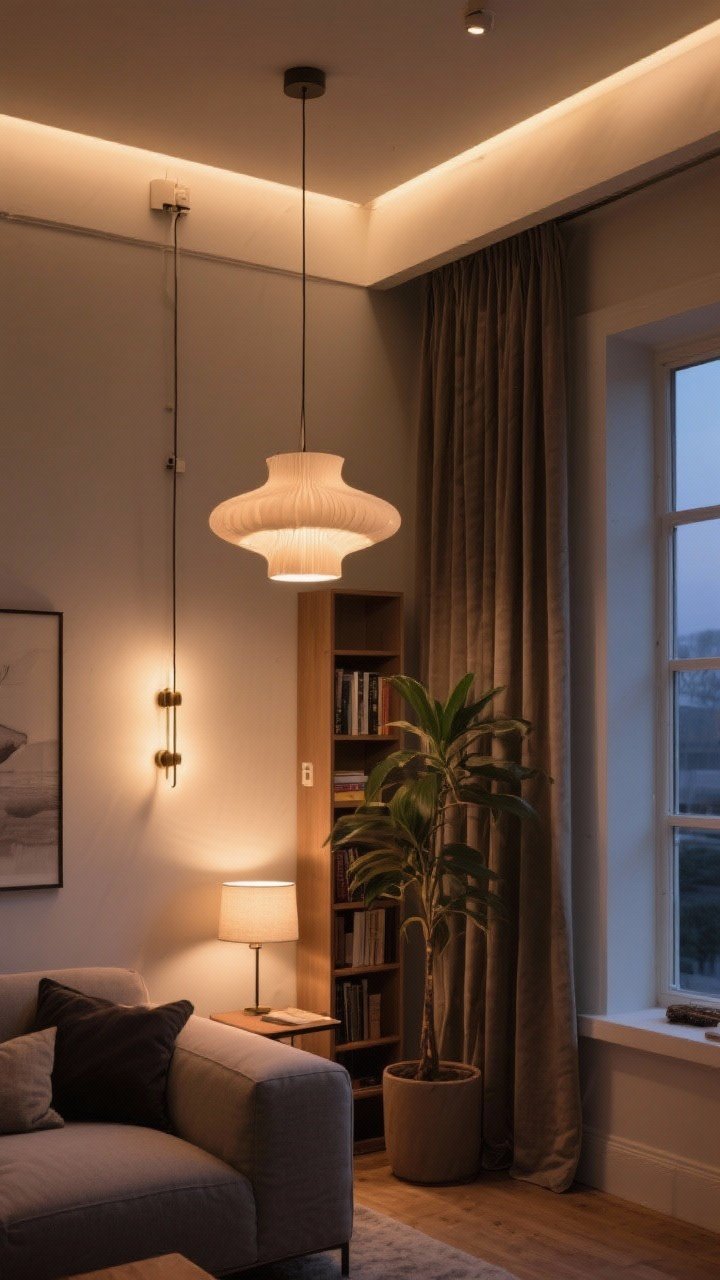
When floor space is limited, think up. Vertical elements pull the eye north and make ceilings feel higher. It’s like contouring, but for your room.
Light It Right
- Swap table lamps for sconces: Plug-in sconces free up surface space and add instant architectural vibes.
- Use a statement pendant: A single sculptural light fixture does more for mood than five tiny accents.
- Layer lighting: Aim for three sources—overhead, task, and ambient—so the room glows, not glares.
Then add height with a tall plant, floor-to-ceiling curtains, or a vertical bookshelf. Floor-to-ceiling drapes (hung high and wide) are basically a magic trick for small rooms. IMO, they’re non-negotiable.
3. Master Mirrors And Glossy Surfaces
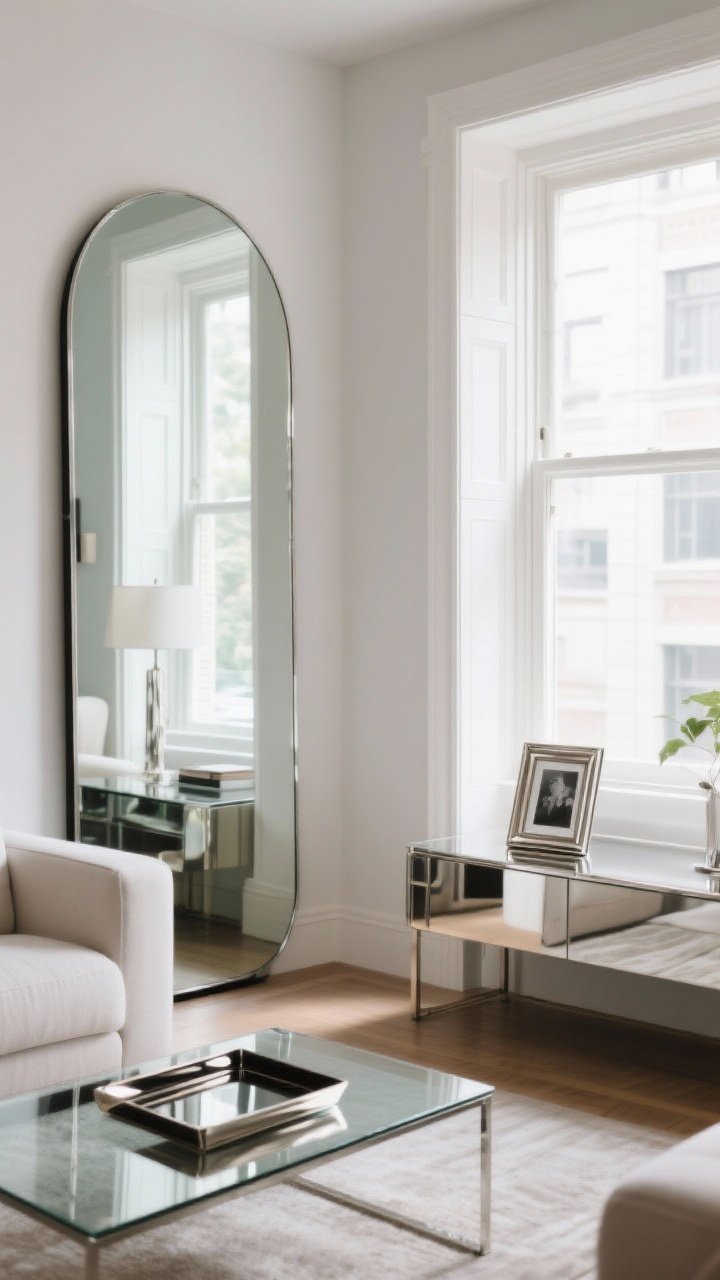
Mirrors are the oldest small-space trick because they work—period. They bounce light, double your view, and give your room that airy, polished feel.
Transform Your Home With 7,250+ Stunning Landscaping Designs—No Expensive Designers Needed!
- 🌿 Access 7,250+ stunning landscaping designs.
- 💰 Save thousands—no pro designer needed.
- 🏡 Plans for gardens, patios, walkways, and more.
- ✨ Simple, beginner-friendly DIY layouts.
- 🛠️ Customize any design to fit your yard.
Placement Matters
- Across from a window: Capture maximum daylight. If there’s no window, reflect a lamp or art wall.
- Oversized if you can: One large mirror beats a bunch of tiny ones. Less visual clutter, more drama.
- Go leaner style: A tall, lean mirror adds height and depth without eating floor space.
Balance mirrors with a few glossy accents—a lacquer tray, glass coffee table, or metallic frame—to layer in shine. Just don’t overdo it, unless you’re decorating a disco (which, TBH, sounds fun).
4. Style A Smart, Multi-Tasking Coffee Table
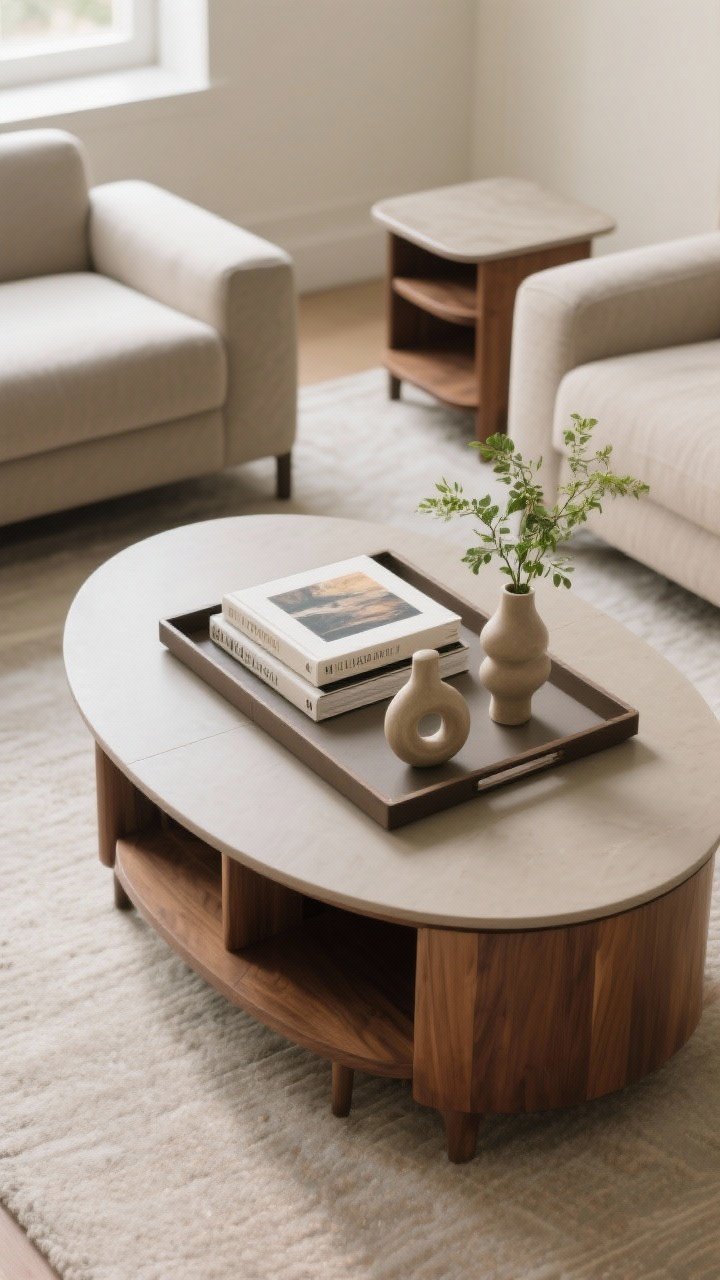
The coffee table is MVP of a small living room: it’s your dining spot, desk, footrest, and display zone. Choose one that does more than just sit there and look pretty.
Pick Your Shape
- Oval or round: Easy to walk around and softens boxy layouts.
- Nesting tables: Pull out when you need more surface, tuck in when you don’t.
- Storage heroes: Lift-top tables, lower shelves, or hidden compartments = clutter control.
Style Without Overcrowding
- Rule of thirds: Stack a couple of books, add a sculptural object, and include something living (bud vase or small plant).
- Use a tray: Corrals remotes, candles, and coasters so it looks intentional, not random.
- Keep clearance: Leave 14–18 inches between table and sofa for comfy legroom.
FYI: If your room is truly tiny, try an ottoman with a firm top—soft when you’re lounging, stable with a tray when you’re hosting.
5. Curate Color And Texture Like A Minimalist With Taste
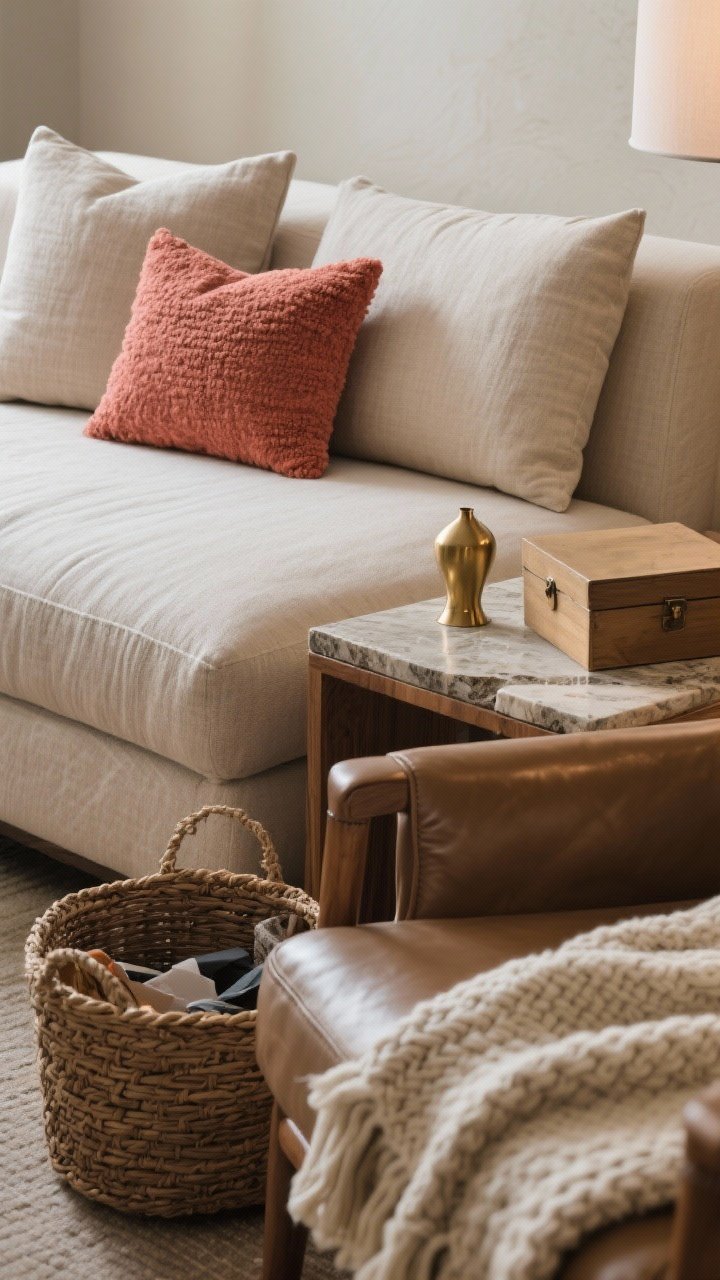
Small rooms love a tight color palette and layered textures. It’s the difference between “cozy boutique hotel” and “why does this feel busy?”
Build Your Palette
- Choose 3–4 core colors: A base neutral, a secondary neutral, one accent, and a metallic. Keep saturation similar for harmony.
- Repeat tones: Let the accent color show up in art, a pillow, and a throw so the room feels connected.
- Limit patterns: One bold pattern + a couple of subtle ones is the sweet spot.
Layer Texture For Depth
- Mix materials: Linen, boucle, leather, wood, stone, and a hint of metal create richness without clutter.
- Vary scale: Chunky knit throw + fine-weave pillows + smooth leather chair = chef’s kiss.
- Contain the extras: Baskets and lidded boxes hide the inevitable “life stuff.” Out of sight, sanity restored.
If you’re craving personality, add one statement piece—a big art print, a color-drenched rug, or a bold accent chair. One star, many supporting actors. That’s the vibe.
Final Takeaway: Small living rooms don’t need more stuff; they need smarter moves. Float your furniture, think vertical, let mirrors and light do the heavy lifting, pick a coffee table that hustles, and keep your palette tight but textured. Do a couple of these, and your space will feel bigger, brighter, and way more you. Now go rearrange something—you’ve got this.