10 Kitchen Organization Mistakes That Are Wasting Space and Time (and Your Sanity)
You know that feeling when you open a cabinet and get attacked by a stack of rogue Tupperware? Same. The good news: your kitchen isn’t tiny, it’s just doing too many things badly. Let’s fix the sneaky organization mistakes that are costing you time, space, and maybe your last nerve.
1. The “Everything Drawer” That Holds, Well, Everything
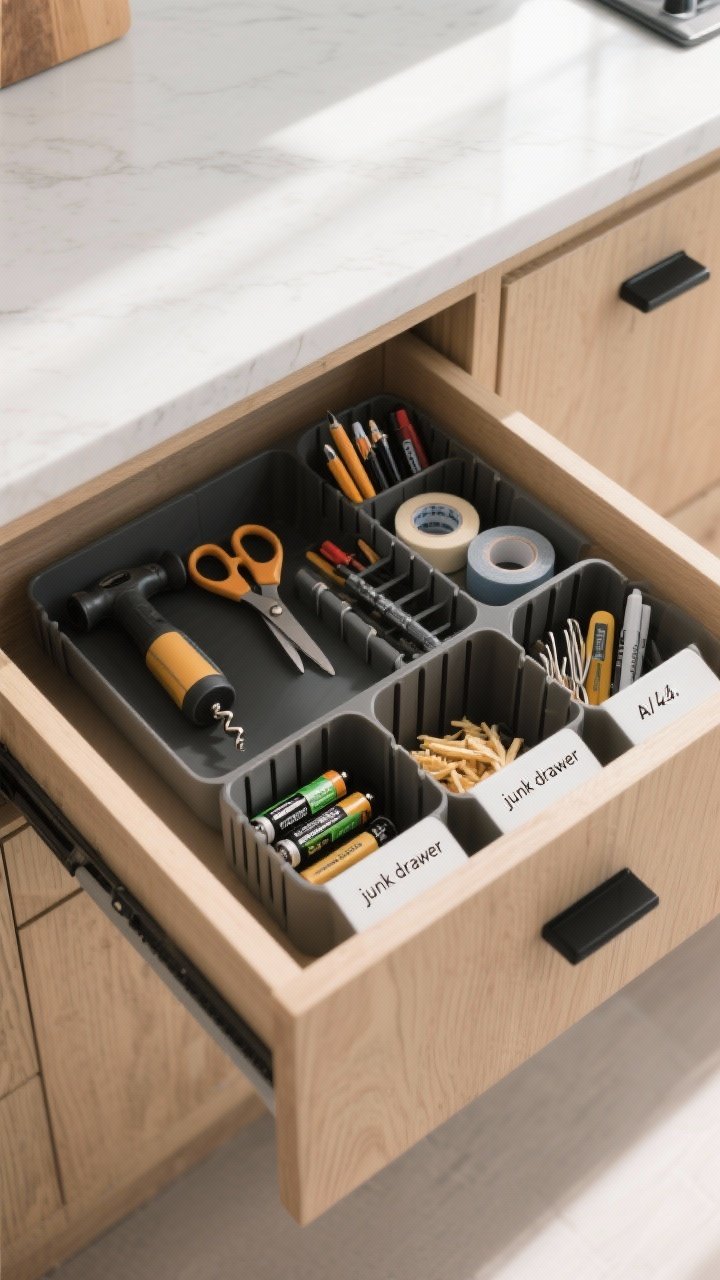
We all have a junk drawer. But when it becomes a junk ecosystem, it swallows the scissors, tape, batteries, and your will to live. The problem isn’t the drawer—it’s the lack of zones inside it.
Tired of snacking when you’re not even hungry? This reset helps you stop the loop and feel back in control.
A simple reset for moments when cravings take over. Easy to use, easy to repeat, and designed to help you feel satisfied instead of stuck.
Quick Fix
- Use modular dividers or small bins to create micro-zones: tools, writing, batteries, clips.
- Store duplicates elsewhere. You don’t need five wine openers in the same drawer, promise.
- Label the inside lip of the drawer. It’s subtle but keeps everyone honest.
Pro tip: If it doesn’t get used weekly, it doesn’t belong in the primary junk drawer. Relocate or donate.
2. Stacking Pots Like Pancakes (And Then Never Using the Bottom One)

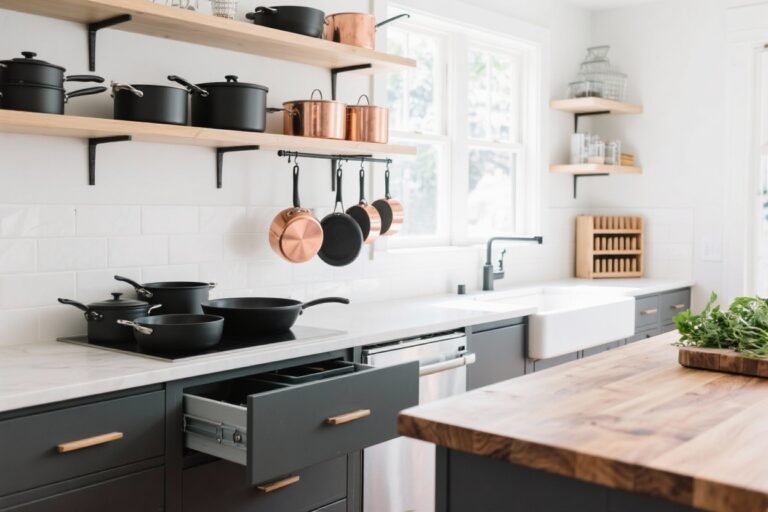
Deep cabinets + tall stacks = guaranteed chaos. Every time you need the Dutch oven, you’re excavating like a backyard archaeologist.
Quick Fix
- Add lid racks on cabinet doors or a vertical organizer to stand lids up separately.
- Use pan organizers to file pots and pans upright—no stacking required.
- Keep the everyday cookware at arm level; stash specialty pieces higher.
FYI: A single adjustable rack can double your usable space and save your shoulders.
3. Letting Spices Free-Roam Like Tiny Chaos Agents
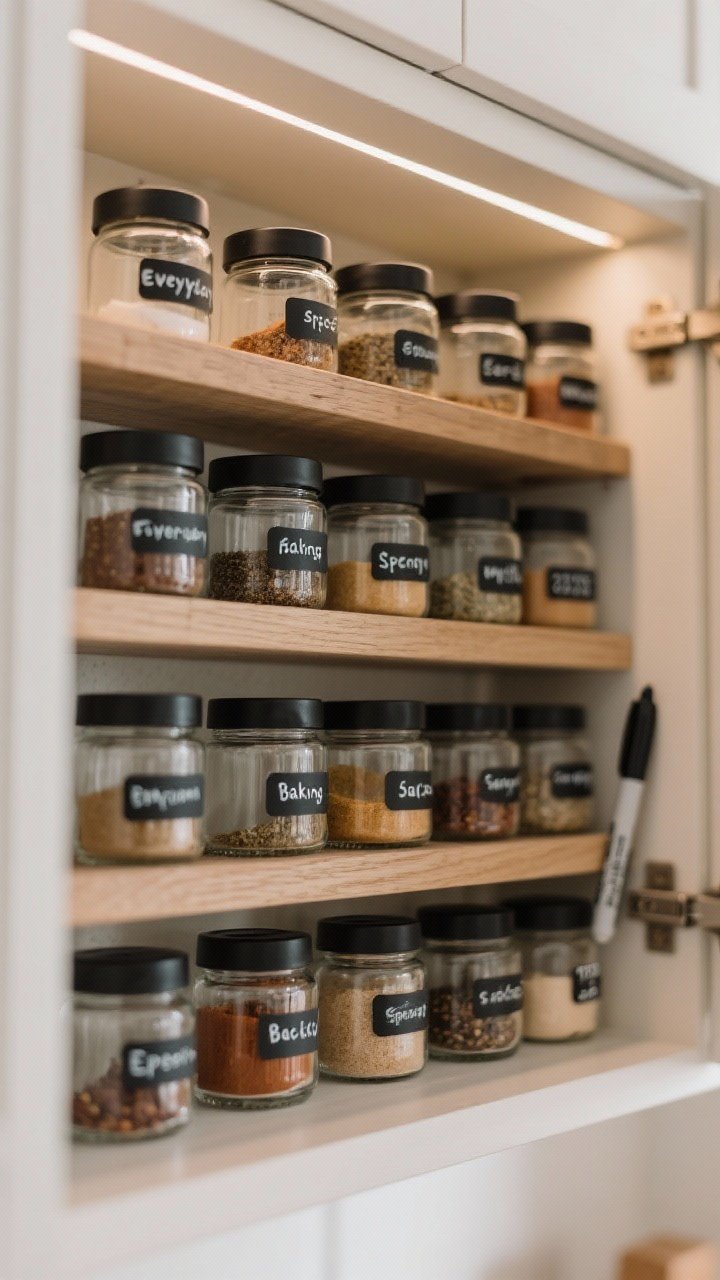
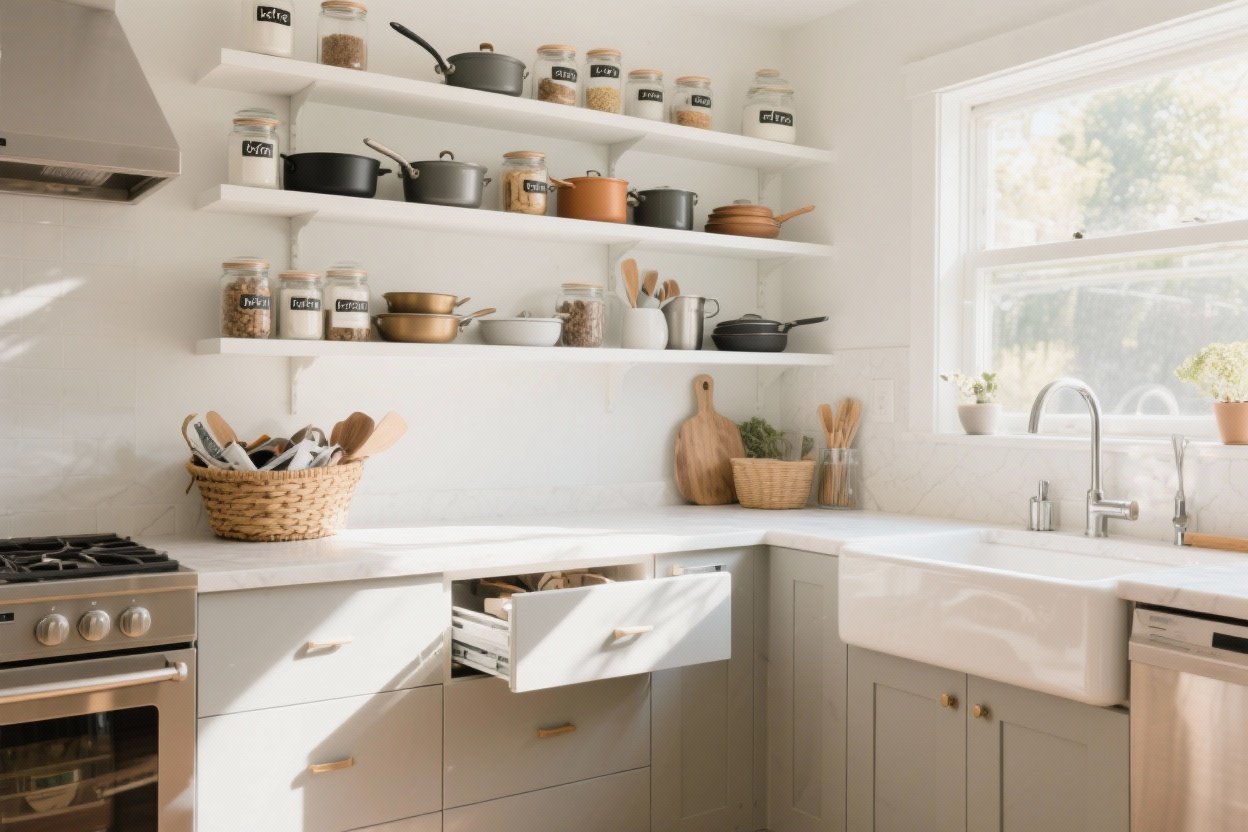
If your spices are tossed in a cabinet, you’ve definitely bought cumin twice. Or four times. The time you spend hunting for paprika? That’s your life, and you’re not getting it back.
Transform Your Home With 7,250+ Stunning Landscaping Designs—No Expensive Designers Needed!
- 🌿 Access 7,250+ stunning landscaping designs.
- 💰 Save thousands—no pro designer needed.
- 🏡 Plans for gardens, patios, walkways, and more.
- ✨ Simple, beginner-friendly DIY layouts.
- 🛠️ Customize any design to fit your yard.
Quick Fix
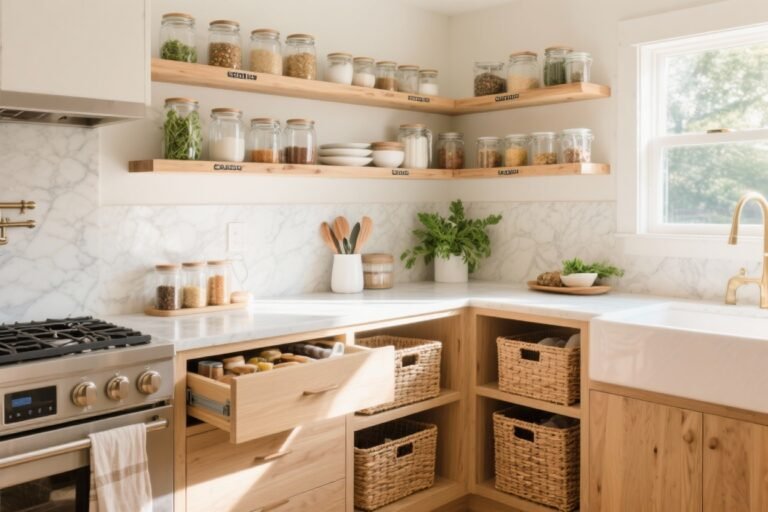
- Pick a system and commit: drawer insert, tiered shelf, or magnetic rack on the fridge or inside a cabinet.
- Use uniform jars with clear labels on lids or fronts. Consistency = visibility.
- Sort by frequency (front), then by type (baking vs. savory), not by alphabet unless you’re Type A and thriving.
Bonus: Keep a tiny marker in the spice zone for adding purchase dates. Whole spices last longer; ground spices get rotated yearly.
4. Wasting Prime Real Estate on Stuff You Rarely Use
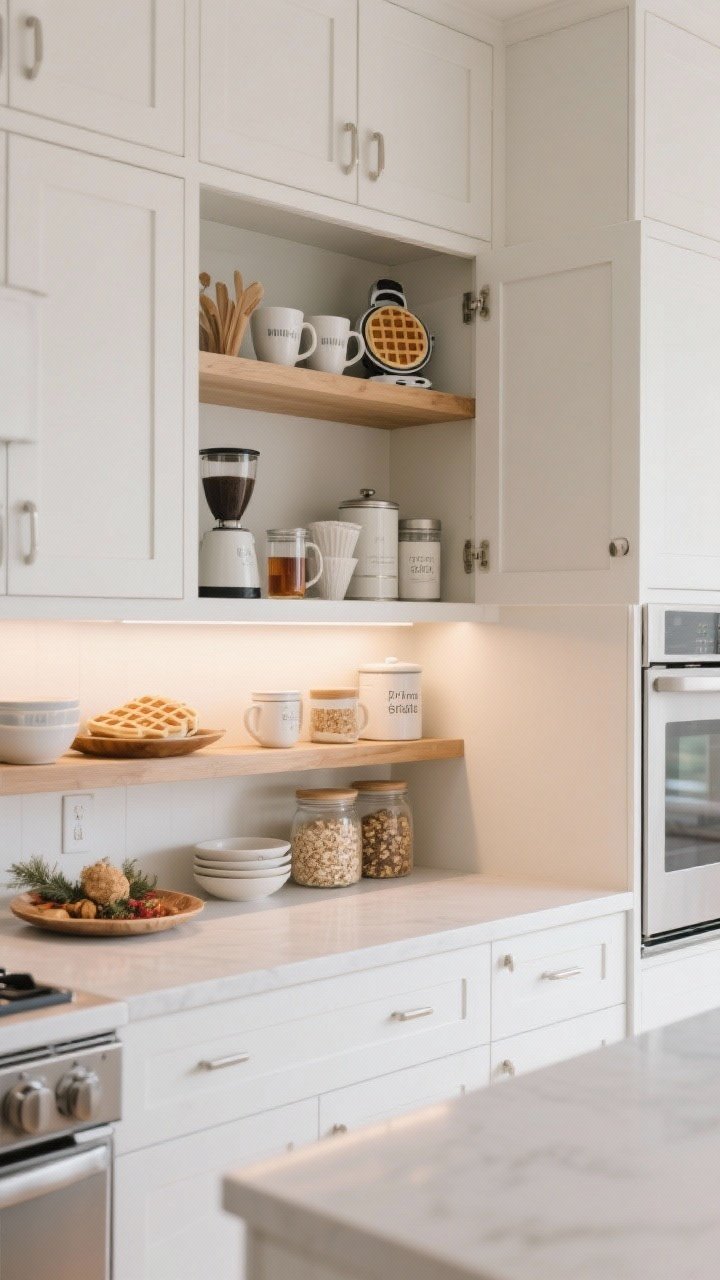
Your eye-level cabinets are VIP seats. Stop giving them to holiday platters and that novelty waffle maker. Daily zones should be, shocker, for daily stuff.
Quick Fix
- Make a “prime zone” rule: anything used at least 3x a week gets shelf height A or B.
- Move seasonal and occasional items up high or to a pantry/utility shelf.
- Create coffee/tea, breakfast, snack stations where you actually use them.
IMO: If it isn’t used weekly, it loses VIP status. Bye-bye to front-row seating.
5. Ignoring Vertical Space (Your Cabinets Are Taller Than You Think)
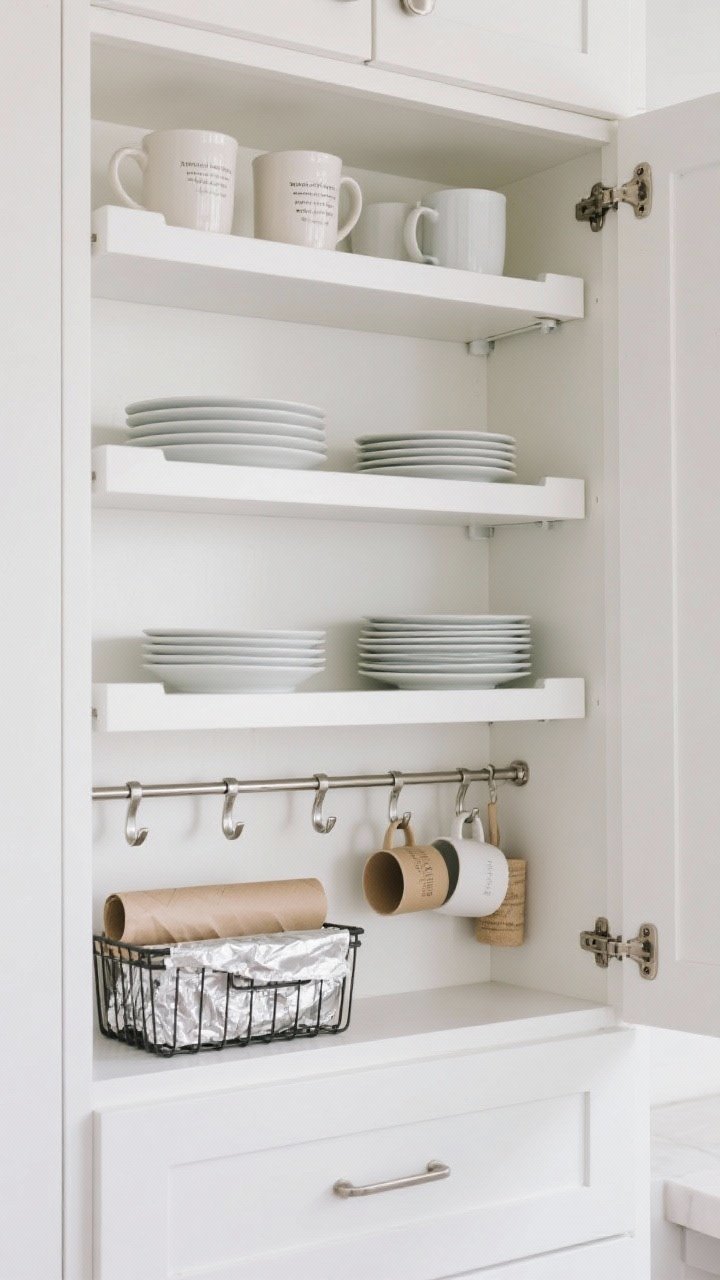
That dead air above your mugs and plates? It’s basically a luxury penthouse going to waste. Shelves too far apart create awkward stacks and sad, teetering towers.
Quick Fix
- Add adjustable shelves or shelf risers to split space and prevent tall stacks.
- Use under-shelf baskets for foil, wraps, or flat items.
- Mount hooks under shelves for mugs, measuring cups, or small colanders.
Pro tip: Measure your tallest mug or plate and set shelf heights to clear just that. No more wasted inches.
6. Treating the Sink Area Like a Soap Graveyard
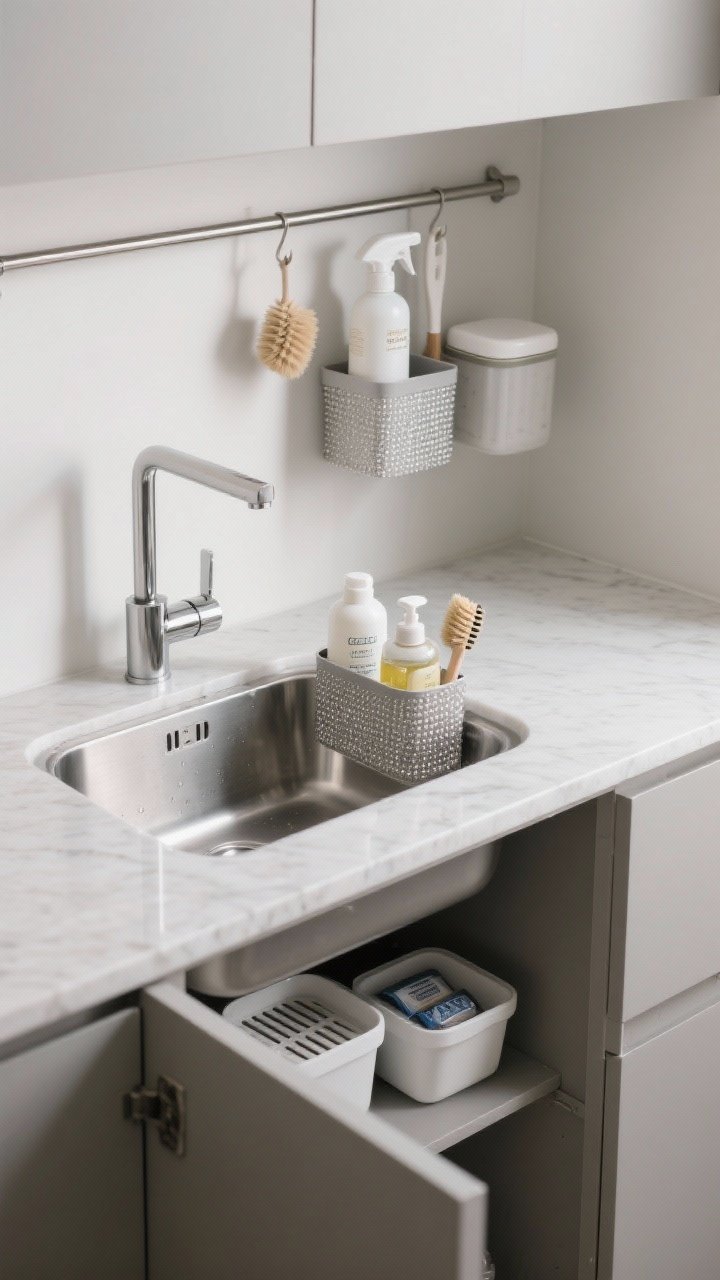
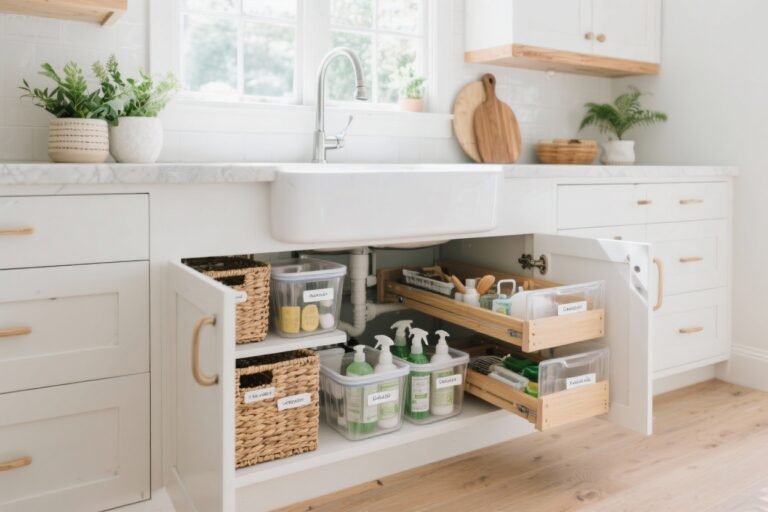
A crowded sink zone slows you down and looks… sticky. Too many bottles, soggy sponges, and no place for dish brushes? That’s bacteria’s favorite party.
Quick Fix
- Use a sink caddy that drains, not a tray that collects goo.
- Install a tension rod inside the under-sink cabinet to hang spray bottles and brushes.
- Corral extras (refills, dishwasher pods) in lidded bins to prevent spills and smells.
Yes, and: One hand soap, one dish soap, one brush. The end. Keep backups stored, not displayed.
7. The Pantry “Mystery Pile” Where Food Goes To Retire
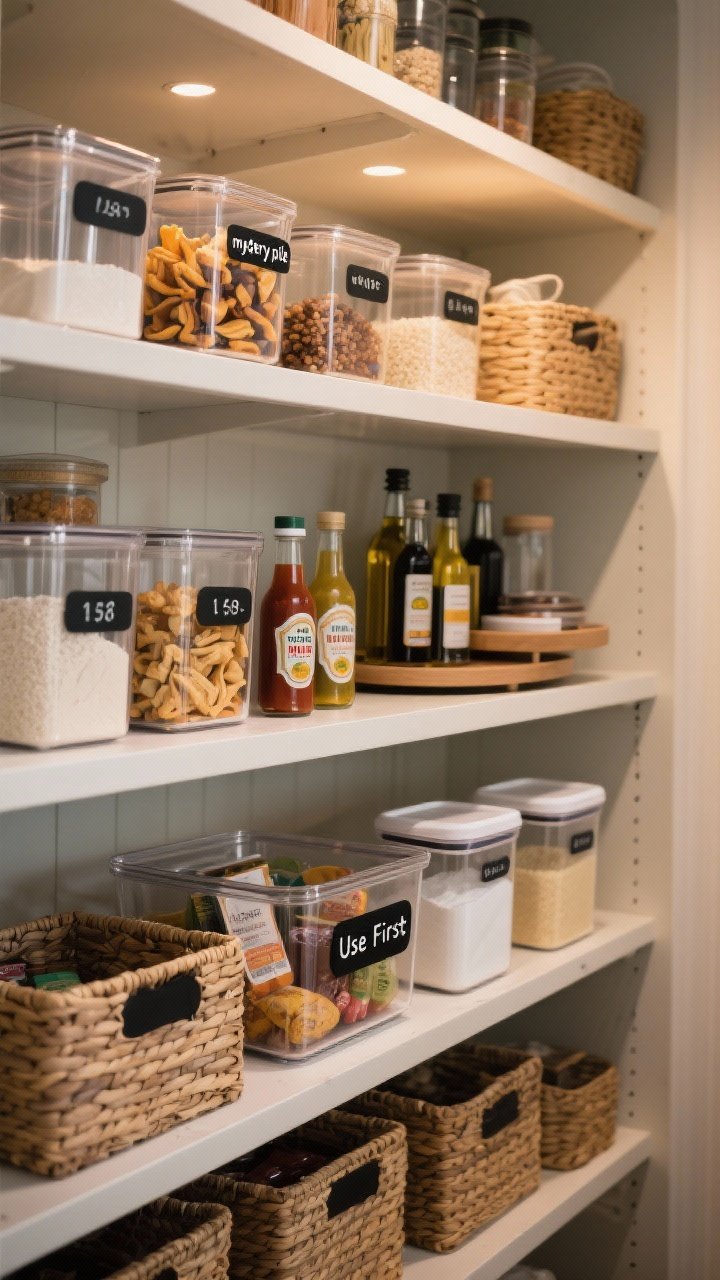
If your pantry has expired soup from 2015, you’re not alone. Overbuying happens when you can’t see what you own. Visibility is everything.
Quick Fix
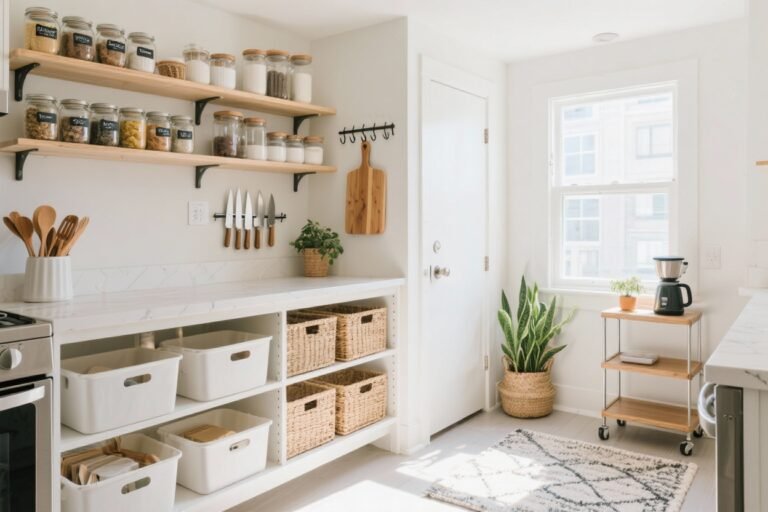
- Use clear bins and lazy Susans for sauces, oils, and snacks.
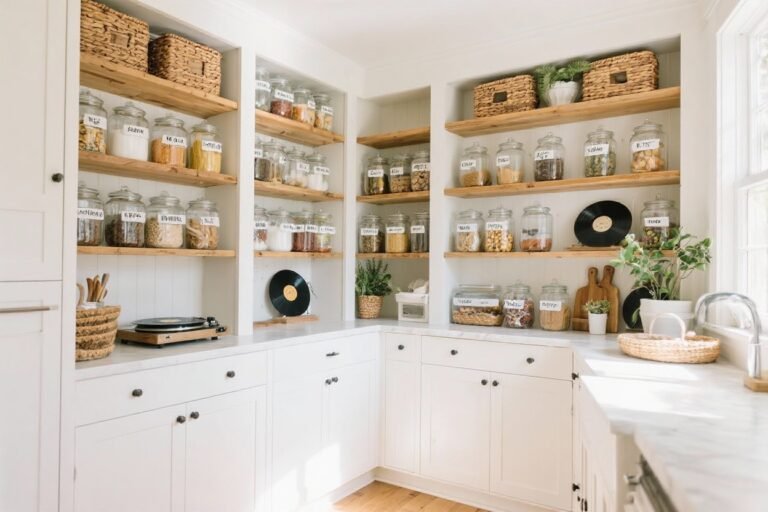
- Decant dry goods (flour, sugar, rice) into airtight containers with labels and dates.
- Designate a “Use First” bin for near-expiry items and open packages.
Routine: Five-minute shelf reset every Sunday. Toss, wipe, restock. Future-you will clap for present-you.
8. Keeping Bulky Appliances on the Counter “Just in Case”

The blender you use twice a month does not deserve permanent counter citizenship. Cluttered counters make your kitchen feel smaller and slow you down.
Quick Fix
- Assign an appliance garage (cabinet with an outlet or a lower cabinet with pull-out shelf).
- Keep only daily-use items out: coffee maker, toaster, maybe a kettle. That’s it.
- Group like-with-like: breakfast appliances together; baking tools together.
FYI: If it’s heavy, it gets a pull-out. If it’s pretty and daily-use, it can stay out.
9. Drawers Without Boundaries (Utensils Playing Musical Chairs)
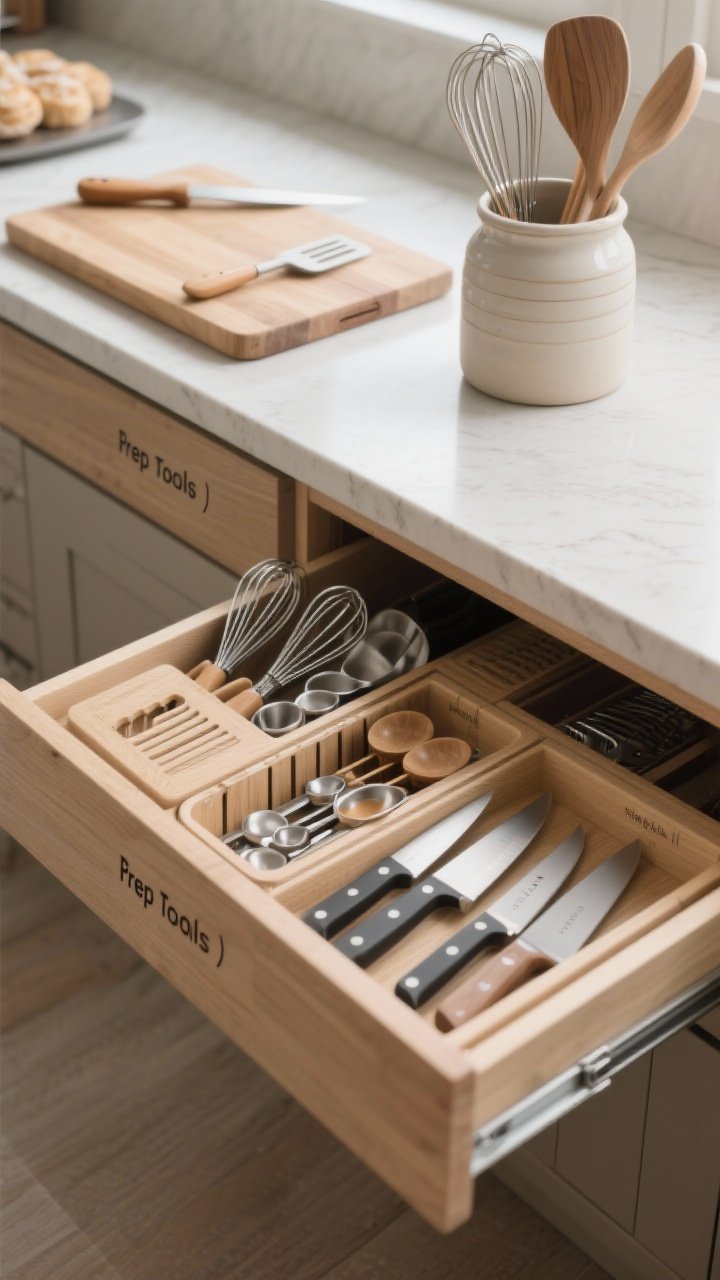
If whisks are mingling with paring knives, chaos is afoot. Unsorted drawers waste time and make prep feel like a scavenger hunt.
Quick Fix
- Use adjustable organizers that fit your exact drawer—no weird gaps.
- Create task-based zones: prep tools near the cutting board, baking tools near the mixer, grill tools by the exit.
- Stand long utensils upright in a counter crock if you’re short on drawer space.
Safety note: Keep knives in a knife block, in-drawer tray, or on a magnetic strip—not loose in a drawer. Your fingers will thank you.
10. Forgetting Workflow: Your Kitchen Triangle Is Crying

When the trash is across the room from prep, you end up doing laps. A smart kitchen follows your cooking flow: grab, prep, cook, plate, clean.
Quick Fix
- Build a prep zone between the fridge and sink: cutting board, knives, towels, trash access.
- Keep spatulas, oils, and seasonings near the stove, not across the room.
- Place plates and bowls near the dishwasher for easy unloading.
Micro-upgrade: Add a slim pull-out trash or a small counter bin near your cutting board. Fewer steps. Less mess.
Bonus Mini-Systems That Change Everything
- Tray Hack: Put coffee gear on a tray. Slide out, make coffee, slide back. Looks tidy, works smarter.
- Meal Prep Bin: Keep commonly used items—olive oil, salt, pepper, garlic—in a portable caddy.
- Label Love: Label shelves, not just containers. Everyone can put things back correctly—magic.
You don’t need a bigger kitchen—you need better boundaries. Start with one zone, set up simple systems, and let the space work for you. You’ll cook faster, clean less, and maybe even like your kitchen again. Sound good? Now go show that junk drawer who’s boss.