10 Clever Gardening Ideas to Grow More in Less Space You’ll Actually Use
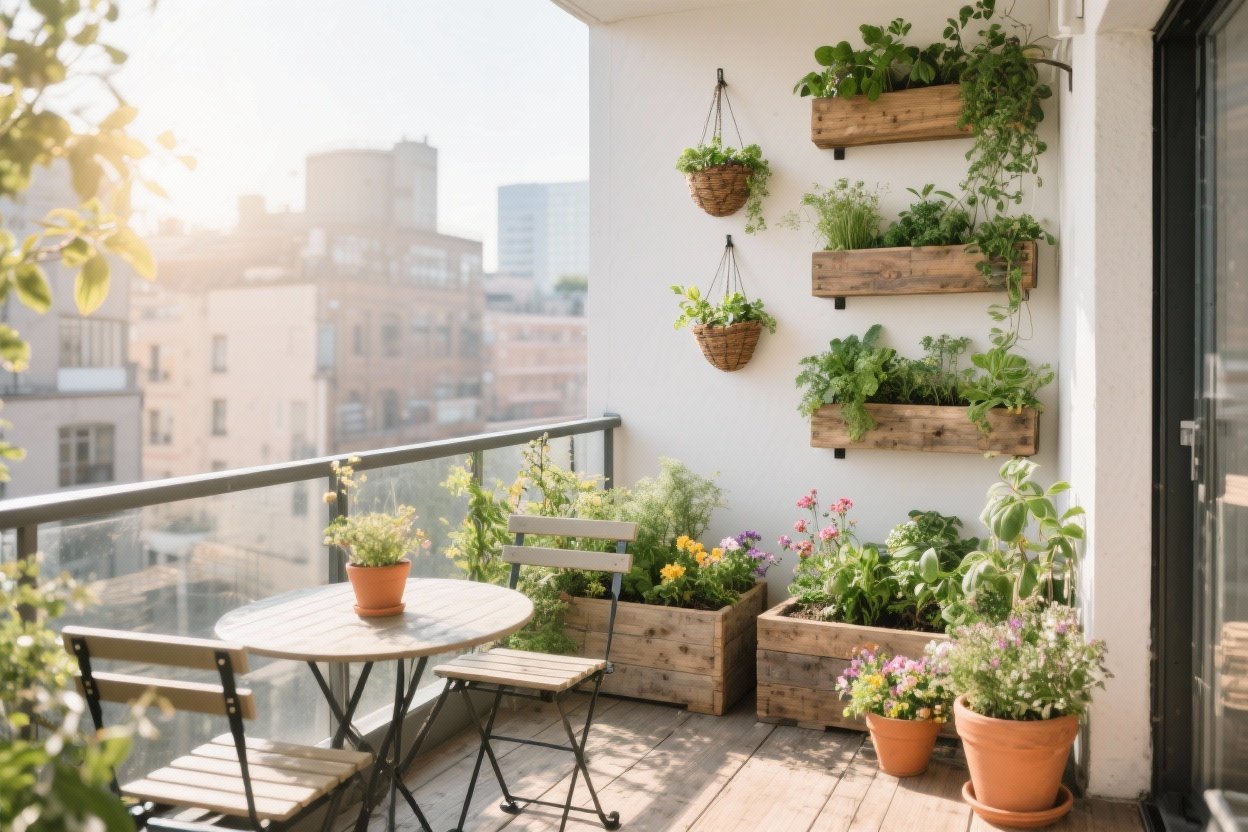
You don’t need an acre to grow a jungle of tomatoes, herbs, and salad greens. You just need smart moves and a little bit of strategy. Think of this as your cheat sheet for squeezing every last leaf out of tiny balconies, patios, side yards—or that strip of sun by your front steps.
Ready to get wildly productive without moving to the countryside? Let’s plant this thing.
Tired of snacking when you’re not even hungry? This reset helps you stop the loop and feel back in control.
A simple reset for moments when cravings take over. Easy to use, easy to repeat, and designed to help you feel satisfied instead of stuck.
1. Go Vertical, Not Viral (But Maybe Both)
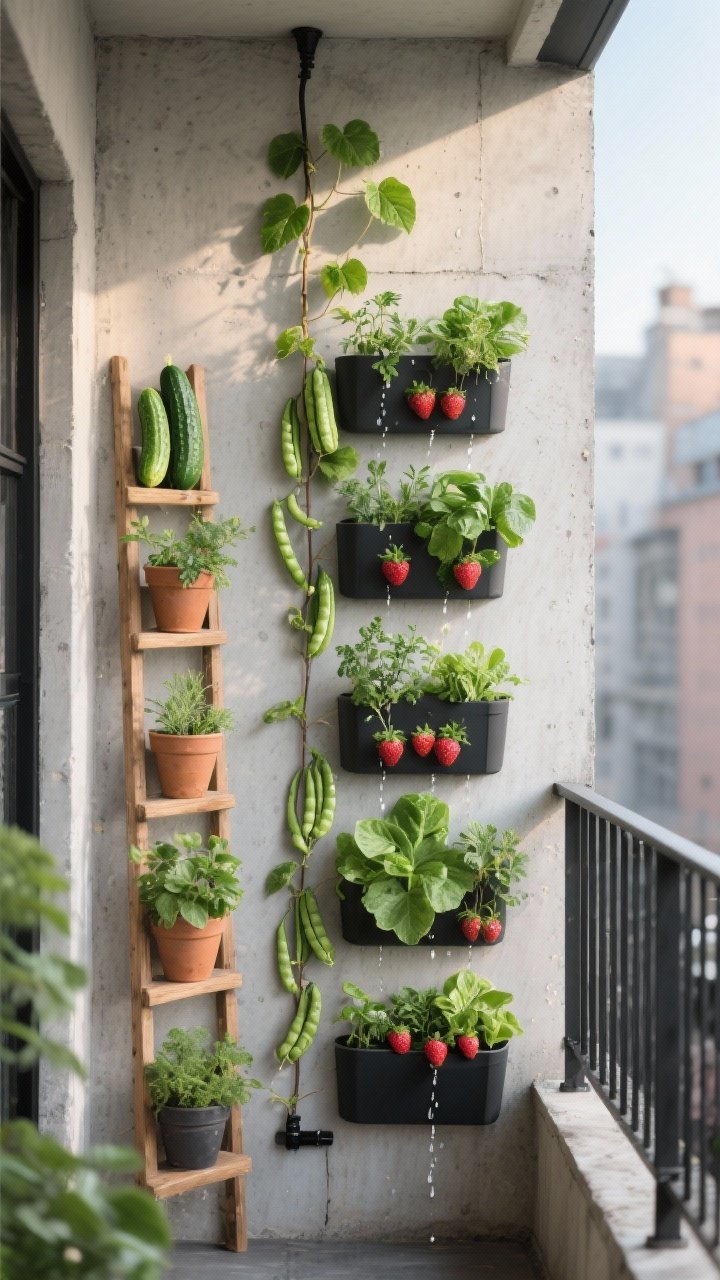
When floor space is precious, your walls and fences are basically real estate gold. Use the vertical plane to stack your harvest, and you’ll be shocked at how much you can grow.
How to Do It
- Wall planters: Mount pockets or modular planters for herbs, strawberries, and leafy greens.
- Trellises: Train cucumbers, peas, and cherry tomatoes upward—less disease, more airflow.
- Ladders + shelves: Repurpose a wooden ladder or tiered shelving for pots and trays.
Pro tip: Choose compact or vining varieties, and add a simple drip line to the top—gravity does the rest. Bonus: vertical gardens look ridiculously pretty, IMO.
2. Tiered Planters = Tetris for Plants
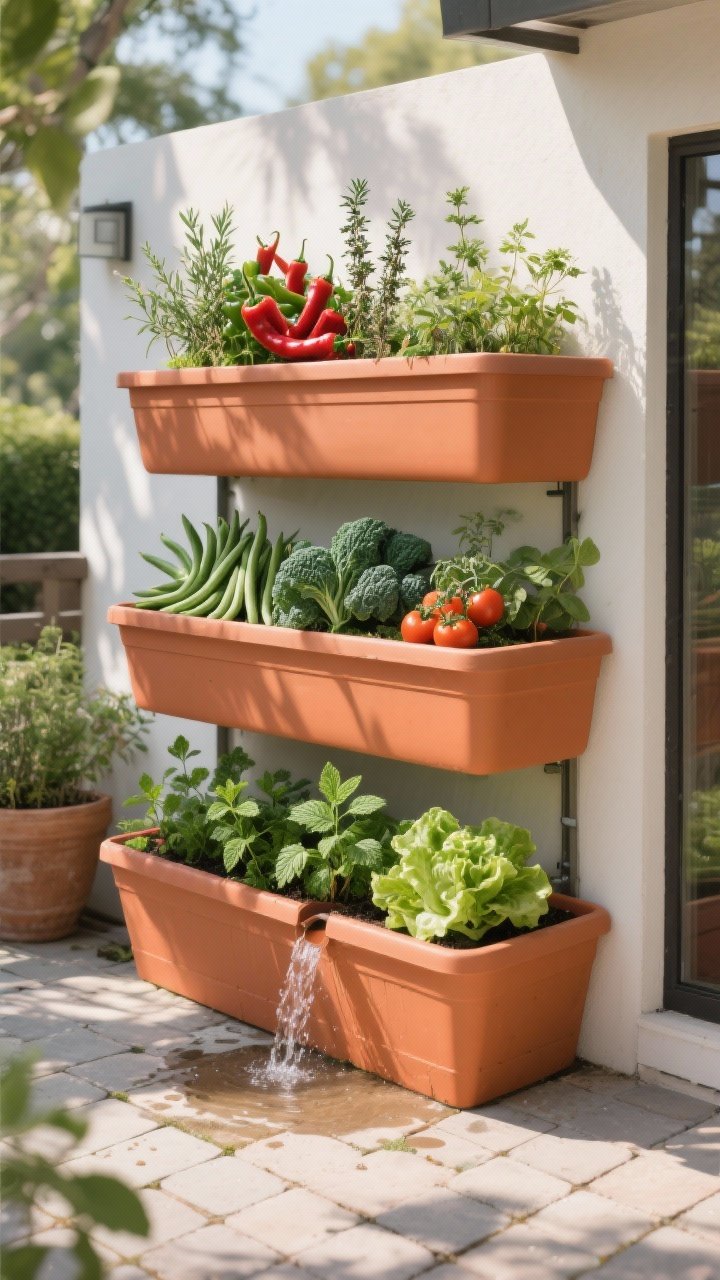
Stacking planters lets you layer crops by sunlight and reach. It’s like bunk beds for basil (the good kind).
Best Plants for Tiers
- Top tier (full sun): Hot peppers, thyme, oregano.
- Middle: Bush beans, kale, dwarf tomatoes.
- Bottom (shadier + moist): Mint (contained!), parsley, lettuce.
Why it works: You’re capturing vertical light and using gravity-fed watering. Place thirstier plants on lower levels so runoff helps them out. Efficient and low-drama.
Transform Your Home With 7,250+ Stunning Landscaping Designs—No Expensive Designers Needed!
- 🌿 Access 7,250+ stunning landscaping designs.
- 💰 Save thousands—no pro designer needed.
- 🏡 Plans for gardens, patios, walkways, and more.
- ✨ Simple, beginner-friendly DIY layouts.
- 🛠️ Customize any design to fit your yard.
3. The Square-Foot Garden That Never Quits
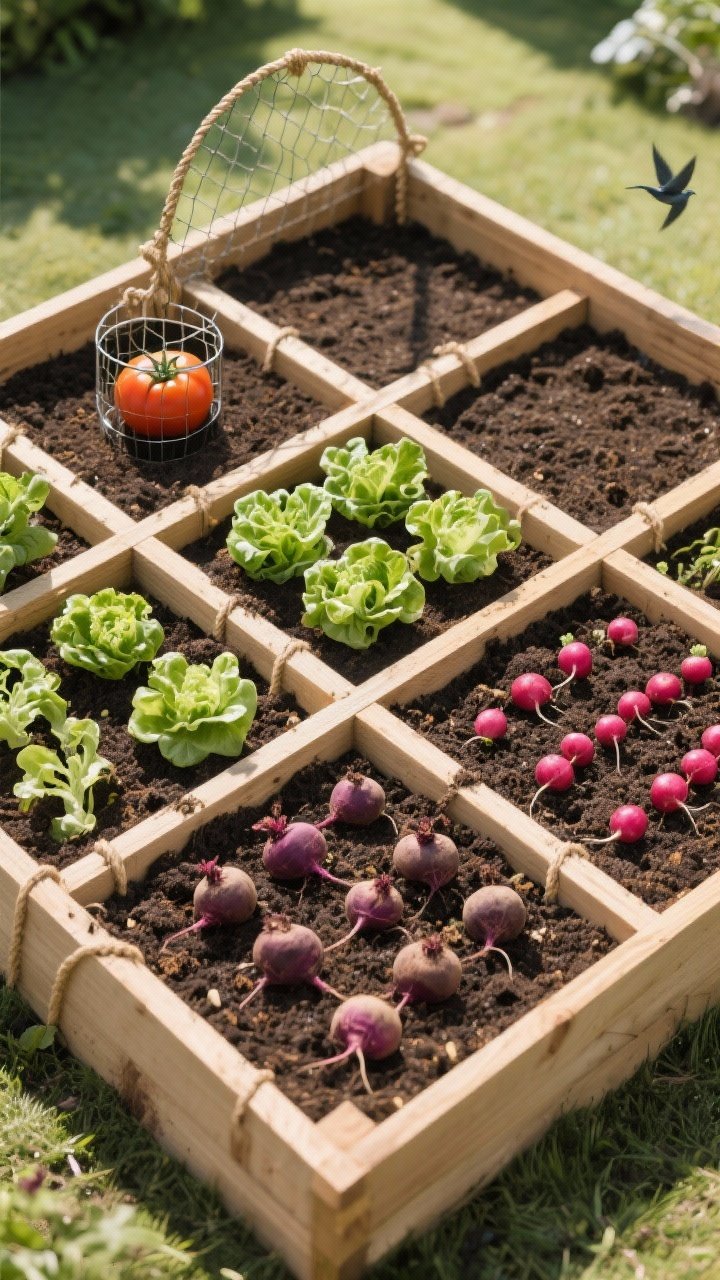
Square-foot gardening is the Marie Kondo of plots: neat, tidy, and crazy productive. You divide a raised bed into 1-foot squares and pack plants in based on their size.
Quick Setup
- Build a 4×4 raised bed (any small size works) and lay a grid with wooden lath or twine.
- Match spacing: 1 tomato per square, 4 lettuces, 9 beets, 16 radishes. Instant efficiency.
- Use good soil: A fluffy mix (compost + coco coir + vermiculite) gives roots room to party.
FYI: Add a simple hoop or net above the bed to support climbers and keep birds from “sampling.”
4. Succession Planting = More Harvest, Less Waiting
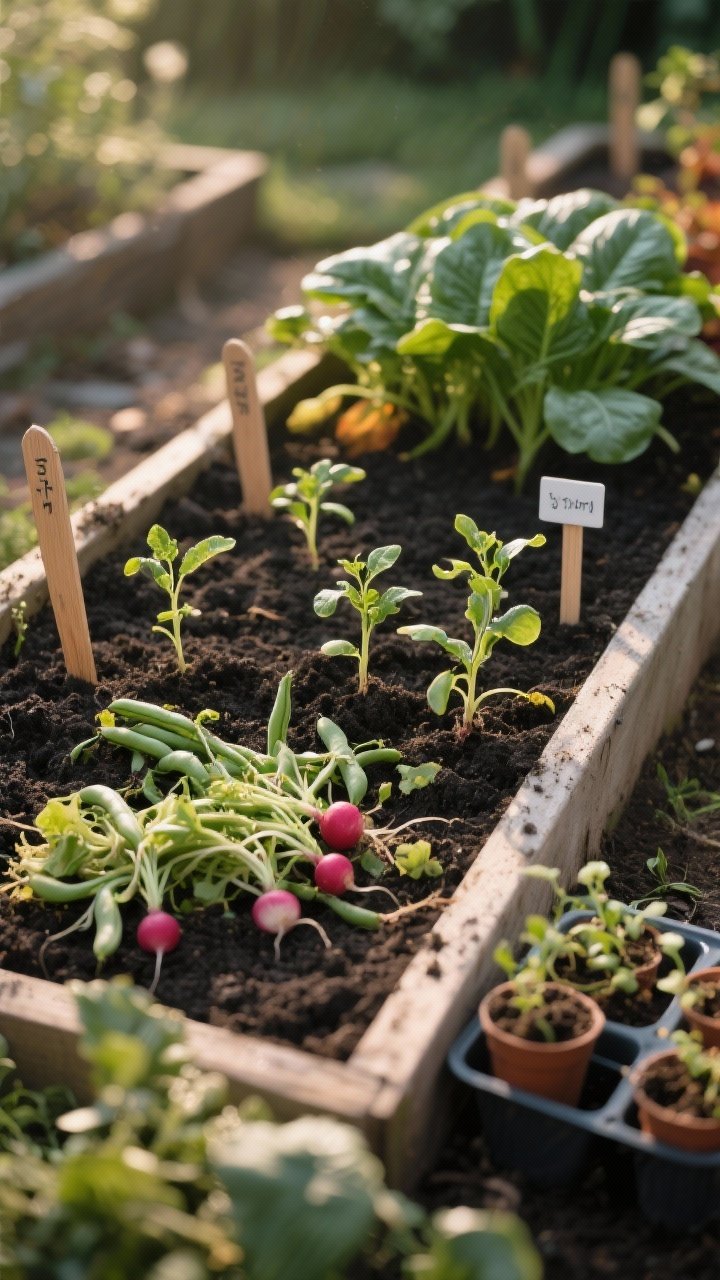
The secret to nonstop salads and constant color? Plant in waves. As one crop finishes, another takes its place.
Easy Successions
- Spring: Radishes → Summer: Bush beans → Fall: Spinach.
- Spring: Peas → Summer: Cucumbers → Fall: Garlic.
- Every 2-3 weeks: Re-seed lettuce so you never run out.
Pro tip: Keep a few seedlings on standby in small pots. When something fades, plug the hole immediately. No downtime.
5. Companion Planting With Benefits
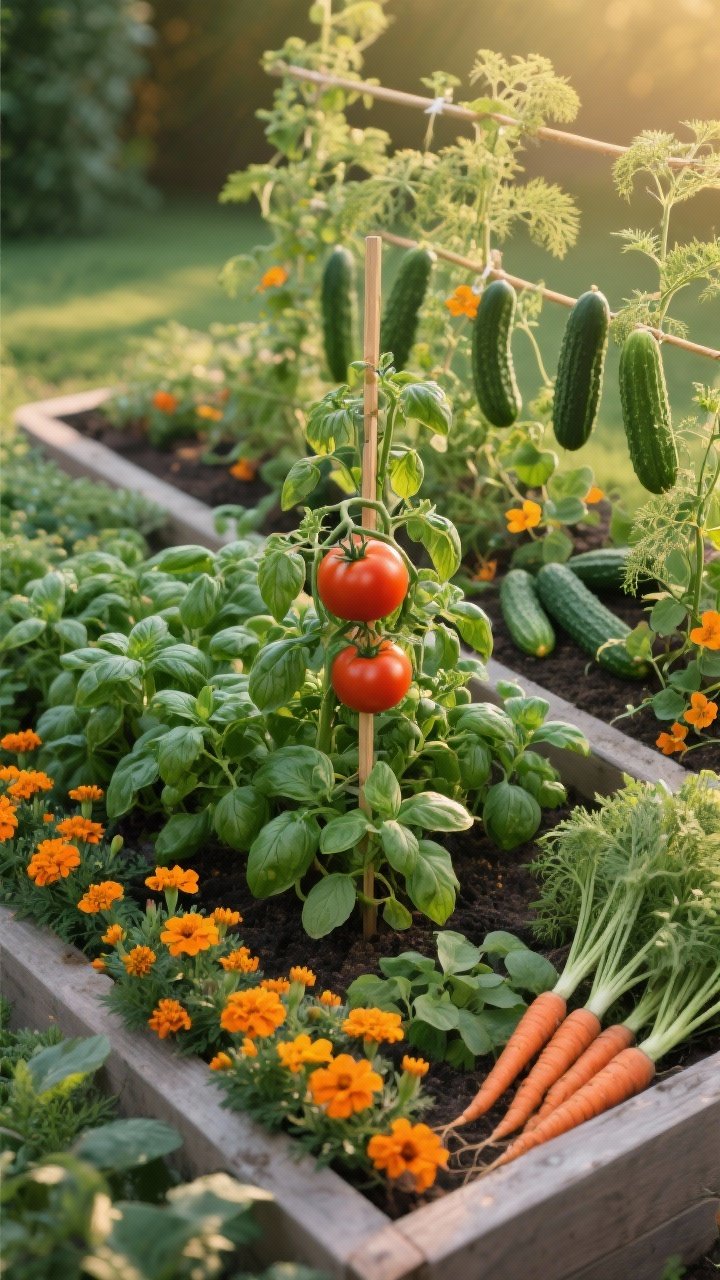
Some plants are just better together. Pair them for pest control, better flavor, and maximum space use.
Matchmaking That Works
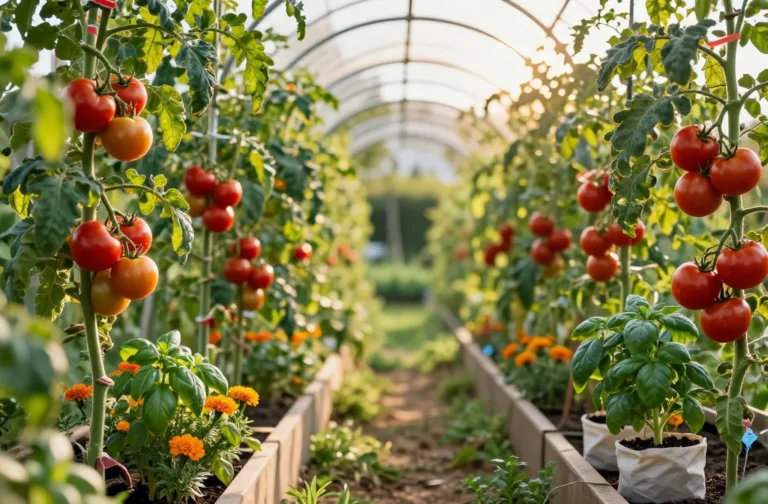
- Tomato + basil + marigold: Basil boosts flavor; marigolds deter pests. Also cute.
- Cucumber + dill + nasturtium: Dill attracts pollinators; nasturtium traps aphids.
- Carrot + spring onions: Onions confuse carrot flies. The drama ends.
Layer smart: Plant tall + medium + low crops together to use every inch of sun and soil. It’s mini guild gardening without the intimidation factor.
6. Container Gardening, But Make It Strategic
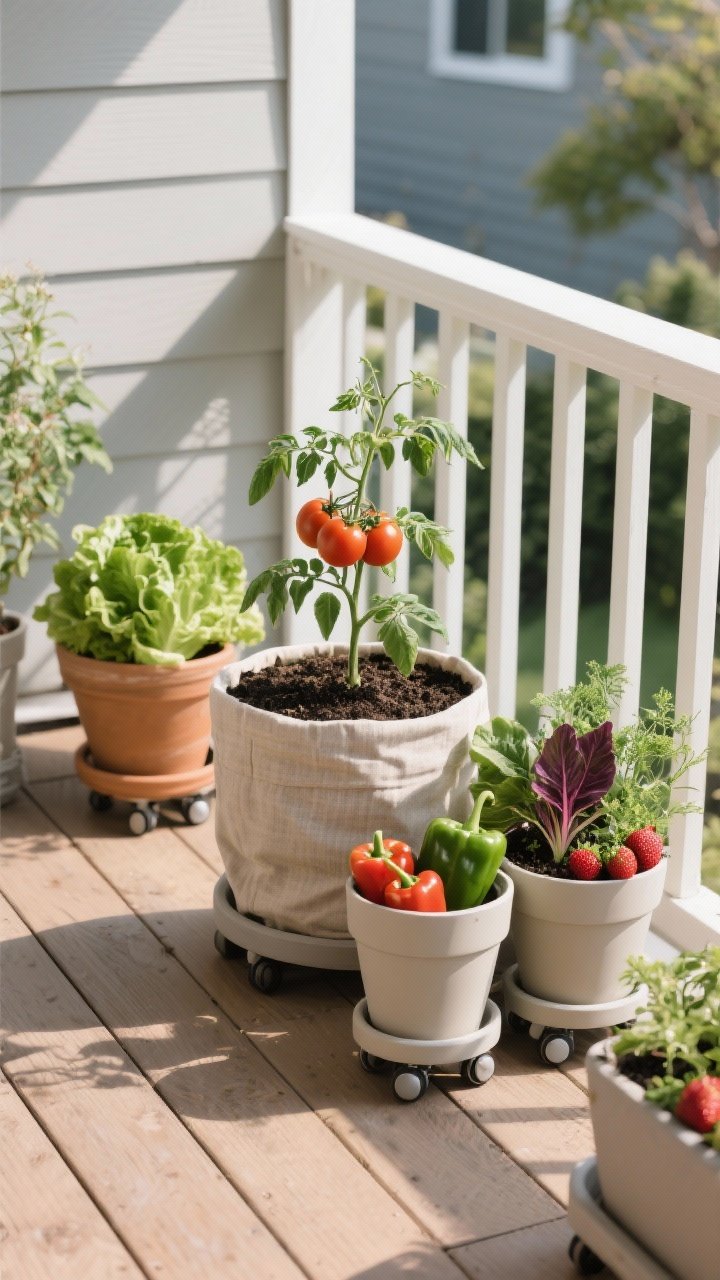
Containers are portable, flexible, and perfect for renters. But the trick is using the right shape and soil to avoid sad, thirsty plants.
Container Rules That Actually Matter
- Go big: More soil = fewer water swings. Think 5 gallons for tomatoes, 2-3 for peppers.
- Choose light pots: Fabric or resin planters keep roots cooler and are easy to shuffle.
- Use potting mix, not garden soil: It drains better and keeps roots happy.
- Add wheels or caddies: Track the sun across seasons—yes, you’re a plant stylist now.
What to grow: Dwarf tomatoes, peppers, lettuce, chard, strawberries, herbs. If you can’t eat it, at least make it pretty.
7. Grow Up the Railings, Arches, and Everything Else
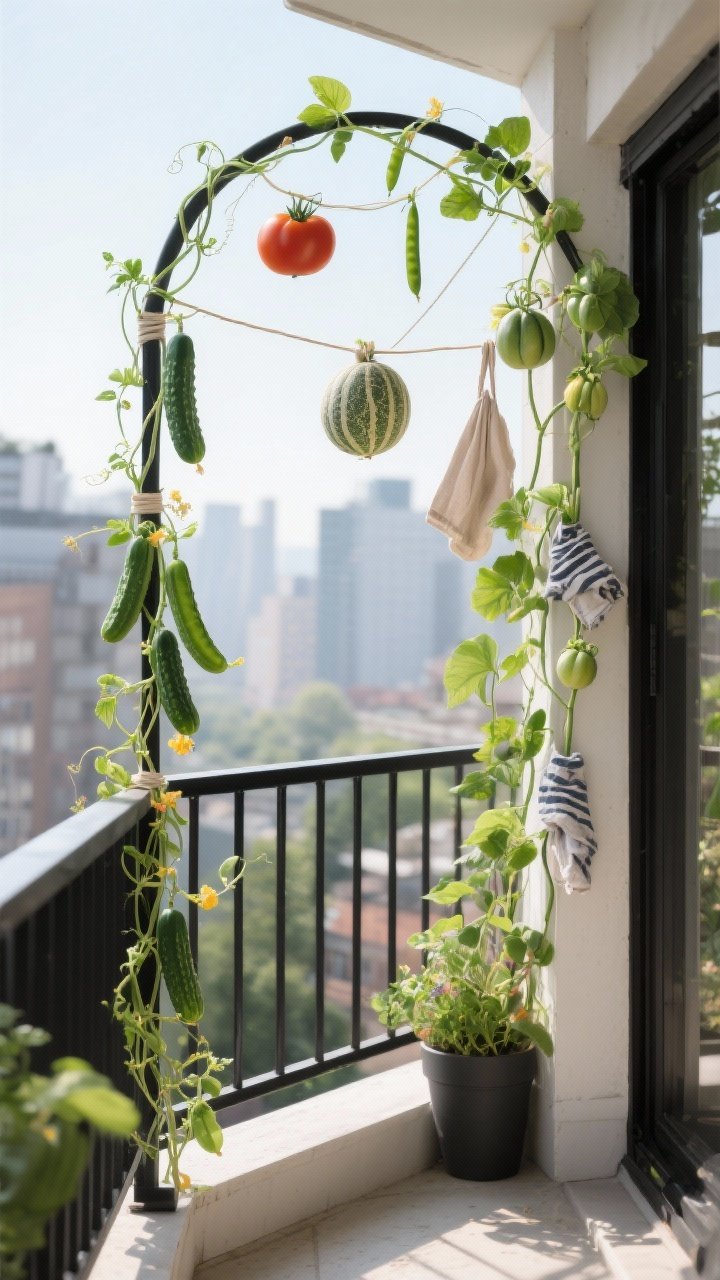
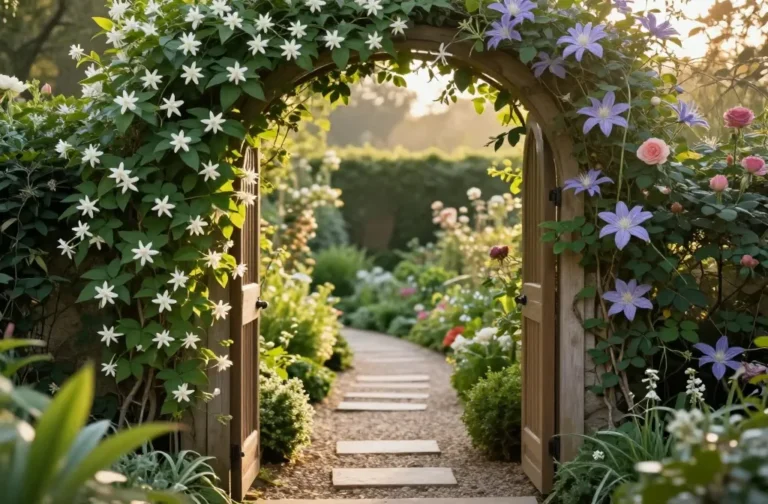
Any vertical support can be a garden: balcony railings, pergolas, over-door arches. Train climbers and you’ll free up floor space instantly.
Climbing All-Stars
- Peas + beans: Fast-growing, productive, and kind of adorable.
- Cucumbers: Opt for smaller varieties like ‘Spacemaster’ or ‘Patio Snacker.’
- Indeterminate tomatoes: Use string trellising—tie a line up high and wind as they grow.
- Melons (mini!): ‘Minnesota Midget’ or ‘Sugar Baby’ with slings to support fruit. Extra credit.
Pro tip: Use soft plant ties or strips of old t-shirts so you don’t strangle stems. Yes, plants have necks. Sort of.
8. Microgreens and Cut-And-Come-Again Greens
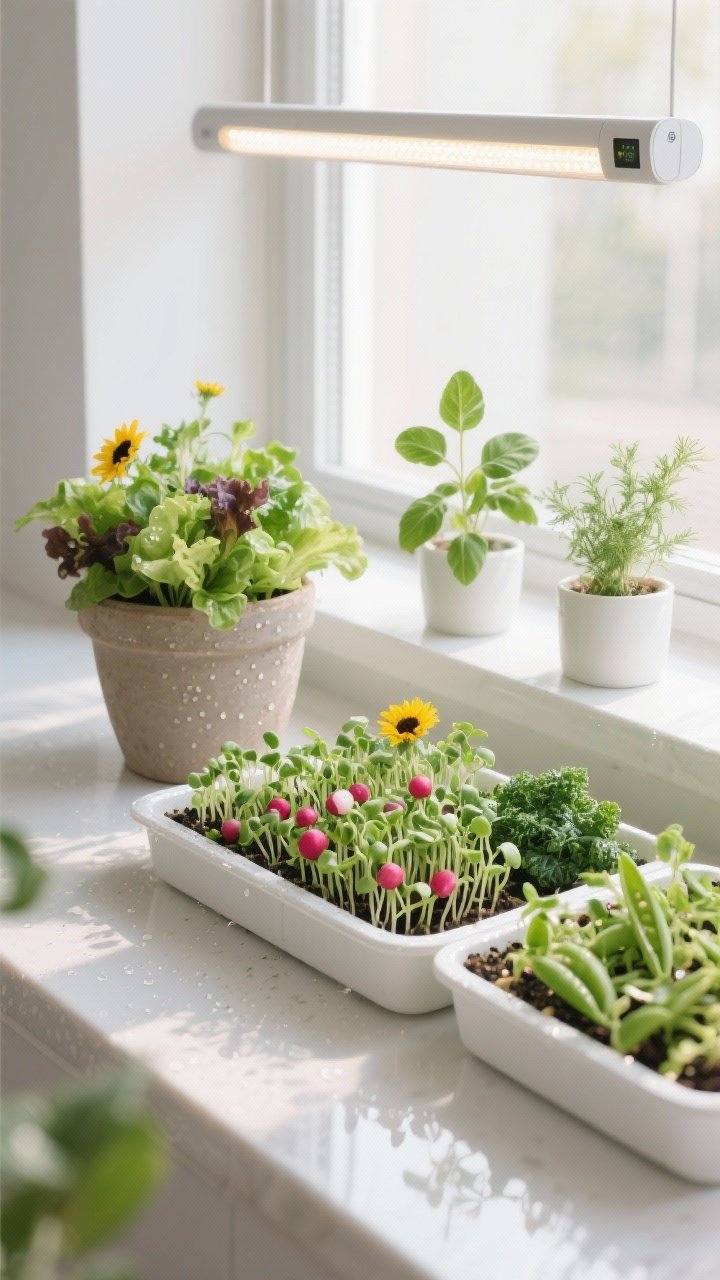
When space is tiny, go for quick wins. Microgreens and baby greens give you multiple harvests with almost zero effort.
How to Harvest More, Faster
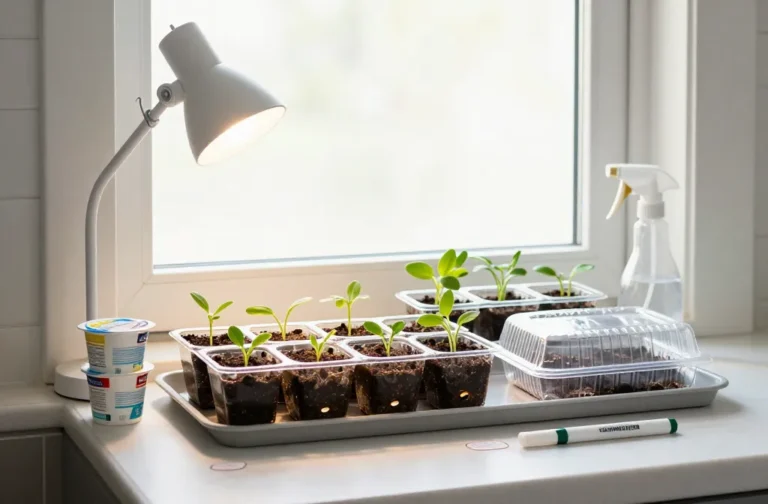
- Microgreens: Sow thickly in shallow trays; harvest in 10–14 days. Try radish, pea, sunflower, kale.
- Baby salad mixes: Cut with scissors when 3–4 inches tall; they regrow 2–3 times.
- Herb trios: Grow basil, cilantro, and dill in a single wide pot for constant snips.
FYI: A sunny windowsill works if you don’t have outdoor space. Add a small grow light and you’re basically a farmer.
9. The Double-Decker Soil Trick (Interplanting)
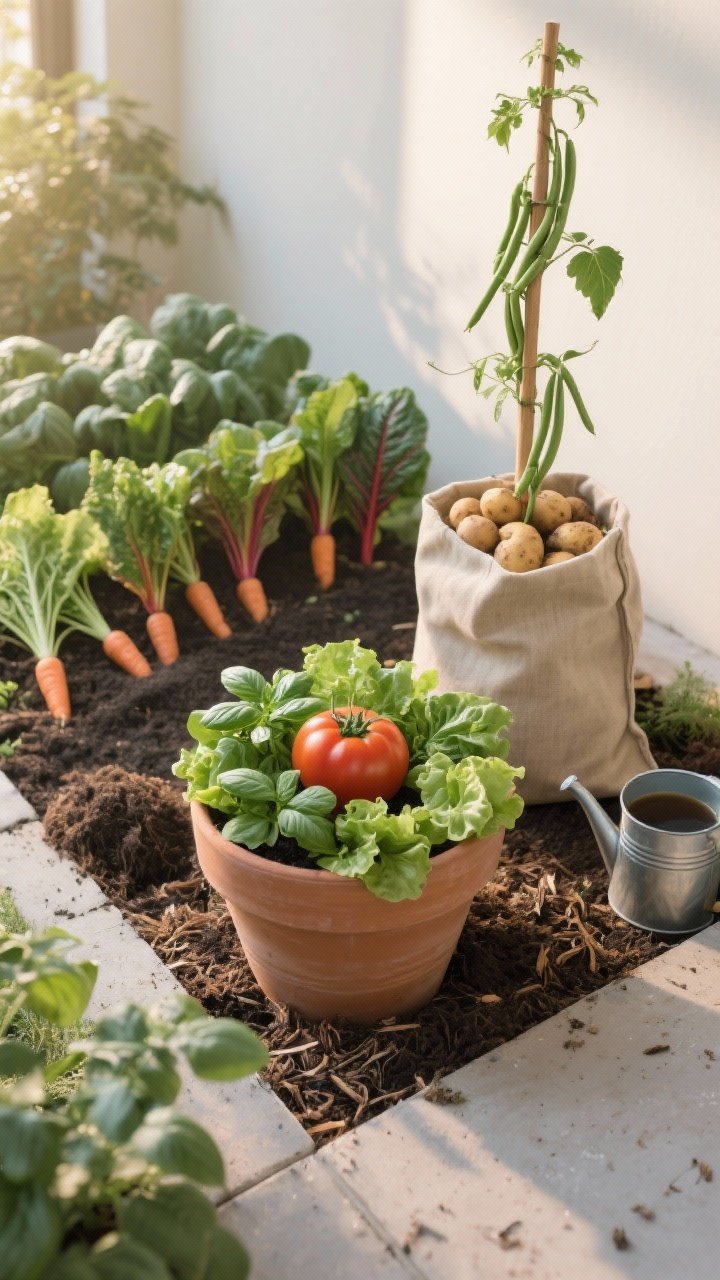
Different plants root at different depths. Use that to your advantage and pack more into the same pot or bed without overcrowding.
Dynamic Duos
- Deep + shallow: Tomatoes with surface-rooted basil and lettuce around the base.
- Tubers + climbers: Potatoes in a grow bag with pole beans up a central stake.
- Roots + leafies: Carrots under taller chard—carrots go down, chard goes up.
Why it works: You’re splitting the soil horizons so roots aren’t fighting. Keep fertility up with compost tea or slow-release organic fertilizer.
10. Smart Watering and Light Hacks = Bigger Yields
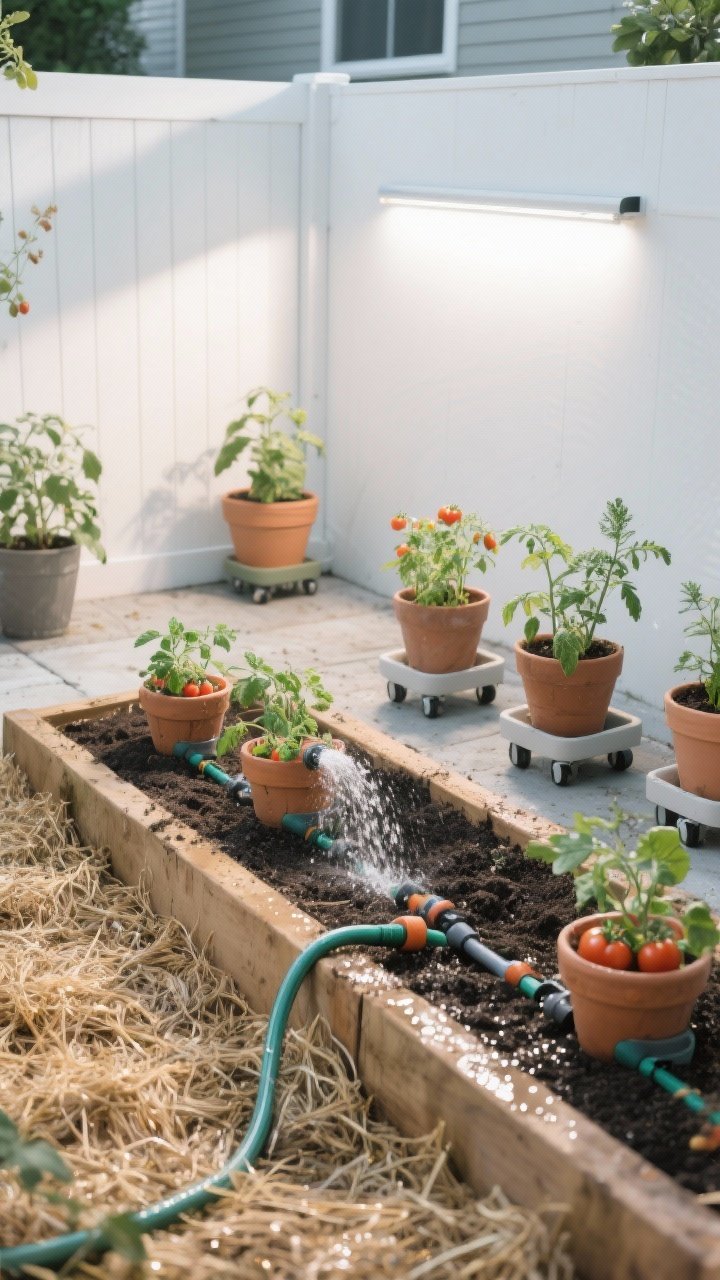
Dialing in water and light is how small gardens punch above their weight. Don’t leave it to chance (or rain dances).
Water Like a Pro
- Drip irrigation or soaker hoses: Direct water to roots, not leaves. Less waste, fewer diseases.
- Mulch, always: Use shredded leaves, straw, or bark to lock in moisture and keep soil cooler.
- Self-watering containers: Great for tomatoes and herbs if you travel or forget. No judgment.
Light Moves
- Chase the sun: Put containers on rolling caddies and rotate weekly.
- Reflectors: A white wall or reflective panel bounces light back onto plants—low-tech, high win.
- Supplement indoors: A simple LED grow light extends “daylight” for seedlings and microgreens.
Bonus efficiency: Water in the morning, harvest in the cool hours, and prune to improve airflow. Tiny gardens love good timing.
Quick Troubleshooting
- Leggy plants? They need more light. Move them or boost with LEDs.
- Yellowing leaves? Could be overwatering or nutrient deficiency. Check drainage first, then feed.
- Slow growth? Pots might be root-bound. Up-pot or trim roots when repotting.
Small spaces don’t limit you—they focus you. With verticals, smart pairings, and a little succession magic, you can harvest like a pro from a balcony or a tiny backyard. Start with one or two ideas, then stack more as you go. Your future salads are already grateful.