Insanely Easy 10 Patio Vegetable Garden Ideas to Try Now
You don’t need a backyard to grow ridiculous amounts of fresh veggies. With a few smart moves, your patio can crank out salads, salsas, and pesto like a tiny farm with Wi‑Fi. These ideas squeeze maximum harvest from minimal space while keeping things pretty and low-maintenance. Ready to snack straight off the vine?
1. Vertical Veggie Walls That Double As Privacy Screens
Tired of snacking when you’re not even hungry? This reset helps you stop the loop and feel back in control.
A simple reset for moments when cravings take over. Easy to use, easy to repeat, and designed to help you feel satisfied instead of stuck.
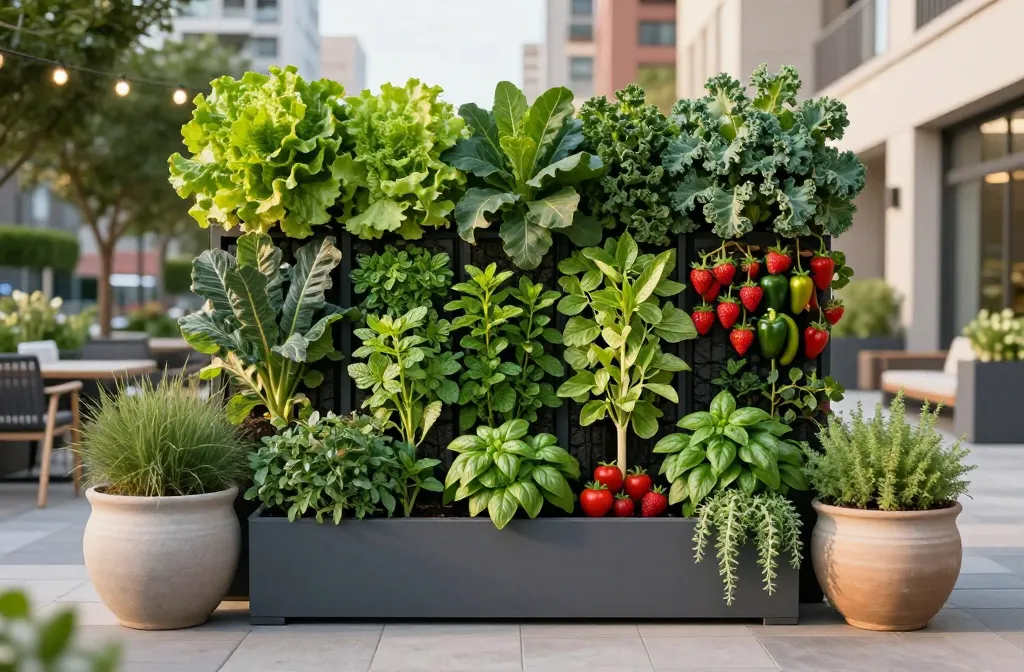
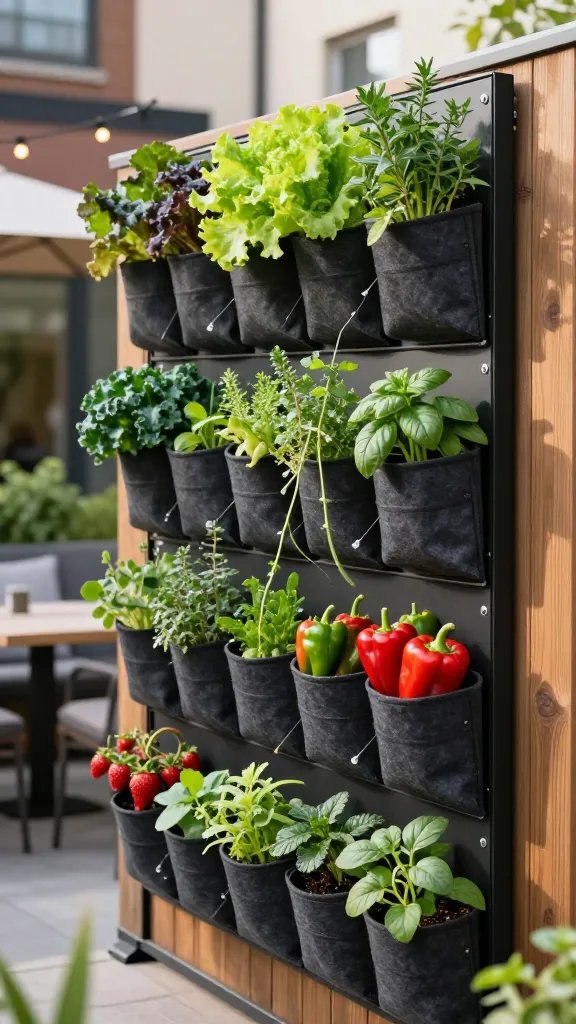
When your square footage says “nope,” go vertical. A veggie wall turns empty railing space or a boring fence into a lush, edible backdrop that also blocks nosy neighbors. It’s functional, gorgeous, and super efficient.
Great Crops For Vertical Setups
- Leafy greens: lettuce, spinach, kale
- Herbs: basil, mint, oregano, thyme
- Compact veggies: strawberries, dwarf peppers, bush beans
Use pocket planters, stacked felt bags, or modular wall units with built-in irrigation. Keep shallow-rooted plants up top and thirstier ones near the water source. You’ll get fresh greens within arm’s reach—and a leafy wall that looks like a plant Instagram flex.
Best when you want maximum harvest per square foot with a side of shade and privacy.
2. Container Gardens With Thriller, Filler, Spiller Magic
Transform Your Home With 7,250+ Stunning Landscaping Designs—No Expensive Designers Needed!
- 🌿 Access 7,250+ stunning landscaping designs.
- 💰 Save thousands—no pro designer needed.
- 🏡 Plans for gardens, patios, walkways, and more.
- ✨ Simple, beginner-friendly DIY layouts.
- 🛠️ Customize any design to fit your yard.
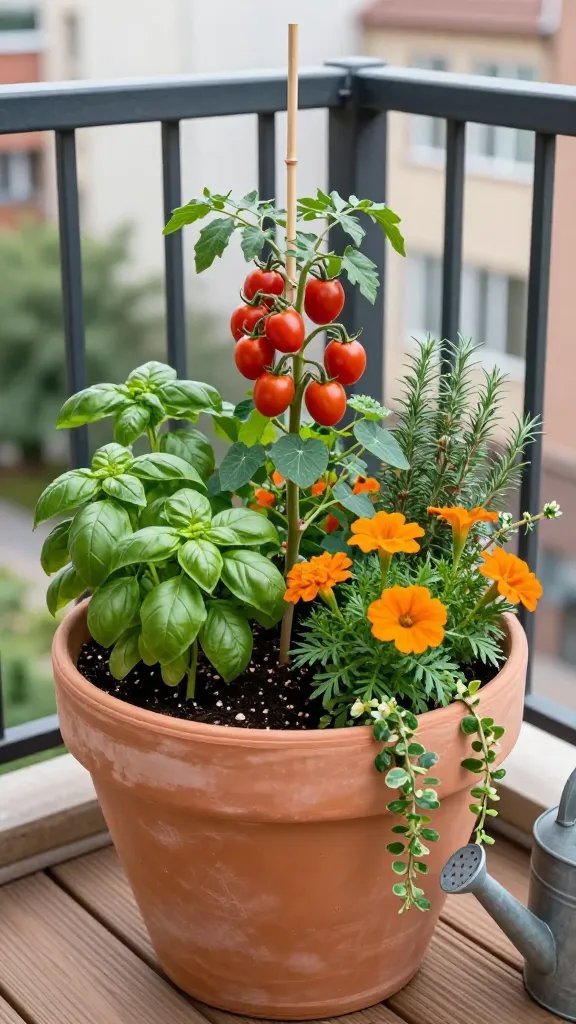
Big containers = big yields, even on a tiny patio. Use the “thriller, filler, spiller” method to build pots that look designer and feed you nonstop. It keeps plants balanced and makes watering way easier.
How To Build The Perfect Pot
- Thriller: a star plant like a dwarf tomato or patio eggplant
- Filler: bush basil, parsley, or marigolds (bonus: marigolds deter pests)
- Spiller: trailing thyme, creeping rosemary, or nasturtiums
Choose 15–20 inch wide containers with drainage holes and a high-quality potting mix (not garden soil). Add slow-release fertilizer and top with mulch to keep moisture steady. You’ll get style and salads in one tidy package—seriously.
Perfect if you want low-maintenance abundance that looks intentional, not chaotic.
3. Rail Planters That Don’t Steal Floor Space
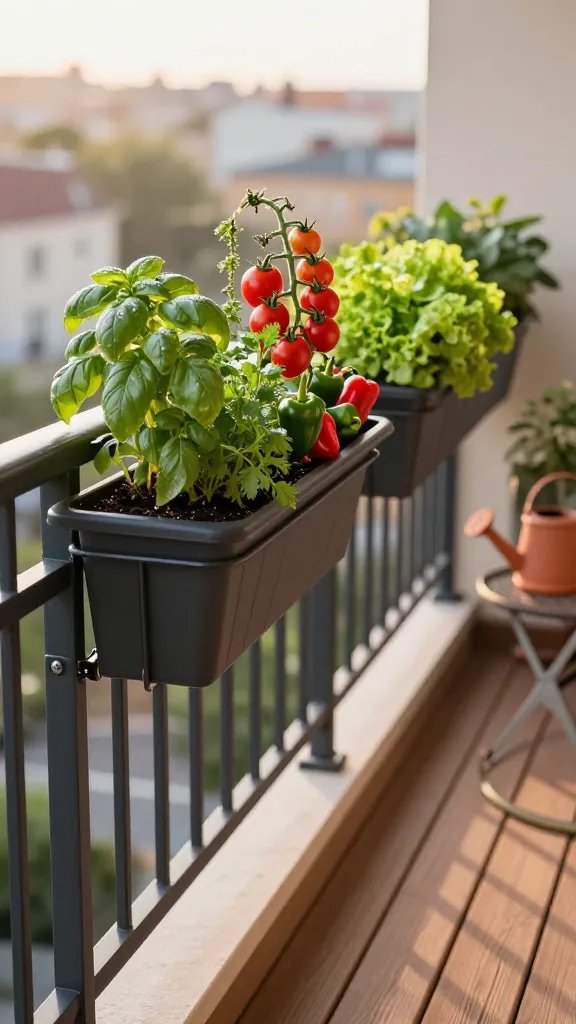
Rail planters clip onto balcony or deck rails and keep your walkway clear. They turn dead air into fresh herbs, cherry tomatoes, and baby greens without tripping hazards. Bonus: the height makes harvesting a total breeze.
Tips For Rock-Solid Rail Planters
- Pick adjustable brackets that fit your rail style (round, flat, or wide)
- Use lightweight potting mix and add water-retention crystals if you get hot sun
- Plant compact varieties: patio tomatoes, dwarf peppers, cut-and-come-again lettuce
Install a drip line or self-watering inserts if your summers get spicy. You’ll water less and harvest more without sacrificing precious square footage.
Awesome for tiny balconies where every inch counts.
4. Tiered Shelving For Sun-Chasing Plants
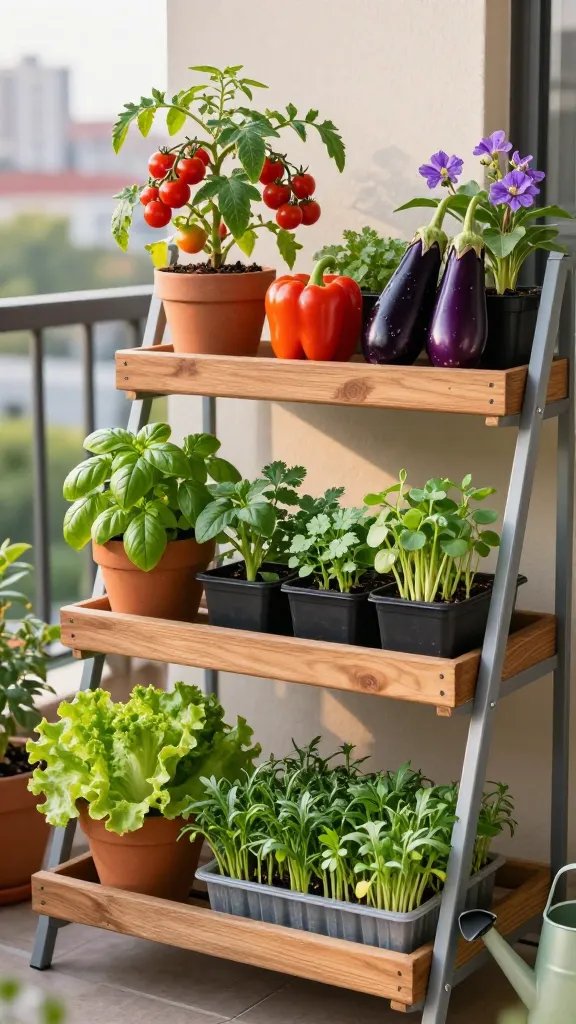
Tiered plant shelves let you layer crops by height and sun needs. Top shelf gets the heat-lovers, bottom shelf gets partial shade queens. It creates a neat, grocery-aisle vibe you’ll want to show off.
Smart Shelf Setup
- Top: tomatoes, peppers, eggplants
- Middle: basil, cilantro, bush beans
- Bottom: lettuce, arugula, microgreens
Anchor shelves so wind doesn’t tip things over and leave space between tiers for airflow. Rotate pots weekly if sunlight hits at an angle. You’ll maximize your harvest without the cluttered look—trust me, it’s a mood.
Use this when your sun exposure changes through the day and you want control.
5. Grow Bags For Monster Roots And Easy Rearranging
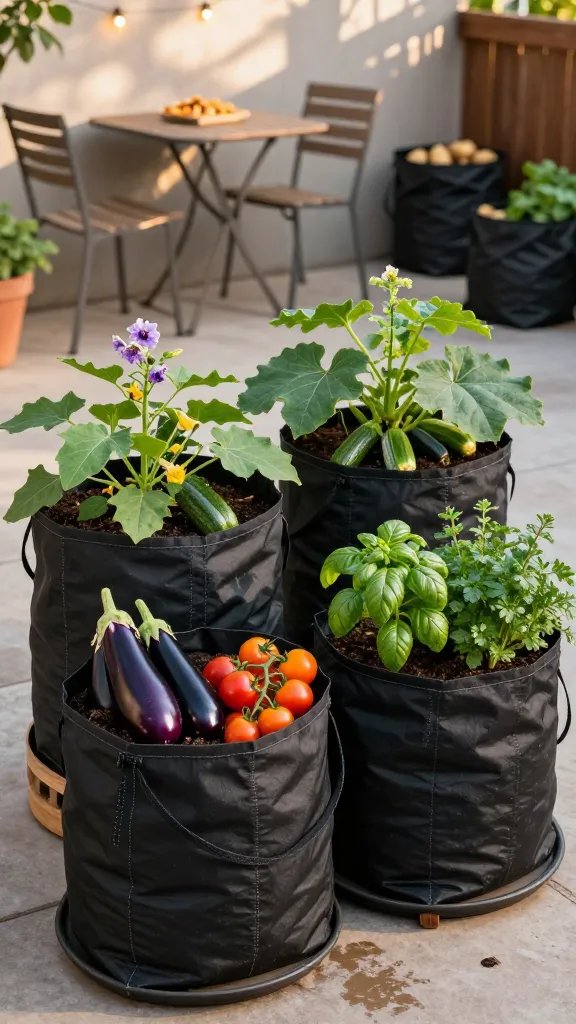
Grow bags give roots great airflow and prevent soggy soil. They’re lightweight, affordable, and you can shuffle them around when the sun shifts—or when you need patio space for friends and snacks. They also fold flat for winter storage. Win-win-win.
What To Grow In Which Size
- 5–7 gallon: peppers, dwarf tomatoes, herbs
- 10–15 gallon: eggplants, bush cucumbers, multiple lettuces
- 20+ gallon: potatoes, zucchini, compact squash
Use sturdy handles, add a saucer or plant caddy to protect your deck, and water slowly so it soaks in evenly. Expect happy roots, fewer diseases, and shockingly big yields for the footprint.
Best when you want flexibility and serious production without heavy pots.
6. Trellised Climbers That Turn Up The Drama
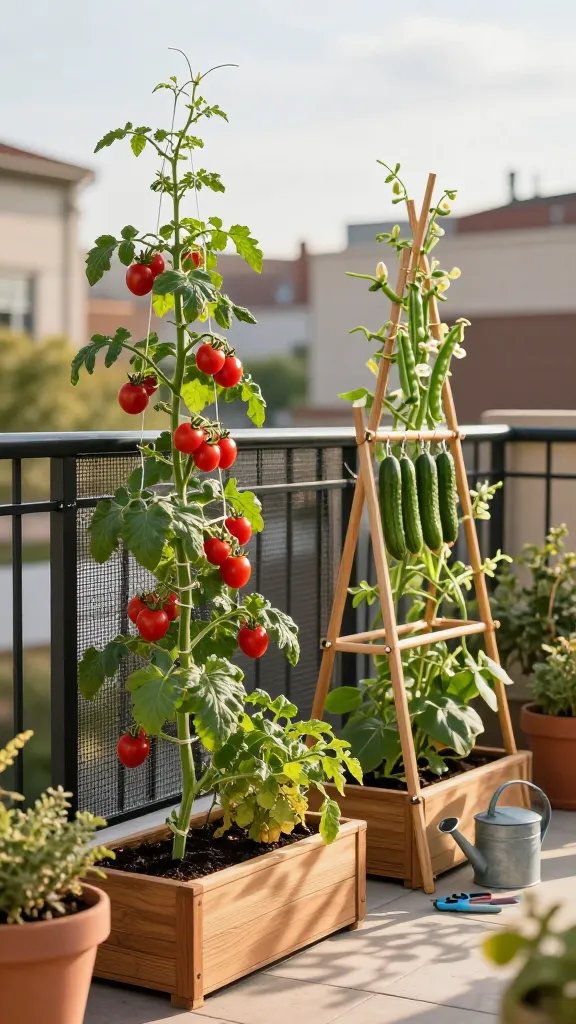
Climbing veggies add height, shade, and plenty of food without hogging floor space. A simple trellis transforms patio edges into living green towers. Looks fancy, works hard—IMO the best upgrade per dollar.
Top Climbers For Patios
- Cherry tomatoes on string trellises or mesh panels
- Cucumbers on A-frames to keep fruit straight and clean
- Pole beans and peas for fast growth and easy picking
Secure trellises to planters or railings so wind doesn’t throw a tantrum. Prune lightly to keep airflow and encourage fruit. You’ll harvest more in less space and get that lush, secret-garden vibe.
Ideal for sunny patios where vertical real estate beats floor space.
7. Salad Bar Boxes For Cut-And-Come-Again Harvests
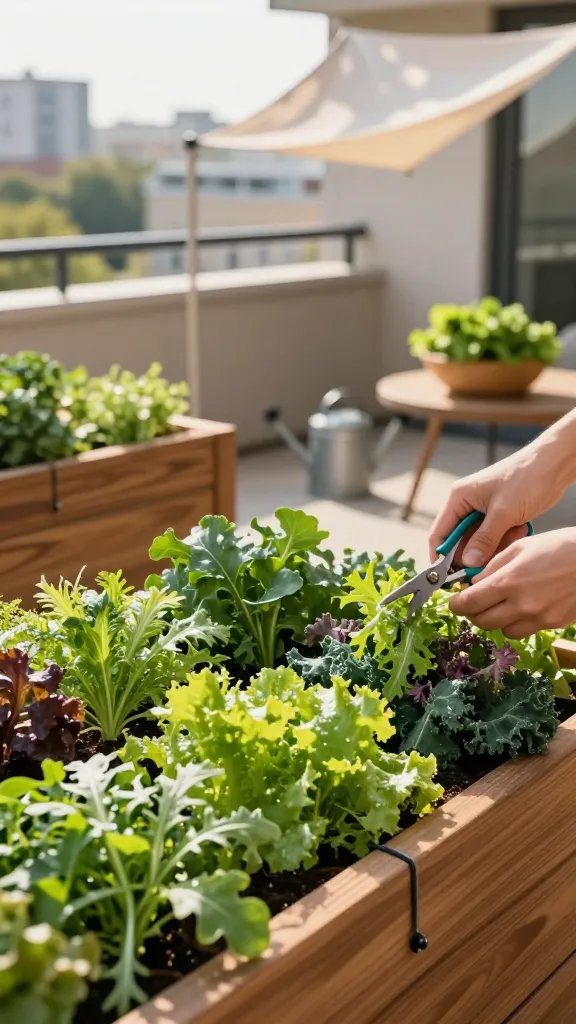
Build a dedicated “salad bar” with shallow planters packed with mixed greens. You’ll snip fresh salads every few days and skip sad grocery clamshells forever. It’s fast, pretty, and ridiculously satisfying.
How To Keep It Producing
- Sow every 2–3 weeks for continuous harvest
- Use blends: mesclun, arugula, baby kale, mizuna
- Harvest with scissors, leaving 1–2 inches so leaves regrow
Shade cloth helps during heat waves so greens don’t bolt. Add a simple drip line and you’ll basically have a self-serve salad station. Your future lunch self will send thank-you notes.
Use this if you eat salads often and want quick, reliable wins.
8. Companion Planting That Fights Pests (And Looks Cute)
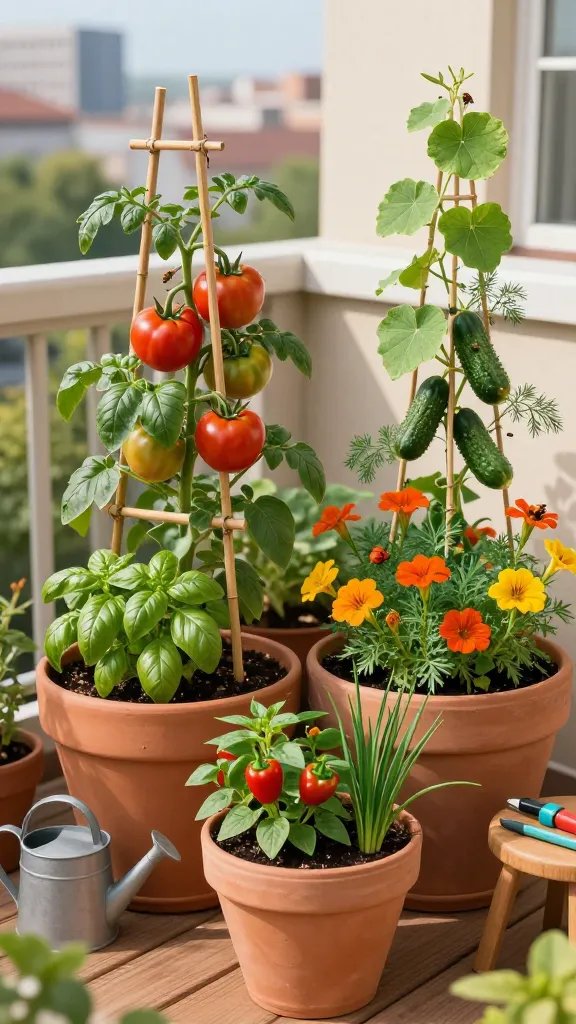
Mixing the right plants helps deter pests and boosts flavor and yield. It also makes your patio look like a charming micro-jungle instead of a row of soldier pots. Functional and adorable? Yes please.
Classic Combos That Work
- Tomatoes + basil + marigolds: flavor boost, fewer hornworms
- Cucumbers + dill + nasturtiums: attracts beneficial insects, distracts aphids
- Peppers + oregano + chives: low-key pest control, great for cooking
Avoid cramming heavy feeders in the same container unless you size up and fertilize consistently. Think harmony, not plant cage match. Your veggies will thrive and your patio will smell amazing—seriously.
Great when you want beauty and natural pest control with less spraying.
9. Self-Watering Setups So You Can Actually Leave For The Weekend
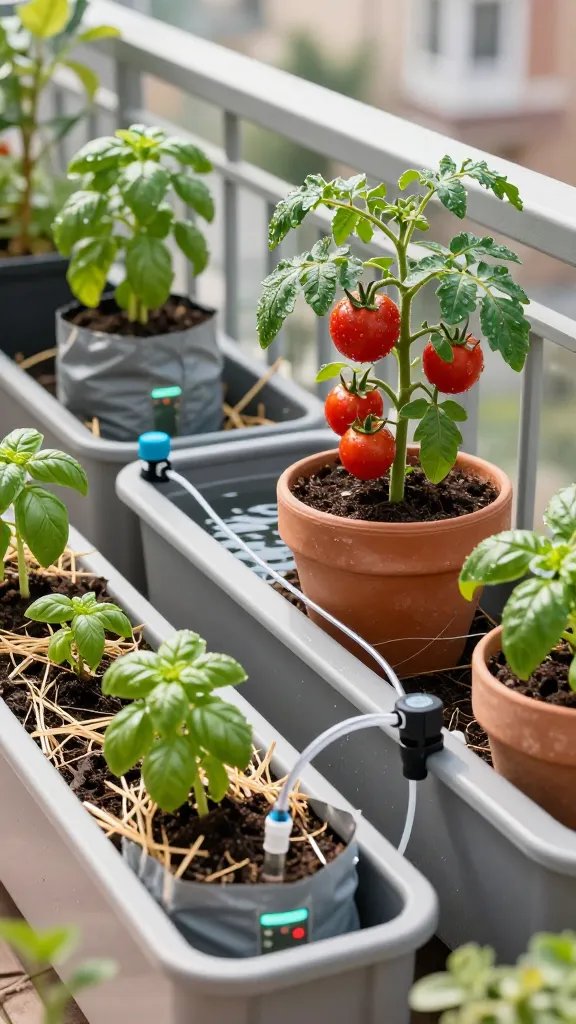
Self-watering containers and simple drip systems save you from crispy plant tragedies. They deliver steady moisture right to the roots, which means happier plants and fewer daily chores. Lazy? No. Efficient? Absolutely.
Easy Watering Options
- Reservoir planters: wick water upwards for consistent moisture
- Ollas or watering spikes: slow-release hydration for individual pots
- Drip irrigation + timer: set-and-forget watering for the whole patio
Mulch your containers to lock in moisture and reduce splashing. Calibrate timers after the first week to match your sun and heat levels. You’ll travel guilt-free and come back to thriving greens instead of plant drama.
Best for hot climates or busy schedules where daily watering feels like a second job.
10. Seasonal Crop Swaps To Keep The Harvest Rolling
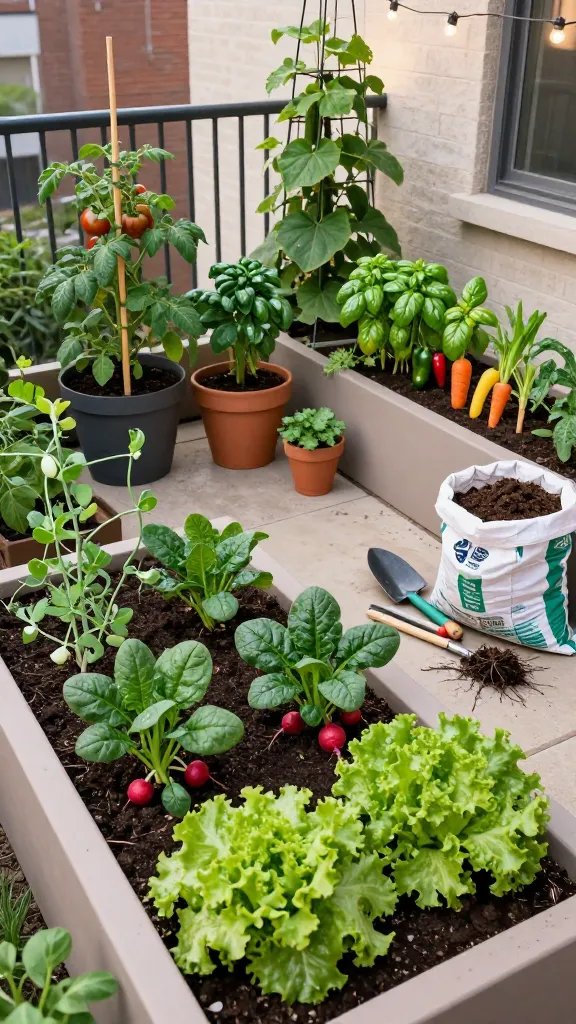
Rotate your crops through the seasons and your patio will produce nonstop. Cool-weather greens in spring, heat-lovers in summer, and a hearty fall lineup—easy. It’s like programming your garden for year-round snacks.
Simple Seasonal Plan
- Early Spring: peas, spinach, radishes, lettuce
- Summer: tomatoes, peppers, cucumbers, basil
- Fall: kale, chard, carrots, cilantro
Clear out tired plants fast, refresh with compost, and swap in the next wave. Keep notes on what crushed it and what flopped so you can optimize next time. Your patio becomes a tiny, efficient farm with a revolving door of deliciousness.
Use if you want maximum yield and variety without expanding your space.
Ready to turn that patio into your favorite room with snacks? Start with one or two ideas, then build as you go—you’ll learn fast and harvest faster. Before long, you’ll invite friends over just to casually pick tomatoes while acting like it’s no big deal. FYI: it’s a very big (and delicious) deal.