10 Iris Garden Ideas That Turn Heads All Season
Iris flowers bring drama, color, and that “wait, what is THAT?” energy to any yard. They bloom in waves, handle neglect like champs, and look fancy without trying. Want a garden that shows off all season, not just for a hot minute in spring? These iris ideas pack personality, structure, and serious curb appeal—without needing a full-time gardener.
1. Create a Sun-Drenched Iris Border
Tired of snacking when you’re not even hungry? This reset helps you stop the loop and feel back in control.
A simple reset for moments when cravings take over. Easy to use, easy to repeat, and designed to help you feel satisfied instead of stuck.
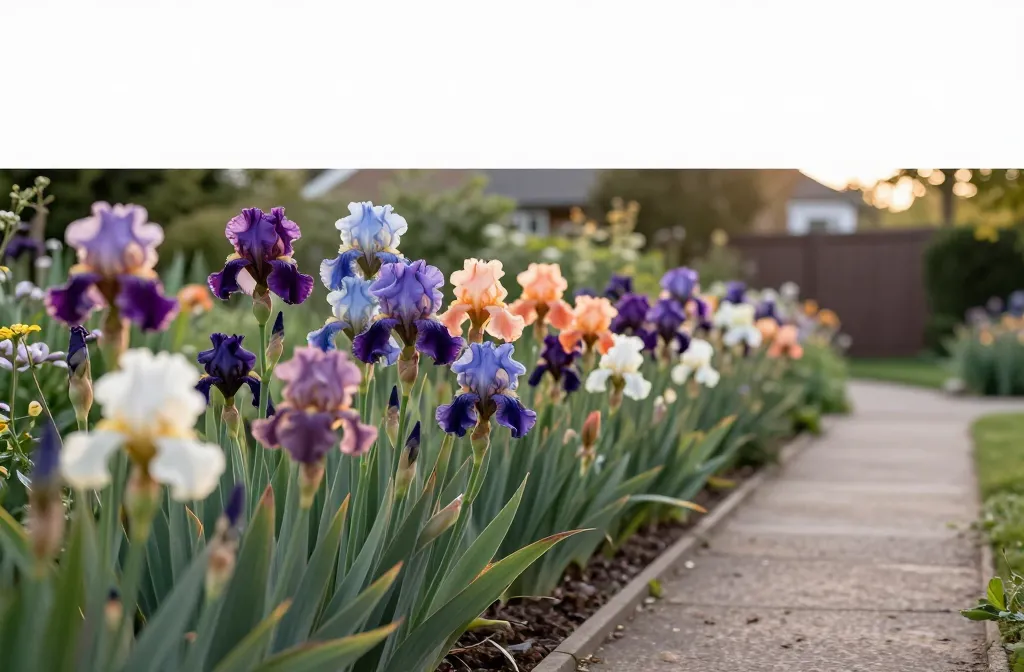
Give irises a front-row seat along paths and fences where they can bask in sunshine. A bright border packs color and fragrance, and it looks polished even when the rest of the yard plays catch-up. You’ll also get easy access for dividing rhizomes and deadheading—aka less bending and more bragging rights.
Key Points
- Full sun is non-negotiable: 6–8 hours daily.
- Use well-draining soil and plant rhizomes barely covered.
- Space tall bearded iris 12–18 inches apart for airflow.
Great for framing walkways and giving your home that “I hire a landscape designer” vibe, without actually doing that.
2. Build a Color-Story Bed
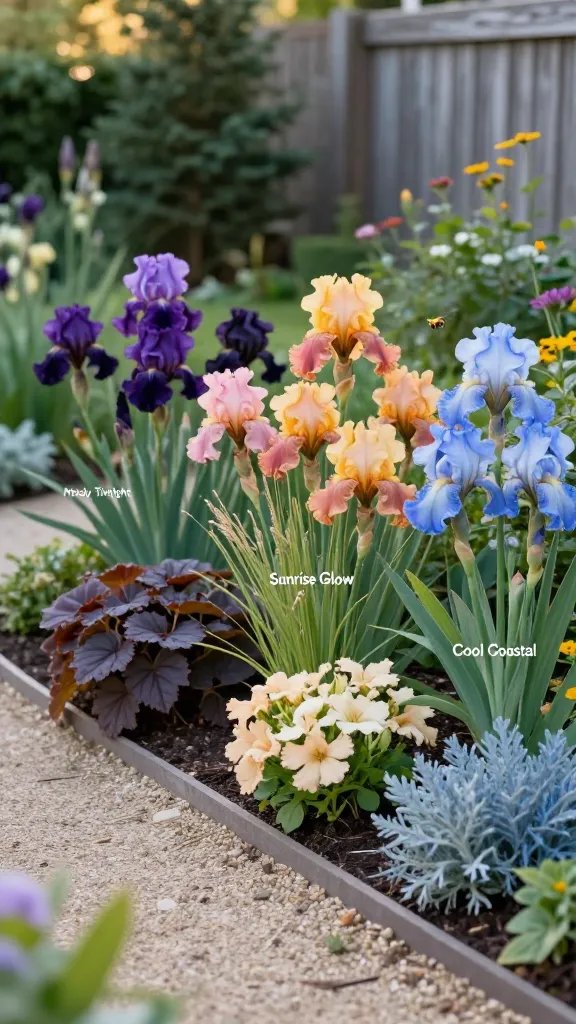
Instead of tossing random hues together, curate a palette that tells a story. Think smoky purples with silvery blues, or apricots with creamy whites. This gives your garden that editorial look—like a photoshoot set, but with bees.
Transform Your Home With 7,250+ Stunning Landscaping Designs—No Expensive Designers Needed!
- 🌿 Access 7,250+ stunning landscaping designs.
- 💰 Save thousands—no pro designer needed.
- 🏡 Plans for gardens, patios, walkways, and more.
- ✨ Simple, beginner-friendly DIY layouts.
- 🛠️ Customize any design to fit your yard.
Palette Ideas
- Moody Twilight: Deep purple, indigo, black-tinged varieties like ‘Before The Storm.’
- Sunrise Glow: Peach, tangerine, and soft yellow bearded iris.
- Cool Coastal: Sky blue Siberians with white standards and gold signals.
Use this when you want elegance and cohesion. FYI, repeating the same 3–4 varieties looks intentional and high-end.
3. Mix Heights for Wow-Factor Layers
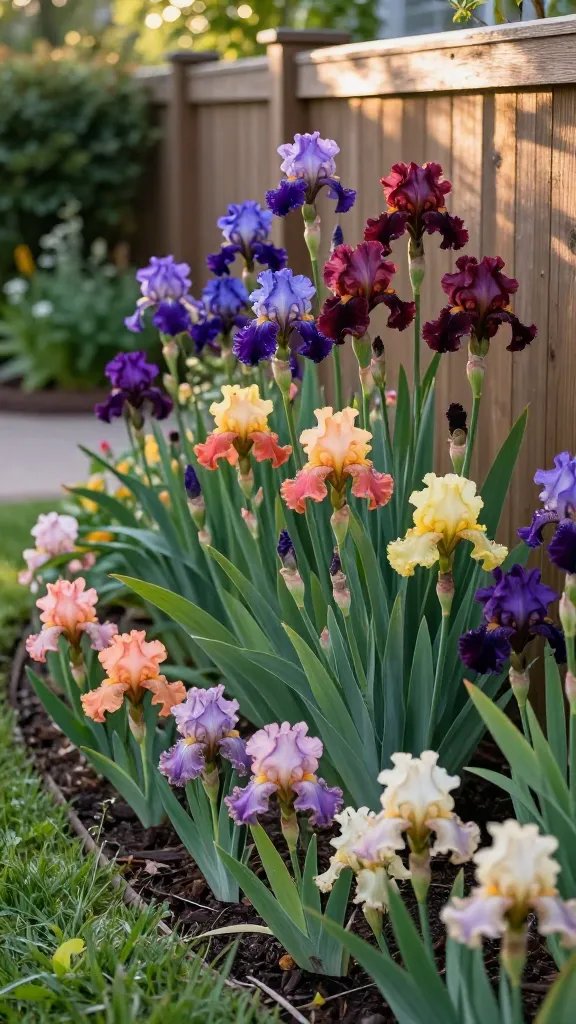
Flat gardens look, well, flat. Irises come in a buffet of heights—from pocket-sized dwarfs to tall, fence-brushing varieties—so stack them like a designer. Layers create depth, better visibility, and that “how did they do that?” effect.
Suggested Layout
- Front: Standard dwarf bearded iris (8–15 inches) for a neat edge.
- Middle: Intermediate bearded or Louisiana iris (16–28 inches) for fullness.
- Back: Tall bearded iris (28–40+ inches) as the showstoppers.
Use this along fences or backdrops. It turns a simple bed into a layered scene with dimension and drama.
4. Pair With All-Season Companions
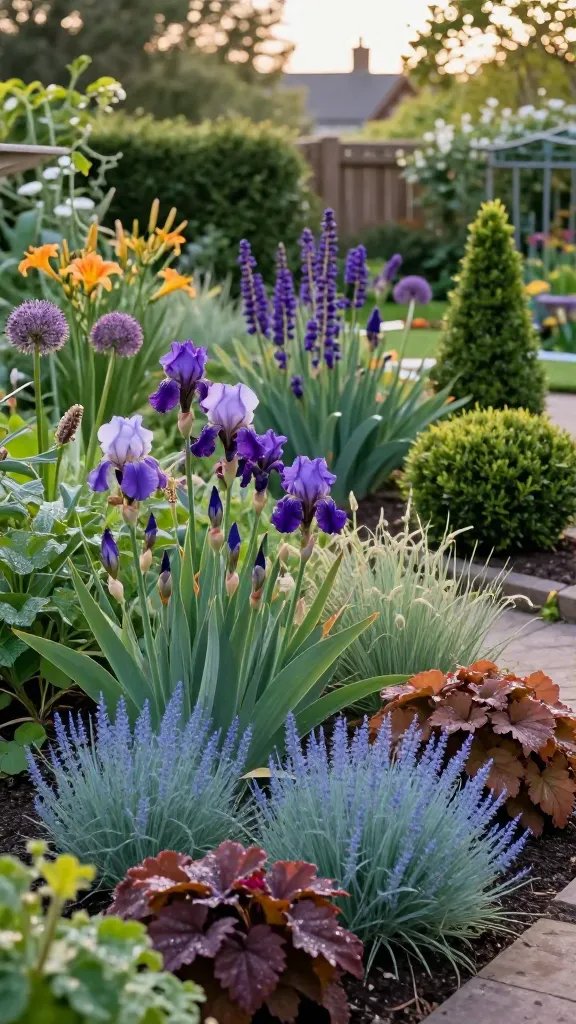
Irises shine hard during bloom, then chill out. Partner them with plants that keep interest alive the rest of the year. Think feathery textures, evergreen structure, and late bloomers that tag in when irises clock out.
Winning Combos
- For Texture: Nepeta, heuchera, and ornamental grasses (like festuca or carex).
- For Continuous Color: Salvia, alliums, and daylilies.
- For Structure: Boxwood balls, dwarf conifers, or rosemary.
Perfect if you want a bed that looks alive in July, not just glorious in May. Also helps hide fading iris foliage—seriously clutch.
5. Design a Water’s-Edge Iris Nook
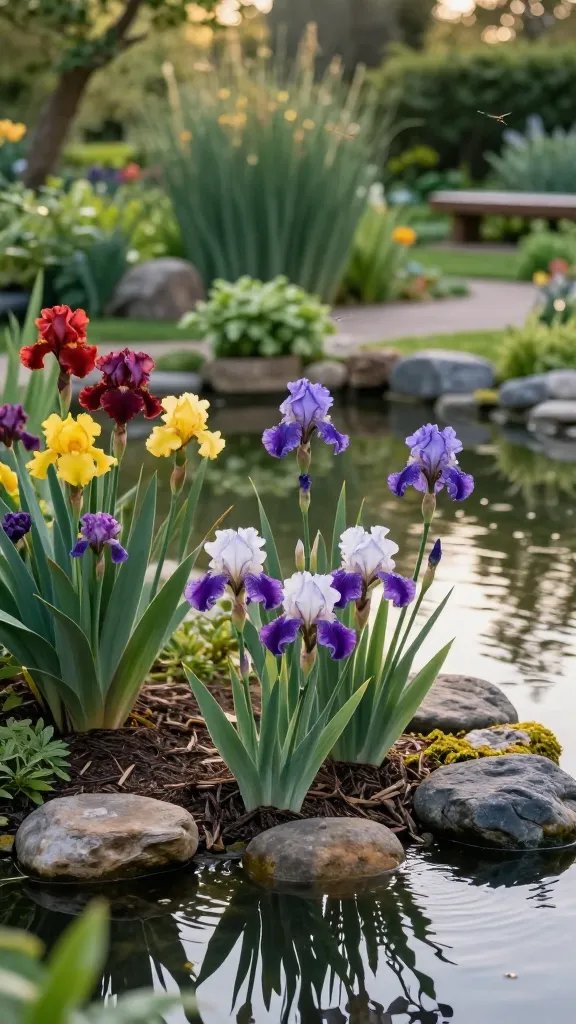
Got a pond or a spot that stays damp? Some irises love wet feet and reward you with lush, architectural foliage. This turns a tricky area into a dreamy oasis with reflections and wildlife buzzing.
Best Choices
- Japanese iris (Iris ensata): Huge, flat blooms; loves acidic, moist soil.
- Siberian iris (Iris sibirica): Graceful clumps; tolerates damp to average conditions.
- Louisiana iris: Thrives in wet soils; bold colors and big presence.
Use this near water features or low spots. Bonus: dragonflies will make this their hangout, and who doesn’t want that?

6. Craft a Low-Maintenance Gravel Iris Bed
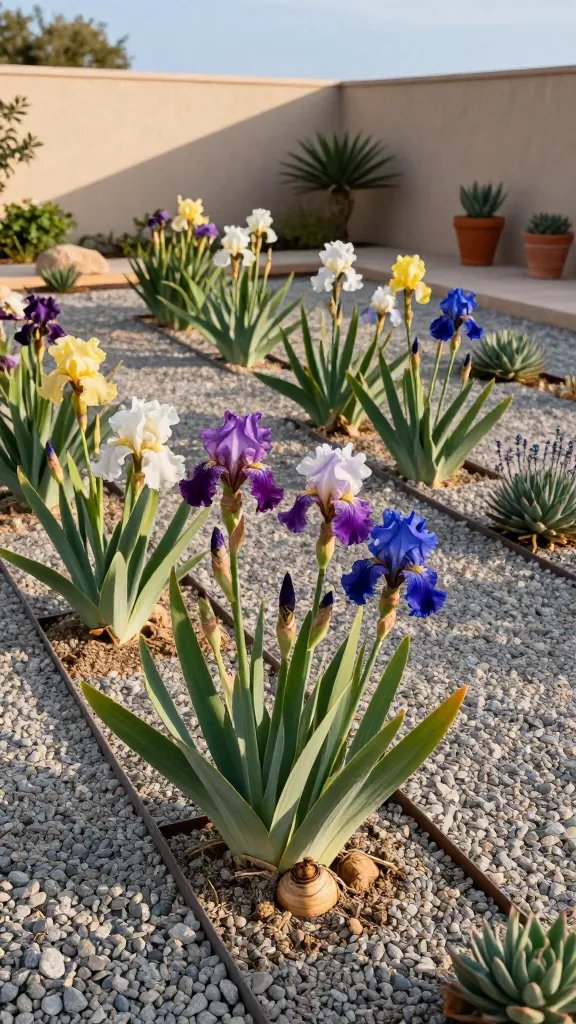
Bearded irises adore sun and sharp drainage, which means gravel is basically their love language. A gravel bed looks modern, cuts down on weeds, and keeps rhizomes from rotting. It’s tidy, it’s chic, and IMO it’s the easiest way to nail the Mediterranean vibe.
How-To Basics
- Lay 2–3 inches of crushed gravel over landscape fabric.
- Amend planting pockets with gritty mix (sand + compost + small gravel).
- Plant rhizomes shallowly, fan leaves outward, and keep crowns exposed.
Ideal for hot, dry regions or anyone who refuses to baby plants. Your future self will send you a thank-you note.
7. Plan a Succession Bloom Showcase
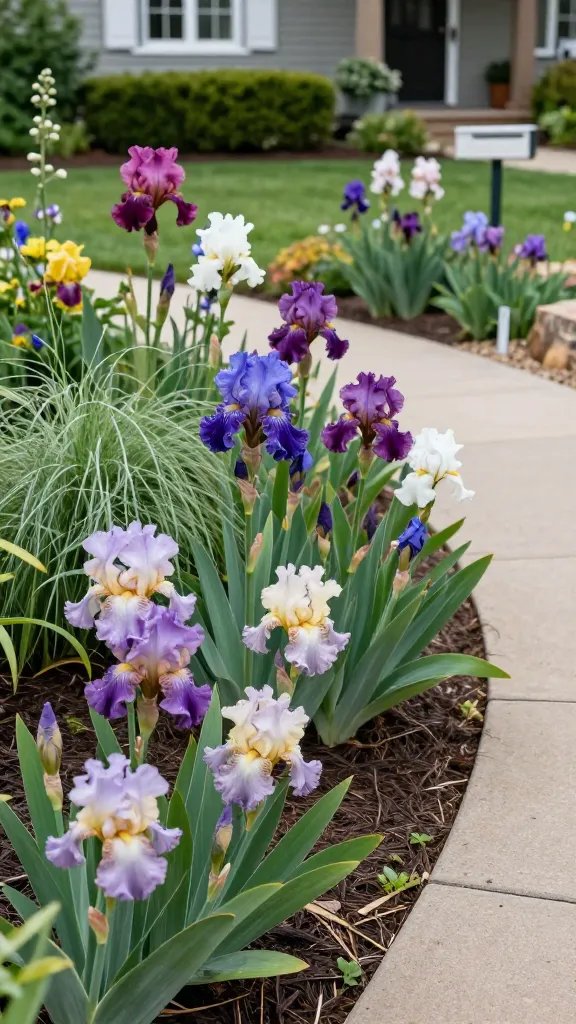
Why settle for a two-week spectacle when you can stretch the party for months? Choose early, mid, and late bloomers, then toss in reblooming varieties for an encore in fall. It’s like programming your very own flower festival.
Bloom Calendar Cheatsheet
- Early: Miniature dwarf bearded iris and early tall bearded varieties.
- Mid: Most tall bearded and Siberian iris peak.
- Late: Japanese and Louisiana iris take over.
- Bonus: Reblooming bearded iris like ‘Immortality’ for fall color.
Use this in front yards or high-traffic spots. You’ll always have something strutting its stuff, spring through fall.
8. Go All-In on a Monochrome Iris Moment
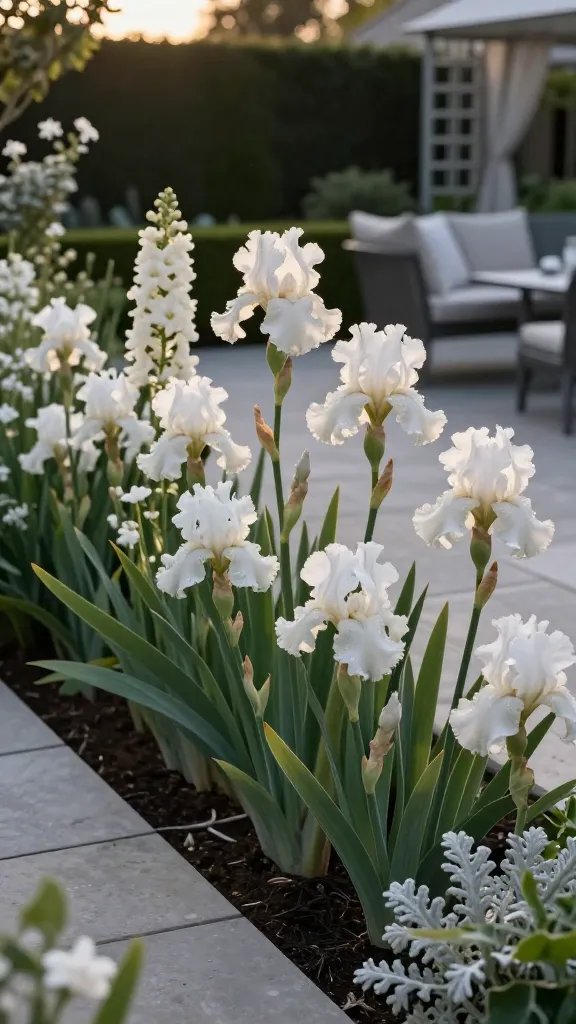
Sometimes one color hits harder than a rainbow. A monochrome iris bed—think all whites or all deep purples—looks luxe and intentional. It also makes designing way easier since everything plays nice together.
Monochrome Magic
- All-White: ‘Immortality,’ ‘Skating Party,’ and white Siberians glow at dusk.
- All-Purple: ‘Dusky Challenger,’ ‘Purple Serenade,’ and inky near-blacks.
- All-Yellow: Sunny bearded iris + golden companion plants like yarrow.
Try this in formal beds or around patios. It photographs beautifully and feels intentional even if you picked plants on sale. Trust me.
9. Edge Paths With Dwarfs and Minis
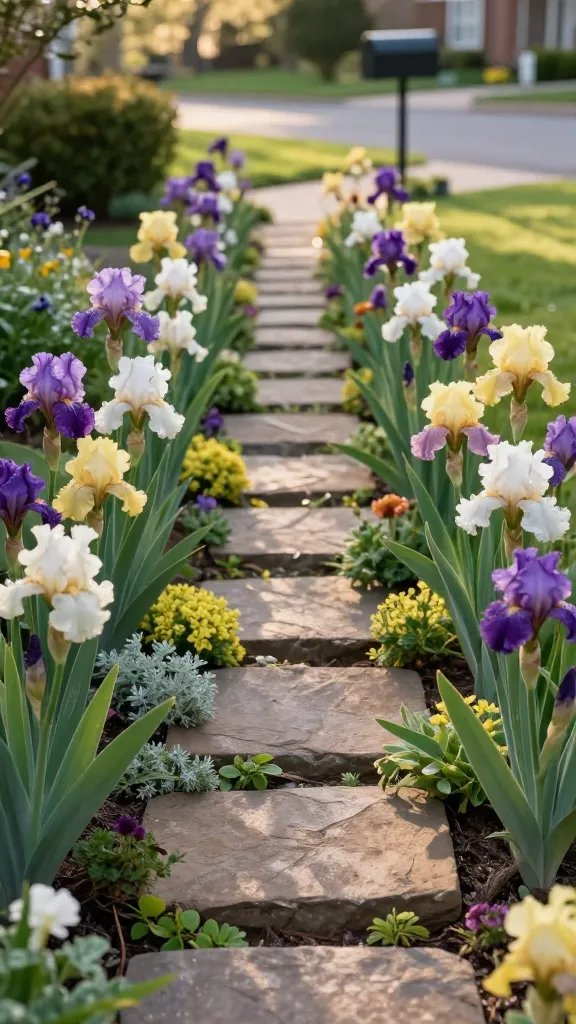
Short irises make adorable, tidy borders that stay out of your way. They add color pops right where you walk, which honestly makes everyday errands feel like a garden tour. Plus, they bloom early when you’re starved for flowers.
Tips
- Choose dwarf bearded iris and miniature tall bearded for scale and variety.
- Space 8–12 inches apart for a dense ribbon of bloom.
- Pair with thyme or creeping sedum between stones for softness.
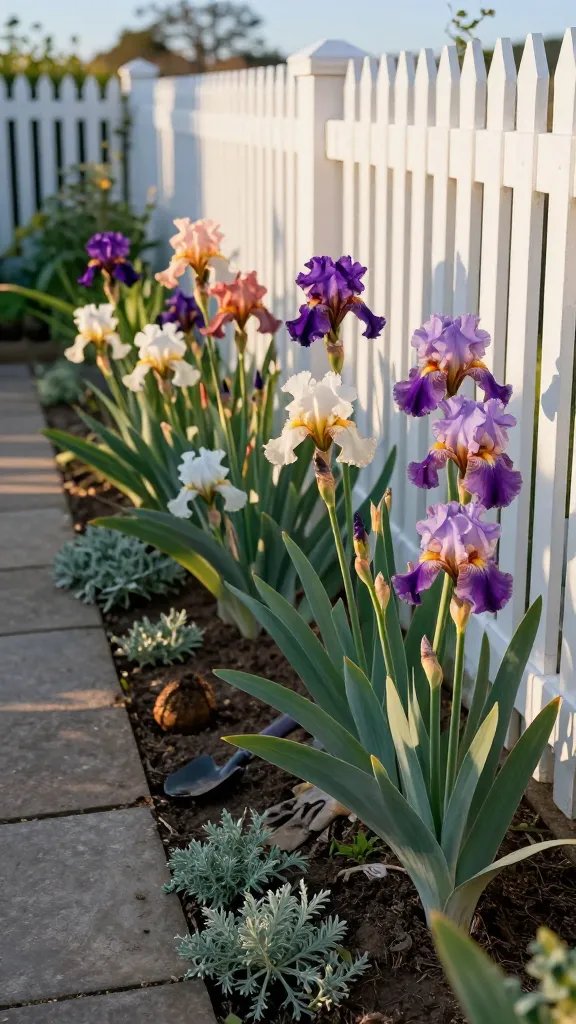
Best along stepping stones, driveways, and mailbox paths. It’s the fastest way to look charming without trying too hard.
10. Build a Collector’s Corner With Labels
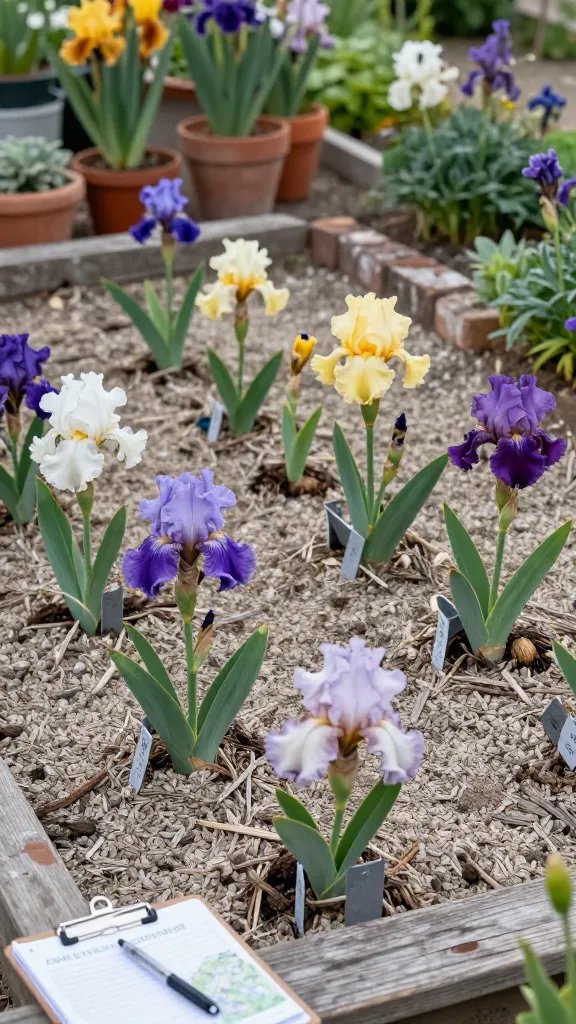
If you love geeking out on varieties, set up a special bed just for your favorites. Keep it orderly, label plants, and track bloom times. You’ll learn what thrives, what flops, and which diva needs the VIP spot.
Materials
- Metal or slate labels with UV-stable markers.
- A simple garden map or notes app for tracking divisions.
- Mulch with fine gravel to show off rhizomes and reduce rot.
Use this to experiment, trade divisions, and refine your palette. It’s practical, nerdy, and extremely satisfying—seriously.
Care and Planting Nuggets You’ll Thank Me For
Let’s keep your iris garden thriving with a few power moves. These are the unglamorous habits that make all the difference between meh and magnificent.
Quick Care Wins
- Planting: Set rhizomes just at or slightly above soil level; don’t bury them deep.
- Watering: Water to establish, then go light—too much water = rot city.
- Division: Split clumps every 3–4 years in late summer when centers thin out.
- Airflow: Space generously to dodge fungal issues.
- Clean-Up: Remove spent blooms and any mushy leaves to deter pests.
Do these and your irises will reward you with reliable blooms and clean clumps season after season.
Bonus Design Flourishes (Because Why Not?)
Want your iris garden to feel curated, not chaotic? A few finishing touches go a long way. These little upgrades change the whole mood.
Finishing Touches
- Backdrops: Dark-stained fences or hedges make pastel blooms pop.
- Accents: A birdbath, rusted obelisk, or weathered bench injects character.
- Lighting: Low-voltage uplights catch sword-like leaves at night—gorgeous.
Add these when you want your garden to look good 24/7, not just during bloom season.
Seasonal Iris Game Plan
Your irises don’t need constant attention, but timing matters. Nail these seasonal moves and you’ll look like a pro without breaking a sweat.
Calendar Snapshot
- Spring: Stake tall varieties if windy; deadhead to tidy.
- Summer: Divide and replant in late summer; water new divisions.
- Fall: Light cleanup; feed with low-nitrogen fertilizer if needed.
- Winter: Leave fans slightly trimmed; ensure crowns stay exposed.
Stick to this and you’ll keep blooms strong and clumps healthy year after year.
Common Mistakes to Dodge
Let’s save you from the facepalm moments. A few classic errors can tank your iris game—avoid them and you’re golden.
Watch Outs
- Planting too deep: Rhizomes suffocate and refuse to bloom.
- Overmulching: Mulch traps moisture; keep it off the crowns.
- Too much shade: Fewer flowers, leggier leaves—just no.
- Skipping division: Overcrowded clumps = weak blooms.
A little prevention beats replanting an entire bed. Your future self approves.
Where to Start (Fast Track Plan)
Feeling inspired but slightly overwhelmed? Start small and level up. Here’s a quick path to glory.
Starter Steps
- Pick a sunny 6×8-foot area and clear weeds.
- Amend soil with compost + grit for drainage.
- Choose five varieties: two early, two mid, one late (splash a rebloomer if you can).
- Plant in odd-numbered groups of 3 for impact.
- Edge with dwarf iris and tuck in nepeta or thyme.
In one weekend, you’ll have a bed that looks intentional now and incredible next season.
Conclusion
Irises bring color, structure, and just enough drama to make your garden memorable. Pick a few ideas, plant boldly, and let these stunners do the heavy lifting. Ready to turn heads every spring—and beyond? Go grab those rhizomes and make it happen.